Key takeaways
- Aluminum: Around 0.8 to 1.0 millimeter, or roughly 0.032 to 0.040 inch, is a useful range for everyday baking. Approximately 0.040-inch aluminum is often described as 18 gauge. Aluminum heats quickly and evenly but can warp if a hot pan is exposed to cold water or a cold surface.
- Carbon steel: About 0.6 to 1.0 millimeter is common. It is tougher than very thin aluminum and often gives roasted foods stronger browning, but it may heat less gently for delicate cookies.
- Stainless steel: Roughly 0.7 to 1.0 millimeter provides a firmer feel. Stainless resists corrosion and reaction with acidic foods, but it is not naturally nonstick and may distribute heat less evenly than aluminum unless it has an aluminum core or layered construction.
- Aluminized steel: A steel body with an aluminum-silicon coating can combine rigidity with improved heat distribution and corrosion resistance. It is often a strong middle or premium choice.
What's inside
Choosing a baking sheet by gauge alone is a common mistake. A lower gauge number usually means thicker metal, but gauge standards vary by material, and thickness is only one part of how a pan performs. A thin aluminum sheet may heat quickly and release cookies easily, while a thicker steel pan may feel sturdier but brown food more aggressively. A rolled rim, reinforced edge, coating, and overall shape can matter just as much.
Shoppers also buy the wrong size for their oven, assume “commercial grade” guarantees a heavy pan, or confuse a nonstick finish with permanent durability. Before comparing prices, decide what you bake, how often you bake it, and whether you value fast response or maximum rigidity. This guide explains how to choose a baking sheet pan gauge thickness in 2026 without relying on vague marketing claims.
As an Amazon Associate we earn from qualifying purchases at no extra cost to you. Product prices and availability are accurate as of the date shown and are subject to change.


Decide These 3 Things First
- Your baking habits: Cookies and pastries benefit from predictable heat and easy release. Roasting vegetables, meats, and frozen foods places more stress on the pan and favors thicker, more rigid construction.
- Your oven and storage limits: A standard half sheet measures about 18 by 13 inches and needs an oven cavity at least 20 inches wide. Smaller ovens may be better suited to a 13 by 9-inch quarter sheet or a 15 by 10-inch pan.
- Your care preferences: Bare aluminum should generally be hand-washed and can discolor in a dishwasher. Stainless steel is more forgiving, while coated carbon steel is easier to clean but may require gentler utensils and lower cleaning temperatures.
Size and Usable Capacity
Size determines whether a pan fits your oven, rack, storage area, and recipes. A quarter sheet is typically 13 by 9 or 13 by 9.5 inches, with a usable surface close to 12 by 8 inches after accounting for the rim. It suits small batches, toaster ovens, and compact kitchens. A jelly-roll-style pan around 15 by 10 inches offers more room without the footprint of a full half sheet.
The common half sheet is approximately 18 by 13 inches, with a 1-inch rim. It is a practical choice for roasting vegetables, baking 12 to 18 cookies, or preparing a weeknight meal. However, outside dimensions vary by brand. Measure the interior width of your oven, not just the listed pan size, and leave at least 1 inch of clearance on each side for airflow and handling.
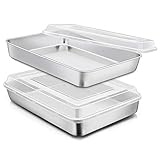
For crowded ovens or small households, a three-size set can be more useful than two identical half sheets. For example, the GoodCook Everyday set includes small, medium, and large pans, while the Umite Chef two-pack focuses on the popular 18-by-13-inch half-sheet format. Check the interior dimensions and rim height before buying; a tall rim can reduce usable baking space.
Material and Gauge Thickness
Gauge is a thickness shorthand, not a universal quality rating. In most systems, a lower gauge number indicates thicker metal, but aluminum and steel use different gauge references. Always favor a listed thickness in millimeters or thousandths of an inch when available.
- Aluminum: Around 0.8 to 1.0 millimeter, or roughly 0.032 to 0.040 inch, is a useful range for everyday baking. Approximately 0.040-inch aluminum is often described as 18 gauge. Aluminum heats quickly and evenly but can warp if a hot pan is exposed to cold water or a cold surface.
- Carbon steel: About 0.6 to 1.0 millimeter is common. It is tougher than very thin aluminum and often gives roasted foods stronger browning, but it may heat less gently for delicate cookies.
- Stainless steel: Roughly 0.7 to 1.0 millimeter provides a firmer feel. Stainless resists corrosion and reaction with acidic foods, but it is not naturally nonstick and may distribute heat less evenly than aluminum unless it has an aluminum core or layered construction.
- Aluminized steel: A steel body with an aluminum-silicon coating can combine rigidity with improved heat distribution and corrosion resistance. It is often a strong middle or premium choice.
For most home cooks, medium-to-heavy material is more useful than chasing the thickest available pan. A pan that is too thin may flex, twist, and warp; one that is excessively heavy can be awkward to lift when loaded with food.
Construction and Warp Resistance
Thickness helps prevent warping, but construction determines how that thickness behaves. Look for a reinforced or rolled rim, squared corners, and a flat base. A wire-reinforced edge can add rigidity without making the entire pan extremely heavy. Deep, sharply formed sides also reduce flexing, although they can slightly restrict airflow around cookies.
Hold an empty pan by one corner and gently flex it. It should resist twisting and sit flat when placed on a counter. Avoid pans that rock, have visibly uneven corners, or make a sharp “oil-can” pop when pressed in the center. These are signs of weak forming or residual stress, though normal heating can still cause some movement in any metal pan.
A thickness of about 0.8 millimeter is adequate for many household tasks. If you roast at high temperatures, use a broiler, or regularly load the pan with heavy foods, look closer to 1.0 millimeter or a reinforced commercial-style design. Never use a sheet pan under a broiler unless the manufacturer specifically permits it.
Comfort, Coating, and Performance
A filled half sheet can weigh several pounds, so handling details matter. An empty pan in the 1.5- to 2.5-pound range is manageable for most kitchens; heavier pans may feel more stable but can be tiring when carrying hot food. Choose a rim that provides a secure grip with oven mitts and avoid extremely narrow edges that are difficult to grasp.
Bare aluminum is popular because it responds quickly to temperature changes and works well for cookies, biscuits, and pastries. It may darken over time and can react with highly acidic ingredients such as tomatoes or citrus marinades. Parchment or a silicone baking mat can simplify cleanup.
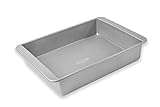
Nonstick coatings offer easy release, especially for cookies, granola, and sticky roasted foods. Use wood, silicone, or nylon utensils, and follow the temperature limit printed by the manufacturer. A coating does not make a thin pan warp-proof. The GoodCook carbon steel set, for instance, emphasizes coated convenience and multiple sizes, while the USA Pan quarter sheet combines aluminized steel with a nonstick surface in a compact format.
Stainless steel avoids many coating concerns and is a sensible choice for acidic foods, but it benefits from oil or parchment. A stainless set such as the listed 12-, 16-, and 17.5-inch assortment may offer useful size flexibility; confirm whether “nonstick” refers to a coating, a surface treatment, or simply easier release with proper greasing.
Price Tiers and Value
Budget sheet pans generally cost about $8 to $15 each, or $15 to $25 for a basic set. Expect thinner material, simpler rims, and fewer details about exact thickness. They can work well for occasional cookies and parchment-lined foods.
Midrange pans typically run $15 to $30 each, or $25 to $50 per set. This tier commonly includes thicker aluminum, aluminized steel, reinforced edges, or a more consistent nonstick finish. The example products priced around $16.19 to $25.99 fit the value-oriented set market, while the approximately $19.95 USA Pan quarter sheet offers a smaller single-pan option.
Premium pans often cost $30 to $60 or more each. You are paying for heavier construction, better forming, durable coatings, specialty finishes, or a longer warranty—not automatically better results in every recipe. For a first purchase, one reliable half sheet and one quarter sheet are usually more valuable than a large collection of duplicate sizes.
Warranty and Care Support
Check whether the warranty covers warping, coating failure, rust, or only manufacturing defects. A one-year warranty is common; limited lifetime coverage is more reassuring when the pan is made for frequent use. Read exclusions carefully because overheating, dishwasher damage, metal utensils, and thermal shock may void coverage.
Care instructions should be specific. For coated pans, look for a stated maximum temperature, dishwasher guidance, and utensil restrictions. For bare aluminum, confirm whether darkening is considered normal. A manufacturer that clearly lists material, thickness, oven limit, and cleaning instructions is generally more trustworthy than one that only says “heavy duty.”
Delivery and Packaging
Sheet pans need little or no assembly, so delivery quality matters more than setup. Look for packaging that separates nested pans and protects corners. On arrival, place each pan on a flat surface and inspect for rocking, dents, sharp burrs, coating bubbles, and bent rims before washing or using it.
Large 18-by-13-inch pans can arrive with corner damage because their broad surfaces are easy to bend. Keep the packaging until you confirm that every pan sits flat. If a set nests tightly, separate it carefully rather than levering one pan against another, which can scratch a coating or deform the rim.
Spec Checklist
| Spec | Budget | Mid | Premium |
|---|---|---|---|
| Typical price | $8–$15 each; $15–$25 set | $15–$30 each; $25–$50 set | $30–$60+ each |
| Useful thickness | About 0.5–0.7 mm | About 0.8–1.0 mm | About 0.9–1.2 mm or reinforced construction |
| Common materials | Thin aluminum or carbon steel | Heavier aluminum, coated steel, stainless | Aluminized steel, thick aluminum, layered designs |
| Typical sizes | 13×9 to 17×11 inches | 13×9.5 or 18×13 inches | Quarter, jelly-roll, and half-sheet options |
| Best feature to verify | Flat base and safe rim | Reinforced edge and care instructions | Warranty, coating limit, and exact thickness |
Red Flags
- The listing gives a gauge number but does not identify whether it applies to aluminum or steel.
- “Heavy duty” appears without a thickness, weight, material grade, or construction description.
- The pan has no stated oven temperature limit, especially when it has a nonstick coating.
- The listed outside dimensions are much larger than the usable interior, with no explanation of rim size.
- Reviews repeatedly mention rocking, corner dents, peeling, rust, or warping after ordinary use.
- A very thin pan is marketed for broiling or high-heat roasting without clear manufacturer approval.
FAQ
What gauge is best for a baking sheet pan?
For everyday home baking, look for about 0.8 to 1.0 millimeter metal, then verify the material because gauge numbers differ between aluminum and steel. A reinforced 0.8-millimeter pan can outperform a poorly formed thicker pan.
Is a thicker baking sheet always better?
No. Thicker pans are generally more rigid and less prone to flexing, but they can be heavier and slower to respond to temperature changes. For delicate cookies, a medium-thickness aluminum pan may be preferable to an extremely heavy steel sheet.
Should I buy aluminum, stainless steel, or carbon steel?
Choose aluminum for responsive, even baking; stainless steel for corrosion resistance and coating-free cooking; and carbon or aluminized steel for added rigidity and strong roasting performance. A coating can improve release but requires more careful handling.
Can a baking sheet go in the dishwasher?
Only if the manufacturer says so. Bare aluminum can discolor, and nonstick coatings may deteriorate with repeated dishwasher exposure. Hand-washing with warm water, mild detergent, and a nonabrasive sponge is the safest general approach.