Key takeaways
- Table of Contents 7 sections 9 min read 1 Quick Verdict 2 Side by Side 3 Where Aluminum Sheet Pan Wins 4 Where Stainless Steel Baking Sheet Wins 5 Cost Over 5 Years 6 Which One for Your Home 6.1…
What's inside
Choosing between an aluminum sheet pan vs stainless steel baking sheet comes down to more than color or price. Both materials can handle cookies, roasted vegetables, chicken, and sheet-pan dinners, but they behave differently in the oven and at the sink. Aluminum is light, affordable, and a favorite for even baking. Stainless steel is heavier, more resistant to staining and corrosion, and often a better match for cooks who want long-term durability.
The real buyer decision is this: do you want the easiest pan to lift and replace, or a sturdier pan that may tolerate years of heavier use? Your answer also depends on storage space, whether you use parchment, how much browning you prefer, and whether the pan will live in a busy family kitchen or a compact apartment. Here is how the two materials compare for a typical half-sheet pan measuring approximately 18 by 13 inches.
As an Amazon Associate we earn from qualifying purchases at no extra cost to you. Product prices and availability are accurate as of the date shown and are subject to change.


Quick Verdict
Choose aluminum if you want excellent heat responsiveness, a lightweight pan, and the lowest upfront cost. It is especially well suited to cookies, biscuits, pastries, and cooks who regularly use parchment or silicone baking mats.
Choose stainless steel if you prioritize durability, a polished appearance, and resistance to rust, discoloration, and acidic ingredients. It is a strong choice for roasting, broiling when the manufacturer allows it, and households that want to keep the same pans for many years.
For most home bakers, a sturdy natural aluminum half-sheet is the practical value winner. For cooks who dislike delicate-feeling bakeware or want a metal pan that is less reactive and easier to keep looking new, stainless steel is worth the extra cost.
Side by Side
| Factor | Aluminum sheet pan | Stainless steel baking sheet |
|---|---|---|
| Comfort | Very light and easy to lift, usually with one hand | Heavier and more rigid; can feel steadier when loaded |
| Heat response | Heats quickly and promotes even browning when properly designed | Heats more slowly and may brown food less aggressively |
| Durability | Can dent, scratch, or warp if thin or exposed to abrupt temperature changes | Generally resistant to dents, rust, and corrosion; quality varies by thickness |
| Price range | About $7 to $20 for a half-sheet or two-pan set | About $22 to $27 for common half-sheet sets |
| Maintenance | Hand washing is often preferred; avoid harsh cleaners and metal scouring | Usually easier to scrub and less likely to retain stains; follow dishwasher guidance |
| Space needed | Approximately 18 by 13 inches per half-sheet, plus rim height | Usually the same footprint, but heavier stacks need stronger shelves |
| Look | Matte silver or darkened natural finish over time | Bright, polished appearance that can look more upscale |
| Resale or hand-me-down value | Low; inexpensive and more likely to show wear | Moderate; attractive, usable pans can remain desirable longer |
| Best for | Cookies, pastries, biscuits, vegetables, and everyday baking | Roasting, general cooking, acidic foods, and long-term ownership |
Where Aluminum Sheet Pan Wins
Aluminum’s biggest advantage is its combination of low weight and efficient heat transfer. A natural aluminum pan can move from cabinet to counter without the awkward heft of a thick steel pan. That matters when you are carrying a loaded tray of vegetables, rotating multiple cookie sheets, or cooking in an oven with a high rack.
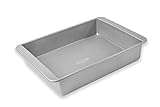
It is also a budget-friendly material. A commercial-style two-pack such as the Commercial Quality Baking Sheet Pan Set, Natural Aluminum Cookie Sheet, Umite Chef Warp Resistant Baker’s Half Sheet Pan, listed at $19.99, gives a home cook two 18-by-13-inch pans for a relatively modest price. A single Winco 13-by-18-inch Aluminum Sheet Pan, 1/2 Size, is listed at $7.19, making aluminum particularly appealing for a first kitchen, rental, or backup supply.
For cookies and delicate baked goods, aluminum is often the easier starting point. It responds quickly to oven heat and does not add a dark nonstick coating that may increase browning. A natural, light-colored surface can help cookies bake predictably, although results still depend on dough temperature, oven calibration, pan thickness, and whether you use parchment.
Aluminum is also convenient when you need several pans at once. Two half-sheets can support a large batch of cookies or a complete dinner prep session without adding much weight to a cabinet shelf. Look for a rolled rim, reinforced edge, or thicker-gauge construction if warping is a concern. Never move a cold aluminum pan directly into a very hot oven, and avoid pouring cold liquid onto a hot pan; sudden temperature changes can contribute to distortion.
The tradeoff is appearance and surface sensitivity. Aluminum can darken, develop baked-on marks, and show scratches. Some acidic foods, including tomatoes, citrus marinades, and vinegar-heavy preparations, may react with bare aluminum and affect flavor or discolor the pan. Parchment, foil, or a silicone mat creates a useful barrier for those recipes.
Where Stainless Steel Baking Sheet Wins
Stainless steel is the more reassuring choice for cooks who want a solid, long-lived pan. It does not rust easily, resists many stains, and is less reactive with acidic foods than bare aluminum. A stainless sheet can move from cookies to tomato-topped vegetables or a vinegar-based marinade without the same concern about metal interaction.
Its weight is both an advantage and a disadvantage. A heavier pan feels stable on the counter and is less likely to flex when you load it with potatoes, a roast, or a full batch of food. It can also be less prone to dents from everyday handling. However, that same weight may be inconvenient for children, older adults, or anyone who frequently lifts a pan with one hand.
Stainless steel is available in different grades and thicknesses, so the label alone does not guarantee performance. A thicker pan with a securely rolled rim should feel rigid rather than floppy. Some products use a stainless-steel surface over another metal or include a nonstick coating, so read the care instructions if you specifically want uncoated stainless steel.
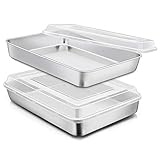
For current price context, a Baking Sheet Set of 2, Commercial Grade Stainless Steel Cookie Sheets measuring 18 by 13 inches is listed at $26.99. A three-piece stainless cookie-sheet set is listed at $21.97 after a 41% discount. Sale pricing can change, but these examples show that stainless often costs more than basic aluminum without necessarily requiring a premium kitchen budget.
Stainless steel may not brown cookies exactly like aluminum. Because it is less thermally conductive, food can bake differently depending on the pan’s thickness and the oven rack position. That is not automatically a problem; it simply means you may need to adjust baking time slightly when switching materials. Parchment remains useful for easy release and cleanup.
Cost Over 5 Years
Using the prices above, aluminum has the lowest entry cost. A $7.19 single pan costs roughly $1.44 per year over five years if it remains usable. A $19.99 two-pack works out to about $2 per pan per year. Even replacing one pan during that period would keep the total purchase cost near $4 per pan per year.
A $26.99 stainless two-pack costs approximately $2.70 per pan per year over five years. The $21.97 three-piece set costs about $1.46 per pan per year, assuming all three pieces meet your needs and remain in service. These calculations exclude tax, shipping, discounts, and replacement costs.
The more meaningful difference is not the annualized price but how you use the pans. A thick stainless pan may deliver better long-term value if you are hard on cookware, move frequently, or dislike replacing dented bakeware. Aluminum may be the better value if you mainly bake and prefer to replace an inexpensive pan once its surface becomes too stained or warped to use comfortably.
Which One for Your Home
Small apartment
Choose aluminum if lifting and storage are the primary concerns. A half-sheet measuring 18 by 13 inches will still require a cabinet or oven drawer with enough clearance, but an aluminum two-pack adds less weight to a small shelf. If you cook acidic foods often and have limited time for hand washing, stainless may justify its added cost.
Family with kids or pets
Stainless steel is a sensible choice for a busy household. Its heavier construction can feel more stable when transferring food, and its resistance to rust and staining is useful when pans do not receive immediate attention. Keep any full sheet pan out of reach of children while hot, regardless of material.
Rental
Aluminum offers the best low-cost coverage for a rental kitchen. You can purchase one or two pans without a major investment, and the light weight is helpful if you move again. Use parchment for sticky or acidic foods and store the pans carefully to reduce scratches and dents.
Long-term home
Stainless steel makes sense if you are building a durable cookware collection and expect to use the pans for roasting as well as baking. Aluminum is still worth adding for cookies and pastries, so a mixed collection can be more useful than choosing only one material.
FAQ
Is aluminum or stainless steel better for cookies?
Aluminum is usually the more predictable choice for cookies because it heats efficiently and is widely used for light-colored baking sheets. Parchment and a properly preheated oven matter just as much. If your stainless pan is unusually thick or dark, expect the cookies to bake somewhat differently.
Can you bake acidic foods on an aluminum sheet pan?
Yes, but bare aluminum can react with strongly acidic ingredients. For tomato, citrus, or vinegar-based recipes, use parchment or another suitable liner, or choose stainless steel. Avoid leaving acidic food on bare aluminum for extended periods.
Which sheet pan is easier to clean?
Stainless steel generally tolerates more vigorous cleaning and is less likely to retain discoloration. Aluminum can still clean up well, especially when lined, but abrasive pads and harsh cleaners may scratch or dull its surface. Always follow the manufacturer’s care instructions.
Do stainless steel and aluminum pans take the same oven space?
Usually, yes. A standard half-sheet is about 18 by 13 inches, though outside dimensions and rim height vary. Measure your oven rack and storage area before buying, and leave room for airflow around the pan rather than crowding the oven walls.