Key takeaways
- Mostly boules, limited storage: A round ceramic cloche around 10–11 inches across is a focused choice if its lid and base fit your oven.
- Regular batards: An oval cloche or a 5–6-quart oval enameled cast-iron Dutch oven offers more length. Check the interior dimensions, not just the capacity.
- Lowest-cost route: A lidded cast-iron Dutch oven can bake excellent crusty bread and serve other cooking needs. Expect a heavier pot and a lid that may be less convenient to handle.
- Less heavy lifting: Consider a purpose-built ceramic cloche, but check the manufacturer’s weight and handling instructions. Ceramic still needs careful handling and protection from thermal shock.
- Small oven or countertop oven: Measure the cavity, rack, and door opening before choosing any covered baker. A cloche that fits the rack may still be awkward to load.
The best bread cloche for artisan bread depends on your loaf shape and oven—not just its advertised capacity
For a classic round boule, choose a heavy, oven-safe cloche with a usable interior around 10–11 inches wide and a lid that traps steam; for long batards, look for an oval model at least 13 inches long, or choose a covered Dutch oven sized to fit your loaf. Measure your oven and shaped dough before buying: listed exterior dimensions can hide a tight baking space.
Shortlist by baking situation
- Mostly boules, limited storage: A round ceramic cloche around 10–11 inches across is a focused choice if its lid and base fit your oven.
- Regular batards: An oval cloche or a 5–6-quart oval enameled cast-iron Dutch oven offers more length. Check the interior dimensions, not just the capacity.
- Lowest-cost route: A lidded cast-iron Dutch oven can bake excellent crusty bread and serve other cooking needs. Expect a heavier pot and a lid that may be less convenient to handle.
- Less heavy lifting: Consider a purpose-built ceramic cloche, but check the manufacturer’s weight and handling instructions. Ceramic still needs careful handling and protection from thermal shock.
- Small oven or countertop oven: Measure the cavity, rack, and door opening before choosing any covered baker. A cloche that fits the rack may still be awkward to load.
Compare the main options
These figures are useful shopping ranges, not specifications for every model. Dimensions and weights vary by brand; verify the exact product’s instructions and measurements before purchase.

Emile Henry Ceramic Bread Cloche 13.2" x 11.2" x 7", Charcoal
Included for 'Best Bread Cloches for Artisan Bread' because the listing specifies Charcoal, details this guide uses to compare options.
View on Amazon
Sassafras Superstone® Covered Bread Baker with Lid - Bisque Glazed Exterior and Unglazed Interior Stoneware Bakeware - Bakes an Artisan Italian Bread with Crusty Crust and a Light Crumb
Included for 'Best Bread Cloches for Artisan Bread' as a relevant option in this category; details come from the product listing.
View on Amazon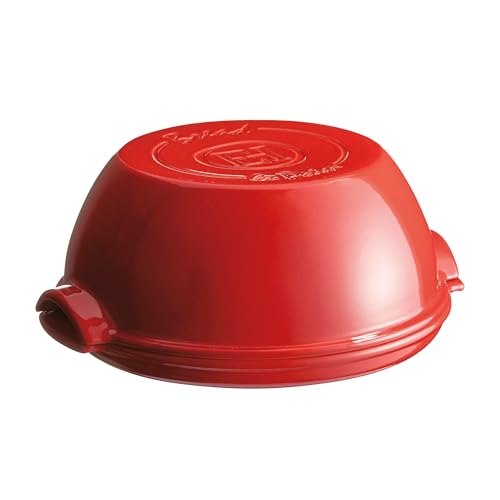
Emile Henry Modern Bread Cloche | Burgundy
Included for 'Best Bread Cloches for Artisan Bread' because the listing specifies Burgundy, details this guide uses to compare options.
View on Amazon
Sassafras Superstone Stoneware La Cloche Bread Baker, Unglazed, Baking Stone for Bread, Capacity 5QT 12”D x7”H with handle, Withstands Temperature 500-2100 Fahrenheit
Included for 'Best Bread Cloches for Artisan Bread' because the listing specifies Unglazed and Baking Stone for Bread, details this guide uses to compare options.
View on Amazon| Baker type | Typical usable space | Common material | What it suits | Main trade-off |
|---|---|---|---|---|
| Round bread cloche | About 9–11 in. interior diameter | Stoneware or other oven-rated ceramic | Round boules, often up to roughly 1–1.5 lb dough | Limited room for elongated loaves; ceramic can chip or crack if mishandled |
| Oval bread cloche | About 12–14 in. interior length | Usually ceramic | Batards and oval loaves | Long footprint can be difficult to fit in compact ovens |
| Round Dutch oven | Often 5–6 qt; commonly about 10–11 in. across | Cast iron, sometimes enamel-coated | Boules and many everyday loaves | Heavy; high sides can make loading and scoring feel cramped |
| Oval Dutch oven | Often 5–6 qt; commonly about 12–14 in. long | Cast iron, sometimes enamel-coated | Batards and wider dough shapes | Heavy and may occupy much of a home oven rack |
Capacity in quarts is not a reliable substitute for loaf clearance. A pot’s volume says little about whether dough will have space to expand upward, or whether you can lower it in without touching the hot sides. Prioritize interior length, width, and height.
How to choose the right cloche
1. Match the interior to your shaped loaf
Measure the dough after shaping, then allow room for expansion and safe loading. As a practical starting point, aim for roughly 1–2 inches of clearance around the dough where possible. A 10-inch round interior may work for a moderate boule but feel tight for a broad, high-hydration loaf. For batards, check the usable length: a loaf that barely fits before proofing may press against the sides as it expands.
For a single vessel that must handle both shapes, an oval baker can accommodate a boule, though it may leave excess space. If you bake both shapes often, two appropriately sized vessels—or a Dutch oven plus a baking stone setup—may be more convenient than compromising every time.
2. Choose material for heat behavior and handling
Cast iron holds heat well and tolerates repeated baking, but it is heavy and can make transferring dough or removing the lid more demanding. Enameled cast iron is easier to clean than bare iron, though enamel can be damaged by impact or abrupt temperature changes; follow the maker’s temperature and utensil guidance.
Ceramic cloches are designed around bread baking and often have a low base and domed lid that provide useful clearance. They retain heat, too, but are vulnerable to chips, cracks, and thermal shock. Do not put a cold or wet cloche into a hot oven unless its instructions explicitly allow that use. Avoid setting hot ceramic on a cold, damp, or unprotected surface.
3. Think through steam, lid, and handles
A close-fitting lid traps moisture released by the dough, helping the crust stay flexible during early oven spring. That enclosed steam matters more than a special steam feature. Many recipes bake covered first and uncovered afterward to dry and brown the crust; a removable lid makes that transition possible.
Look for handles or raised grips that remain usable with oven mitts. Small knobs and shallow lid lips can be awkward when hot, while a broad dome may need space above it to lift safely. Check whether the lid can be set down securely and whether its handle is rated for your intended oven temperature. Never assume a plastic or composite knob is oven-safe at every temperature.
4. Confirm the fit in your oven
Measure the oven rack’s flat area, the distance between rack supports, and the clearance to the walls and heating elements. Then account for the lid’s widest point and the space your hands need to lift it. For countertop ovens, also check the door opening: a vessel can fit inside but be difficult to maneuver through the door.
If your oven runs crowded, a round cloche may fit where an oval Dutch oven does not. Leave airflow around the vessel and use a stable rack position recommended by the manufacturer.
Preheating and first-use setup
- Read the product instructions first. Preheating rules differ. Some bakers are intended to heat with the oven; others may have restrictions. Follow the manufacturer rather than assuming all ceramic or cast-iron pieces behave alike.
- Preheat the oven and vessel as directed. A thoroughly heated baker supports a strong start, but placing dough into a very hot vessel takes care. Use dry oven mitts and keep the work area clear.
- Prepare a safe transfer. Use parchment as a sling if the recipe and baker instructions permit it. Trim excess parchment so it cannot touch an element or hang over the vessel.
- Load and cover promptly. Keep hands away from the rim and avoid leaning over the hot baker. Covering retains the loaf’s own steam during the covered phase.
- Uncover to finish browning. Follow your recipe’s timing and temperature. The exact covered and uncovered phases depend on loaf size, oven, and desired crust color.
- Cool the vessel gradually. Set it on a dry, heatproof surface. Let it cool before washing; avoid cold water on hot ceramic or cast iron.
Ownership details that matter after the first loaf
Cloche wear usually starts with chips, cracks, or damage to coatings—not a gradual loss of baking performance. Avoid knocking ceramic against a sink or rack, stacking heavy cookware on it, and thermal shock. For enameled cast iron, protect the enamel from hard impacts and follow care guidance for the finish. Bare cast iron needs the maker’s recommended seasoning and drying routine.
Most bread baking does not require soap or elaborate maintenance, but clean off baked-on residue only after the vessel cools. Do not use a cloche as a storage container for damp dough between bakes. If a ceramic baker develops a crack, stop using it at high heat; damage can worsen under thermal stress.
One practical cost check: if a dedicated cloche costs $60–$120 and you bake twice a week for three years, that is about 312 bakes, or roughly $0.19–$0.38 per bake before energy and maintenance. If you bake monthly, the same purchase spreads across just 36 bakes—about $1.67–$3.33 each. A Dutch oven may make more sense when you also want a pot for braising or soups; a cloche may be the better fit when its shape and easier access suit your bread routine.
Bottom line
Choose the best bread cloche for artisan bread by starting with your most common loaf: round interior for boules, generous oval length for batards, and enough clearance for expansion and safe handling. Then compare material care, lid grip, preheating instructions, and oven fit. For occasional baking, a suitable Dutch oven offers versatility; for frequent bread baking, a purpose-built cloche can be worth choosing when its dimensions match your dough and your oven.