Key takeaways
- Dust the basket shortly before loading the shaped dough, covering the base, sides, and corners.
- Keep the basket dry between uses and avoid storing it in a humid or enclosed damp space.
- When the dough is ready, invert it confidently onto parchment or a peel rather than slowly easing it out.
- If it resists, do not yank the dough. Gently loosen an edge and reassess your flouring and proofing routine next time.
Best Bread Proofing Baskets for Better-Shaped Loaves
The best bread proofing baskets depend on your dough and routine: choose rattan for a classic round or oval loaf with visible flour rings, wood pulp for a sturdy, easy-to-store option, or food-safe synthetic for frequent baking and simpler cleanup.
Quick comparison: which basket fits your baking?
| Basket type | Typical loaf capacity | Best for | Cleaning and sticking | Ownership trade-off |
|---|---|---|---|---|
| Rattan, round | About 750–1,000 g dough; commonly 8–9 in. across | Boules and decorative spiral rings | Usually used with a dusting of rice flour; brush dry after use | Light and breathable, but the weave can trap dough if it is damp or under-dusted |
| Rattan, oval | About 750–1,000 g dough; commonly 10–12 in. long | Batards and longer loaves | Same dry-cleaning routine as round rattan | Needs enough shelf space for its length; shape affects loaf form, not dough strength |
| Wood pulp | About 750–1,000 g dough; commonly 8–9 in. round or 10–12 in. oval | Bakers who want a firm, stackable basket | Often works well with a light flour coating; keep it dry and brush away residue | Rigid walls hold shape, but soaking or prolonged dampness can damage the material |
| Food-safe synthetic | Varies by model; often sized for roughly 500–1,000 g dough | Frequent use and easy cleanup | Many models can be washed; confirm the maker’s care instructions and dry fully | Practical and durable, though some designs provide less pronounced flour-pattern ridges |
These are common size ranges, not standardized capacities. Manufacturers may describe a basket by its dimensions or by the dough weight it is intended to hold. Check both before buying, and remember that dough hydration and proofing level affect how full a basket feels.

Superbaking Sourdough Banneton Bread Proofing Basket, 9" Round, Set of 2
Included for 'Best Bread Proofing Baskets for Better-Shaped Loaves' because the listing specifies 9" Round and Set of 2, details this guide uses to compare options.
View on Amazon
Sourdough Proofing Basket Gift Set, 9" Round and 10" Oval Banneton Bread Baking Supplies, Sourdough Baskets with Bread Lame, Danish Whish, Bowl Scraper, Sourdough Scraper, and Linen Liner
Included for 'Best Bread Proofing Baskets for Better-Shaped Loaves' because the listing specifies 9" Round and 10" Oval Banneton Bread Baking Supplies and Sourdough Baskets with Bread Lame, details this guide uses to compare options.
View on Amazon
Dimpola Banneton Bread Proofing Basket - 9 inch Banneton Basket Set of 2 Sourdough Proofing Basket Round Proofing Bowls Handmade Rattan Baskets and Liners
Included for 'Best Bread Proofing Baskets for Better-Shaped Loaves' as a relevant option in this category; details come from the product listing.
View on Amazon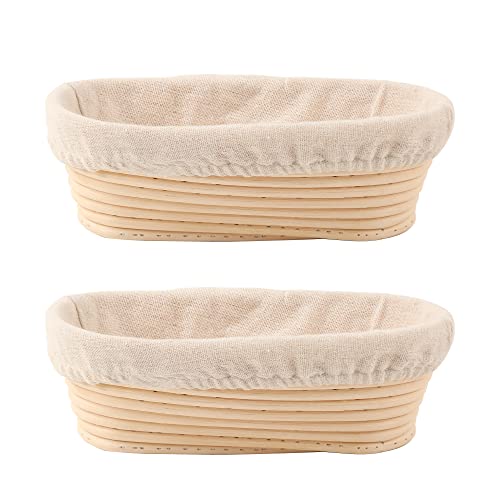
DOYOLLA Bread Proofing Baskets Set of 2 10 inch Oval Shaped Dough Proofing Bowls w/Liners Perfect for Professional & Home Sourdough Bread Baking
Included for 'Best Bread Proofing Baskets for Better-Shaped Loaves' as a relevant option in this category; details come from the product listing.
View on AmazonChoose by loaf shape, dough size, and routine
For a round country loaf: choose a round rattan basket
A round rattan banneton is a reliable choice for a boule. Its curved sides support the dough while it proofs, and the coiled cane can leave a spiral pattern on the crust. Rattan’s gaps allow airflow around the dough surface, which can help it dry slightly and release cleanly when properly floured.
For a typical home loaf made with about 750–1,000 g of dough, an 8- or 9-inch basket is a practical starting point. A smaller basket can make a tall loaf crowd the rim; a much larger one can let a small dough piece spread wider than intended. Shape and proofing matter too: a basket supports dough but cannot compensate for weak gluten or overproofing.
For a batard: pick an oval basket, not a round one
An oval basket gives shaped dough room to lengthen without folding the ends inward. Many home bakers use an oval basket around 10–12 inches long for a loaf in the same general dough-weight range as a round boule. Measure the inside length as well as the outside: thick rims can make the usable space smaller than the advertised dimensions suggest.
If you bake both shapes, two baskets are more useful than one oversized basket. A loaf that is too short for its basket may spread sideways, while one that is too long can press against the ends and proof unevenly.
For a firm, stackable option: consider wood pulp
Wood-pulp baskets have a smooth, rigid structure and are often easy to stack or store. Their walls keep a consistent shape, which can be helpful in a crowded cupboard or for bakers who prefer a less flexible basket. Many are designed to be used without a cloth liner, but follow the product’s instructions and flour the surface as needed.
Wood pulp is not a soak-and-scrub material. Water left in the basket can weaken or warp it, so brush off dry flour and let it air-dry fully. It is a good fit if you can give it dry storage and want a firm basket; it is less forgiving if you routinely put baking gear away damp.
For frequent baking or easier cleanup: look at synthetic
Food-safe synthetic baskets are designed for repeat use and may be washable, making them appealing for high-volume baking or shared kitchens. Their construction varies, so check whether the basket has a perforated surface, ridges, or a liner requirement. A smooth surface may leave less of the traditional spiral pattern, while a textured design can provide more grip and definition.
“Synthetic” covers different materials and designs, so do not assume every basket is dishwasher-safe. Follow the manufacturer’s care instructions, avoid heat exposure unless explicitly permitted, and dry the basket completely before storing it.
Liners, flour, and the real causes of sticking
A liner makes a basket more versatile: use it when you want a smoother loaf surface, when working with very sticky dough, or when you are still learning to judge proofing. A removable cloth liner also gives you a washable barrier. Its drawback is that folds can leave creases in the dough and reduce the flour-ring pattern.
Unlined baskets can produce a more defined pattern, but they need suitable dusting. Rice flour is commonly used because it tends to absorb less moisture than wheat flour and is less likely to form a gummy layer against damp dough. A blend of rice flour and bread flour is another option. Start with a thin, even coating; excess flour can collect on the crust and burn during baking.
Sticking usually comes down to a combination of wet dough, insufficient dusting, a damp basket, or dough left in the basket too long. To reduce the risk:
- Dust the basket shortly before loading the shaped dough, covering the base, sides, and corners.
- Keep the basket dry between uses and avoid storing it in a humid or enclosed damp space.
- When the dough is ready, invert it confidently onto parchment or a peel rather than slowly easing it out.
- If it resists, do not yank the dough. Gently loosen an edge and reassess your flouring and proofing routine next time.
Buying decision matrix
| Your situation | Best starting choice | Why |
|---|---|---|
| New to sourdough; occasional loaves | One 8–9 in. round rattan basket with a liner | Versatile size and the liner offers a forgiving option for sticky dough |
| Mostly bake long loaves | 10–12 in. oval basket matched to dough weight | Supports batard shape without crowding the ends |
| Limited cupboard space | Stackable wood-pulp basket or compact synthetic model | Rigid or nested designs can be easier to store than several woven baskets |
| Bake several times a week | Food-safe synthetic, or multiple rattan baskets if pattern matters | Choose based on whether washable cleanup or traditional crust markings matter more |
| Watching the budget | Basic rattan basket with a removable liner | Typically available in general market ranges around $10–$25; avoid paying for a set of shapes you will not use |
Prices vary by size, material, included liner, and construction. As a broad guide, basic rattan or wood-pulp baskets often fall around $10–$30, while some synthetic models and multi-piece sets range roughly from $15–$40 or more. Treat these as general market ranges, not fixed prices.
Care and durability: what wears first
With rattan, the first problem is often not breakage but residue trapped in the weave. Dried dough is harder to remove than dry flour, so brush the basket after each use and let it air out. A small, clean brush helps reach the grooves. Do not soak rattan or put it away while damp; moisture can encourage damage and shorten its useful life.
Cloth liners are consumables. They can hold flour and moisture, so let them dry completely and wash them when buildup develops, following their care label. Replace a liner if it becomes torn or persistently holds residue. For wood pulp, avoid scrubbing with water; for synthetic, inspect seams and surface texture for cracks or wear, and wash only as directed.
For a first purchase, prioritize the right shape and capacity over a large set of accessories. A single basket matched to your usual loaf, plus a liner if you want a low-stress start, will solve more shaping and release problems than buying several sizes that do not fit your dough.