Key takeaways
- Good food release. A fresh ceramic coating can release cookies, roasted potatoes, fish, and sticky baked goods with less prying than bare metal. You may still need a light coating of oil or parchment for sugary or highly adhesive recipes.
- Easier cleanup. Most spills can be removed with warm water, dish soap, and a soft sponge. A smooth surface is less likely to hold onto baked-on cheese or caramel than uncoated aluminum.
- Useful for lower-fat cooking. The nonstick surface can reduce the amount of butter or oil needed for roasting and baking. It does not eliminate the need for grease in every recipe, particularly cakes, brittle confections, and recipes that depend on fat for browning.
- Attractive appearance. Ceramic finishes often come in cream, gray, blue, or other colors, and textured designs can make a pan look more presentable when it is stored openly.
- Usually free of traditional PFAS-style nonstick chemistry. Many ceramic coatings are marketed as PTFE-free, but buyers should check the exact product labeling rather than assume every “ceramic” pan has identical chemistry.
- Multiple sizes can improve efficiency. A three-pan set lets you bake cookies on one tray, roast vegetables on another, and prepare a smaller batch separately. That can be more useful than buying three identical half sheets.
- Often lighter than stoneware. Unlike solid ceramic bakeware, ceramic coated metal pans are generally manageable with one hand and heat up relatively quickly. That makes them more practical for everyday sheet-pan cooking.
What's inside
The Short Answer
Yes—ceramic coated baking sheets can be a good choice for baking, but only if you are willing to trade some long-term durability for easy release and simple cleanup. They are especially useful for cookies, roasted vegetables, granola, and sheet-pan dinners. They are less compelling if you use metal utensils, bake at very high temperatures, stack pans carelessly, or want a pan that can tolerate years of aggressive use.
The phrase “ceramic coated” can also be misleading. Most of these pans are not made entirely from ceramic. They are usually aluminum or steel pans covered with a thin, ceramic-based nonstick finish. The underlying metal provides the structure and heat conduction; the coating provides the release. That distinction matters because the coating—not the metal body—is usually the part most likely to wear out.
As an Amazon Associate we earn from qualifying purchases at no extra cost to you. Product prices and availability are accurate as of the date shown and are subject to change.


What You Actually Get
A ceramic coated baking sheet generally consists of a metal baking pan with a sprayed or bonded ceramic-infused nonstick surface. Common sizes include a half sheet measuring about 13 by 18 inches, a quarter sheet around 9 by 13 inches, and smaller cookie sheets in the 10-by-15-inch range. A half sheet is the most versatile size for standard ovens, although you should confirm that the pan leaves at least 1 inch of clearance on all sides for airflow.
Construction varies significantly. Some pans use lightweight aluminum, which heats quickly and responds rapidly when you adjust the oven temperature. Others use heavier-gauge steel, which may feel sturdier but can take longer to heat. Rimmed edges are important for roasting vegetables, bacon, and foods with liquid; completely flat cookie sheets are easier to slide cookies off but offer less spill protection.
Expect ceramic coated pans to be oven-safe somewhere in the neighborhood of 400 to 500°F, depending on the manufacturer. The lowest-rated component—such as a silicone grip, textured surface, or coating—sets the limit. Broiler use is usually a bad idea unless it is specifically approved. Ceramic does not mean heatproof, indestructible, or automatically safer at every temperature.
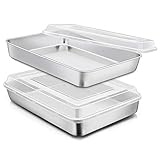
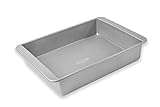
For context, the HONGBAKE Ceramic Coated Baking Sheet Pan Set of 3 with Floral Texture is listed at about $39.99, while the OXO Good Grips Non-Stick Pro Ceramic Coated Metal Bakeware Half Sheet Pan is about $24.95. Those prices are typical of the category: roughly $15 to $45 for a single pan and $30 to $60 for a small set, depending on thickness, finish, and included sizes.
Pros
- Good food release. A fresh ceramic coating can release cookies, roasted potatoes, fish, and sticky baked goods with less prying than bare metal. You may still need a light coating of oil or parchment for sugary or highly adhesive recipes.
- Easier cleanup. Most spills can be removed with warm water, dish soap, and a soft sponge. A smooth surface is less likely to hold onto baked-on cheese or caramel than uncoated aluminum.
- Useful for lower-fat cooking. The nonstick surface can reduce the amount of butter or oil needed for roasting and baking. It does not eliminate the need for grease in every recipe, particularly cakes, brittle confections, and recipes that depend on fat for browning.
- Attractive appearance. Ceramic finishes often come in cream, gray, blue, or other colors, and textured designs can make a pan look more presentable when it is stored openly.
- Usually free of traditional PFAS-style nonstick chemistry. Many ceramic coatings are marketed as PTFE-free, but buyers should check the exact product labeling rather than assume every “ceramic” pan has identical chemistry.
- Multiple sizes can improve efficiency. A three-pan set lets you bake cookies on one tray, roast vegetables on another, and prepare a smaller batch separately. That can be more useful than buying three identical half sheets.
- Often lighter than stoneware. Unlike solid ceramic bakeware, ceramic coated metal pans are generally manageable with one hand and heat up relatively quickly. That makes them more practical for everyday sheet-pan cooking.
Cons
- The coating can wear out. Scratches, staining, loss of slipperiness, and flaking can eventually occur. Ceramic coatings may lose their easy-release performance sooner than a well-made bare aluminum or stainless steel pan, especially with daily use.
- They need gentler care. Use silicone, wood, or nylon tools rather than metal spatulas or knives. Avoid steel wool, abrasive powders, and stacking pans without a protective layer between them.
- Dishwasher cleaning may shorten the useful life. A pan may be labeled dishwasher-safe, but repeated exposure to strong detergent and high heat can dull the finish or reduce nonstick performance. Hand washing is the safer choice if longevity matters.
- They are not always naturally nonstick. “Ceramic” does not guarantee that cookies will never stick. Sugar, cheese, marinades, and high-protein foods can bond to the surface. Parchment remains valuable for delicate cookies and sticky recipes.
- Color and texture can hide browning. A dark or patterned surface makes it harder to judge how quickly the underside of cookies or vegetables is browning. Textured interiors may also be slightly more difficult to wipe completely clean.
- Warping is still possible. Thin metal pans can twist when moved from a hot oven to a cold countertop or when exposed to cold water. A reinforced rim helps, but no ceramic coating prevents thermal stress.
- They may brown differently from bare aluminum. The coating and pan color affect heat absorption and food contact. A recipe developed for a shiny aluminum sheet may need a small adjustment—often checking a few minutes early—to avoid overbrowning.
- Replacement is harder once damaged. Minor discoloration is mostly cosmetic, but deep scratches, peeling, or exposed metal are signs to retire the pan. Unlike a bare cast-iron or stainless pan, the surface cannot realistically be refinished at home.
Who Should Buy It
Buy a ceramic coated baking sheet if you want convenient cleanup, routinely bake cookies or pastries, and prefer using less oil for everyday roasting. It is a sensible option for apartment kitchens, occasional bakers, and cooks who want a matching set in several sizes. It also suits people who dislike the maintenance associated with seasoning carbon steel or cast iron.
Choose a heavier pan with a rolled rim if you roast frequently. For a single all-purpose purchase, a 13-by-18-inch half sheet is more flexible than a small cookie sheet. Look for a firm rim, a coating rated to at least 450°F if your recipes require it, and clear instructions about hand washing, utensils, and broiler use. Weight is a useful quality clue: a sturdier half sheet often weighs roughly 1.5 to 3 pounds, while very thin pans may be closer to 1 pound.
Who Should Skip It
Skip ceramic coated bakeware if your priority is maximum lifespan, if you regularly use metal turners, or if you cook under the broiler. It may also be a poor fit for commercial-style baking, where pans are loaded, washed, stacked, and reused many times each day.
People who want the most predictable cookie browning may prefer light-colored bare aluminum. Those who make highly acidic marinades, broiled dishes, or very high-heat pizza should consider an appropriate stainless steel, aluminized steel, cast iron, or pizza-specific pan instead. If you are likely to put the pan in the dishwasher after every use, a durable uncoated option may offer better value over several years.
Cheaper Alternatives
| Option | Cost | Trade-off |
|---|---|---|
| Bare aluminum half sheet | $10–$20 | Excellent heat response and cookie browning, but it can stain, scratch, and react with some acidic foods. |
| Uncoated aluminized steel sheet | $15–$30 | Usually sturdy and durable, but food release depends on parchment or grease and cleanup takes more effort. |
| Stainless steel baking sheet | $20–$40 | Resists rust and acidic ingredients, but it is more prone to sticking and may brown food less evenly. |
| Silicone baking mat with a bare pan | $12–$25 | Reduces sticking and protects the pan, but mats can limit crisping and must be washed separately. |
| Two-piece bare aluminum set | $18–$35 | More surface area for less money, but you give up the easy-release coating and decorative finish. |
FAQ
Are ceramic coated baking sheets safe?
When used according to the manufacturer’s temperature and care instructions, ceramic coated baking sheets are generally considered safe for normal baking. Check whether the product is labeled PTFE-free if that is important to you. Do not use a pan with peeling or deeply damaged coating, and do not assume that a ceramic finish is safe under a broiler unless the instructions explicitly say so.
Do I need parchment paper on a ceramic coated baking sheet?
Not always. Cookies, vegetables, and many roasted foods can cook directly on a clean ceramic surface with a small amount of oil. Parchment is still useful for caramel, brittle, sticky fruit fillings, delicate cookies, and recipes where fast cleanup matters. It also reduces direct contact with the coating and may extend the pan’s useful life.
How long do ceramic coated baking sheets last?
There is no dependable universal lifespan. Occasional home use with hand washing and nonmetal utensils may provide several years of service. Daily use, dishwasher cleaning, stacking, and temperatures near the pan’s maximum rating can shorten that period. Replace the pan if the coating visibly peels, flakes, or loses its release so badly that food consistently sticks.
Are ceramic coated baking sheets better than regular nonstick pans?
They are different rather than universally better. Ceramic coatings appeal to shoppers who want a PTFE-free option and a bright, easy-clean surface. Traditional nonstick may retain its release longer in some applications, while bare aluminum usually offers better value and predictable baking performance. The best choice depends on whether your priority is easy cleanup, coating chemistry, durability, or browning control.