Key takeaways
- Useful middle size: A 10-by-15-inch pan provides more surface area than a 9-by-13-inch dish without the footprint of a 13-by-18-inch half-sheet pan.
- Shallow sides improve versatility: The roughly 1-inch rim helps contain batter, oil, crumbs, and roasting juices while still allowing air to circulate around many foods.
- Excellent for cookies: Most standard cookie recipes fit comfortably, and the rim makes it easier to move the pan in and out of the oven than a completely flat sheet.
- Good for sheet cakes and bars: It produces thinner layers than a 9-by-13-inch pan, which can be useful for snack cakes, brownies, fruit bars, and dessert squares.
- Easy to portion: The rectangular surface works well for cutting desserts into neat rows. A 10-by-15-inch cake can provide approximately 24 small party portions, depending on the recipe and serving size.
- Helpful for roasting: Vegetables, chicken pieces, fish, and sausages can be spread into a relatively even layer. The shallow profile can encourage browning more effectively than a deep casserole dish.
- Reasonable price: Most basic jelly roll pans cost about $12 to $25, so adding one does not require a major kitchen investment.
- Simple storage: It is usually easier to store than a roasting pan or large baking dish, particularly if the rimmed pan stacks with other sheet pans.
What's inside
The Short Answer
Yes—a jelly roll pan is worth it for baking if you regularly make cookies, bars, sheet cakes, roasted vegetables, or other foods that benefit from a shallow pan with a rim. If you only bake occasionally and already own a standard cookie sheet or half-sheet pan, it is probably not an essential purchase.
A jelly roll pan occupies a useful middle ground. It is larger and more versatile than a typical 9-by-13-inch baking dish, but smaller and easier to handle than a full-size half-sheet pan. For most home kitchens, that balance is the main reason to buy one.
As an Amazon Associate we earn from qualifying purchases at no extra cost to you. Product prices and availability are accurate as of the date shown and are subject to change.


What You Actually Get
A traditional jelly roll pan measures approximately 10 by 15 inches on the inside, with an overall size often close to 12 by 17 inches once the rim is included. The sides are usually about 1 inch high. That shallow edge is enough to contain cake batter, cookie dough, roasting juices, and small ingredients without making the pan feel bulky.
The name comes from jelly roll cakes, thin sponge cakes baked flat and then filled and rolled. However, you do not need to make rolled cakes to justify owning one. The dimensions are especially practical for cookies, brownies, fruit crisps, granola, toasted nuts, bacon, roasted vegetables, and small batches of one-pan dinners.
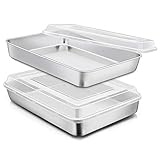
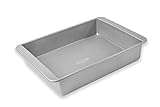
Construction varies. An aluminum pan, such as the Nordic Ware Natural Jelly Roll Pan, is typically valued for even heat response and a simple, durable design. Its listed price is around $18. A coated steel option, such as the HONGBAKE Jelly Roll Pan 15×10, generally costs less—about $13.49—and may offer easier release with less parchment or greasing.
Expect most pans in this category to weigh roughly 1 to 2 pounds, depending on the metal thickness, coating, and reinforced rim. That is light enough for everyday use while still giving the pan more structure than a very thin cookie sheet. Before buying, check whether the advertised dimensions describe the cooking surface or the outside of the rim; a small difference can affect whether it fits your oven, storage rack, or silicone baking mat.
Pros
- Useful middle size: A 10-by-15-inch pan provides more surface area than a 9-by-13-inch dish without the footprint of a 13-by-18-inch half-sheet pan.
- Shallow sides improve versatility: The roughly 1-inch rim helps contain batter, oil, crumbs, and roasting juices while still allowing air to circulate around many foods.
- Excellent for cookies: Most standard cookie recipes fit comfortably, and the rim makes it easier to move the pan in and out of the oven than a completely flat sheet.
- Good for sheet cakes and bars: It produces thinner layers than a 9-by-13-inch pan, which can be useful for snack cakes, brownies, fruit bars, and dessert squares.
- Easy to portion: The rectangular surface works well for cutting desserts into neat rows. A 10-by-15-inch cake can provide approximately 24 small party portions, depending on the recipe and serving size.
- Helpful for roasting: Vegetables, chicken pieces, fish, and sausages can be spread into a relatively even layer. The shallow profile can encourage browning more effectively than a deep casserole dish.
- Reasonable price: Most basic jelly roll pans cost about $12 to $25, so adding one does not require a major kitchen investment.
- Simple storage: It is usually easier to store than a roasting pan or large baking dish, particularly if the rimmed pan stacks with other sheet pans.
Cons
- It is not a true substitute for every pan: A jelly roll pan is too shallow for recipes that require a deep cake, casserole, lasagna, or substantial liquid.
- Less capacity than a half-sheet pan: If you frequently bake large batches of cookies or roast food for a family, a 13-by-18-inch half-sheet pan may be more efficient.
- Dimensions are not perfectly standardized: Two pans labeled “15 by 10” may have slightly different outer measurements, corner shapes, or usable interior space.
- Thin pans can warp: Lightweight metal may flex or twist with repeated high-heat use, especially when exposed to sudden temperature changes.
- Coatings require more care: Nonstick surfaces can scratch when used with metal utensils and may lose performance over time. Some coated pans also have lower maximum-temperature limits than uncoated aluminum.
- Aluminum can react with certain foods: Acidic ingredients such as tomatoes, citrus, and vinegar may discolor an uncoated aluminum pan or affect the surface. Parchment provides a simple barrier.
- It may duplicate what you own: If your kitchen already has several rimmed cookie sheets or half-sheet pans, the extra size may not add enough functionality to matter.
- Cleanup can be awkward around the rim: Baked-on sugar, grease, and crumbs may collect where the base meets the sides, especially if the pan is not lined.
Who Should Buy It
A jelly roll pan is a smart buy for frequent bakers who want one practical, multipurpose pan. It is particularly useful if you make cookies at least a few times a month, bake thin cakes or bars, roast vegetables in moderate portions, or need a pan with enough height to catch drips without using a deep dish.
It also makes sense for small households. A half-sheet pan can be unnecessarily large when you are cooking for one or two people, while a jelly roll pan offers enough space to spread food out without taking over the oven. The format is also convenient for renters, dorm-style kitchens, and anyone building a basic bakeware collection.
Choose uncoated aluminum when durability, quick heat response, and straightforward maintenance matter most. Choose a nonstick model when easy release is the priority and you are comfortable using parchment, silicone, or wood and silicone utensils to protect the coating. For a modest budget, the approximately $13.49 HONGBAKE option is a reasonable format to try. If you prefer a familiar uncoated design and are willing to spend around $18, the Nordic Ware Natural Jelly Roll Pan is another straightforward choice.
Who Should Skip It
Skip a dedicated jelly roll pan if you rarely bake or already have a rimmed half-sheet pan that meets your needs. A half-sheet pan can usually handle the same basic tasks, although recipes may spread differently and cooking times may change because of the larger surface area.
You may also prefer a 9-by-13-inch baking dish if your favorite recipes are casseroles, deep brownies, lasagna, cobblers, or cakes with substantial batter. The higher sides of that dish are more forgiving for liquid or thick mixtures. Likewise, people who regularly cook for a crowd may get more value from two half-sheet pans than from a smaller jelly roll pan.
Cheaper Alternatives
| Option | Cost | Trade-off |
|---|---|---|
| Existing rimmed cookie sheet | $0 if already owned | May be flatter, thinner, or a different size; check that it can contain batter and juices. |
| Basic aluminum baking sheet | About $8–$15 | Usually less reinforced and may warp more easily than a heavier jelly roll pan. |
| 9-by-13-inch metal baking pan | About $10–$20 | Deeper and smaller; useful for bars and casseroles but less effective for spreading food into a thin layer. |
| 13-by-18-inch half-sheet pan | About $12–$25 | More capacity, but it takes up more oven and storage space and may be excessive for small batches. |
| Disposable foil baking tray | About $1–$4 each | Inexpensive and convenient, but less stable, less reusable, and more prone to bending. |
FAQ
Is a jelly roll pan the same as a cookie sheet?
Not exactly. A jelly roll pan is a rimmed baking pan, generally around 10 by 15 inches with sides close to 1 inch high. A cookie sheet may have no sides or only one raised edge. Both can bake cookies, but the jelly roll pan is better for foods that release grease, juices, crumbs, or liquid batter.
Can I use a jelly roll pan for cookies?
Yes. It is one of the pan’s best everyday uses. Leave space between portions as directed by the recipe, and avoid overcrowding the surface. If the pan is dark nonstick rather than light aluminum, cookies may brown faster, so begin checking them slightly earlier than the recipe’s maximum baking time.
What is the best material for a jelly roll pan?
Uncoated aluminum is a strong all-purpose choice because it is lightweight, responsive, and easy to line with parchment. Nonstick-coated steel is convenient for release and cleanup but requires gentler handling. Whichever material you choose, confirm the care instructions and maximum oven temperature before using it under a broiler.
Do I need a jelly roll pan for jelly roll cake?
No. A rimmed pan with the correct approximate dimensions will work, but the pan should be sturdy, level, and large enough to spread the batter evenly. Using a pan that is too small can create a cake layer that is too thick to roll neatly; using one that is too large can produce a thin, dry layer. For occasional baking, a standard 10-by-15-inch rimmed pan is usually sufficient.
Overall, a jelly roll pan is a worthwhile purchase when you want a moderately sized, shallow pan that can handle both baking and roasting. It is not a must-have for every kitchen, but at roughly $12 to $25, it offers enough everyday flexibility to earn its space in many homes in 2026.