Key takeaways
- Confusing diameter with circumference: A 9-inch pan measures about 9 inches straight across the center, not 9 inches around the outside.
- Ignoring exterior width: The latch and rolled rim can add roughly 0.25 to 0.75 inch to the listed diameter.
- Assuming every 9-inch pan has the same capacity: Side height and base design can change usable volume by a cup or more.
- Filling to the rim: Leave room for expansion. Overfilling can force batter into the latch or onto the oven floor.
- Replacing sizes without scaling: An 8-inch pan has about 79% of the surface area of a 9-inch pan, while a 10-inch pan has about 123%. The same batter will be noticeably deeper or shallower.
- Forgetting recipe shape: A recipe written for a deep 9-inch springform may not work in a shallow 10-inch pan without changes to volume and baking time.
- Measuring only the rack: A pan may fit the rack but fail to pass through the oven opening or clear the door.
What's inside
The Short Answer
The most common standard springform pan is 9 inches in diameter and 2.5 to 3 inches deep. That size typically holds about 9 to 10 cups of batter and is a practical choice for cheesecakes, coffee cakes, tortes, and other desserts intended to serve 8 to 12 people.
Springform pan measurements describe the round baking area, not the full outside footprint. A pan listed as 9 inches may measure approximately 9.25 to 9.75 inches across at its outer rim once the latch, base, and rolled metal edge are included. Depth also varies slightly: a pan advertised as 3 inches high may have an usable interior depth closer to 2.75 inches.
As an Amazon Associate we earn from qualifying purchases at no extra cost to you. Product prices and availability are accurate as of the date shown and are subject to change.
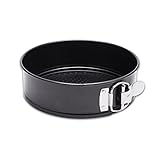


For most home ovens, a 9-inch pan is the safest all-purpose size. Choose an 8-inch pan for smaller recipes and taller cakes, a 10-inch pan for larger gatherings, or a 12-inch model only when the recipe is specifically scaled for it. The dimensions below provide a practical reference for shopping and recipe conversion in 2026.
Standard Sizes
| Nominal diameter | Diameter in centimeters | Typical depth | Depth in centimeters | Approximate capacity | Typical servings |
|---|---|---|---|---|---|
| 6 inches | 15.2 cm | 2.25–2.75 inches | 5.7–7.0 cm | 4–5 cups | 4–6 |
| 7 inches | 17.8 cm | 2.5–3 inches | 6.4–7.6 cm | 5–6 cups | 6–8 |
| 8 inches | 20.3 cm | 2.5–3 inches | 6.4–7.6 cm | 6–8 cups | 6–10 |
| 9 inches | 22.9 cm | 2.5–3 inches | 6.4–7.6 cm | 9–10 cups | 8–12 |
| 10 inches | 25.4 cm | 2.5–3 inches | 6.4–7.6 cm | 10–12 cups | 10–14 |
| 12 inches | 30.5 cm | 2.5–3 inches | 6.4–7.6 cm | 14–16 cups | 14–20 |
Capacity figures are approximate because usable volume depends on the shape of the base, the sidewall height, and how much room the recipe needs to rise. A springform pan should generally be filled no more than two-thirds to three-quarters full. Cheesecake batter may be filled somewhat higher than a light sponge, but leaving headroom helps prevent overflow.
Among current consumer options, 9-inch pans are widely available in the roughly $10 to $20 range. A basic 9-inch nonstick pan such as the HIWARE example may sell near $15.99, while a simpler ZeroPone 9-inch model may be around $9.99. A branded 9-inch Nordic Ware pan or set may cost about $18. Larger, heavier-gauge options, including a 10-inch Fat Daddio’s pan with a 3-inch height, may cost approximately $25 to $35. Prices vary by finish, seller, included pieces, and promotions.
When comparing products, check whether the stated diameter refers to the interior or exterior. Also confirm whether the purchase includes only the ring and removable base, or a two-piece set with both components. The removable bottom should fit securely inside the ring; a loose fit can be more troublesome with thin batters.
How to Measure Your Space
- Measure the oven rack first. Remove the rack or slide it forward, then measure its usable width and depth. A 9-inch pan usually needs at least 10 inches of clear width, while a 10-inch pan may need 11 inches or more.
- Account for the pan’s outer dimensions. Measure across the widest point, including the rim, latch, and any handles. Add at least 1 inch of clearance on each side so air can circulate and the pan can be removed safely.
- Check the oven door and sidewalls. The pan must pass through the oven opening without catching on the door frame. This matters in compact, countertop, and wall ovens.
- Measure vertical clearance. Place the rack at the intended position and measure from the rack surface to the heating element or upper oven wall. A 3-inch pan needs additional room for the cake to rise; allow at least 4 to 5 inches of total vertical clearance when possible.
- Measure the refrigerator shelf. A cheesecake may need several hours or overnight to chill in the pan. Check both shelf width and height, especially if the pan will sit inside a cake carrier or covered container.
- Check storage space. Springform rings can be nested, but the removable bases cannot always be stacked neatly. Measure a drawer or cabinet area about 11 inches wide for a 9-inch model and about 12 inches wide for a 10-inch model.
By Room or Use Case
For a standard home kitchen
A 9-inch, 2.5- to 3-inch-deep pan is the best general-purpose choice. It fits most full-size ovens, matches many cheesecake recipes, and provides enough surface area for clean slices without requiring unusual ingredient quantities. Look for a sturdy latch, a flat base, and a rim that sits evenly on the counter.
For a compact or countertop oven
Choose a 6- or 7-inch pan after measuring the oven cavity. Compact ovens often have less than 10 inches of usable rack width, making an 8-inch pan a tight fit once the outer rim is included. A smaller pan may require a reduced recipe, and baking time may change because the batter is deeper.
For family gatherings
A 10-inch springform pan is useful for 10 to 14 servings, especially for dense cheesecake or layered desserts. If the recipe is written for a 9-inch pan, do not simply add extra batter without adjusting baking time and checking the center. A 10-inch pan produces a thinner cake when the same quantity of batter is used.
For tall cheesecakes and tortes
Prioritize depth over diameter. A 9-inch pan that is 3 inches high offers more headroom than a shallow 2-inch model. For very tall desserts, a 7- or 8-inch pan can create a higher finished cake, but the smaller diameter may require a longer bake at a lower temperature. Always keep the filling below the rim.
For water-bath baking
A springform pan used for cheesecake may be wrapped in foil before it is placed in a water bath, but the fit between the pan and the larger roasting pan matters. Leave at least 1 inch around the springform so it can sit level and be lifted without tipping. If preventing water contact is important, consider a pan designed with a tighter base-ring fit or use a larger oven-safe cake pan as an outer shield.
For storage and serving
Match the pan to the cake carrier or refrigerator shelf, not just the oven. A 9-inch dessert often needs a carrier at least 10 to 11 inches wide and 4 to 5 inches high. Allow extra height for toppings, whipped cream, or fruit. A removable base also makes it easier to transfer the chilled dessert to a serving plate.
Common Sizing Mistakes
- Confusing diameter with circumference: A 9-inch pan measures about 9 inches straight across the center, not 9 inches around the outside.
- Ignoring exterior width: The latch and rolled rim can add roughly 0.25 to 0.75 inch to the listed diameter.
- Assuming every 9-inch pan has the same capacity: Side height and base design can change usable volume by a cup or more.
- Filling to the rim: Leave room for expansion. Overfilling can force batter into the latch or onto the oven floor.
- Replacing sizes without scaling: An 8-inch pan has about 79% of the surface area of a 9-inch pan, while a 10-inch pan has about 123%. The same batter will be noticeably deeper or shallower.
- Forgetting recipe shape: A recipe written for a deep 9-inch springform may not work in a shallow 10-inch pan without changes to volume and baking time.
- Measuring only the rack: A pan may fit the rack but fail to pass through the oven opening or clear the door.
FAQ
What is the standard springform pan depth?
Most standard springform pans are 2.5 to 3 inches deep, or approximately 6.4 to 7.6 centimeters. A 3-inch model is generally more versatile for cheesecake because it provides extra room for filling and rise.
Is a 9-inch springform pan the most common size?
Yes. The 9-inch size, measuring about 22.9 centimeters across, is the most common all-purpose option. It typically holds 9 to 10 cups and serves approximately 8 to 12 people, depending on slice size and dessert height.
Can I use an 8-inch or 10-inch pan instead of a 9-inch pan?
Yes, but the batter depth and baking time will change. An 8-inch pan makes a deeper cake and may need longer baking, while a 10-inch pan makes a thinner cake and may finish sooner. Adjust the amount of batter when possible rather than filling either pan to the rim.
How much clearance does a springform pan need in an oven?
Allow at least 1 inch of horizontal clearance on every side, with more space preferred for even heat circulation. Measure the pan’s full exterior width, including the latch, and confirm that the oven opening and rack depth can accommodate it before buying.