Key takeaways
- Choose the diameter: A 9-inch pan is the most versatile cheesecake size, while a 6-inch pan suits small batches and a 10-inch pan is better for a crowd.
- Decide whether you use a water bath: If you do, prioritize a tightly fitted base, a sturdy latch, and a water-resistant outer setup. If you bake without a bath, seam design still matters because loose batter can escape before the crust firms.
- Set a realistic budget: Basic pans generally cost $12 to $22, better-built midrange models run about $23 to $35, and premium options typically cost $36 to $55 or more.
What's inside
A springform pan can make cheesecake removal dramatically easier—or turn a careful bake into a soaked crust and a cracked, leaking mess. The most common mistake is treating every 9-inch pan as interchangeable. Diameter is only one part of the decision: seam design, latch quality, base fit, coating, and compatibility with a water bath all matter.
Another frequent error is assuming “leakproof” means completely watertight. A springform pan has a removable base and a side seam, so even well-made models may allow a small amount of thin batter or water through. For a cheesecake baked in a water bath, the safest setup is a snug pan plus an oven-safe roasting bag or multiple layers of wide heavy-duty foil. This springform pan buying guide for cheesecake leak proof seams focuses on the features that reduce leakage without promising performance no pan can guarantee.
As an Amazon Associate we earn from qualifying purchases at no extra cost to you. Product prices and availability are accurate as of the date shown and are subject to change.

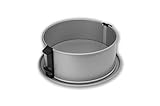

Decide These 3 Things First
- Choose the diameter: A 9-inch pan is the most versatile cheesecake size, while a 6-inch pan suits small batches and a 10-inch pan is better for a crowd.
- Decide whether you use a water bath: If you do, prioritize a tightly fitted base, a sturdy latch, and a water-resistant outer setup. If you bake without a bath, seam design still matters because loose batter can escape before the crust firms.
- Set a realistic budget: Basic pans generally cost $12 to $22, better-built midrange models run about $23 to $35, and premium options typically cost $36 to $55 or more.
Once those choices are clear, compare the details below rather than relying on a product title or a “leakproof” label.
1. Size and Capacity
A 9-inch springform pan is the standard choice for most cheesecake recipes. Its typical outside diameter is close to 9.5 to 10 inches, so measure your oven rack, roasting pan, and refrigerator shelf—not just the stated pan diameter. Most 9-inch models are roughly 2.5 to 3 inches deep and hold approximately 9 to 10 cups, depending on the base shape and wall angle.
A 6-inch pan usually holds about 3 to 4 cups and is useful for half recipes. An 8-inch pan often holds 6 to 8 cups, while a 10-inch pan can hold roughly 11 to 13 cups. Do not pour filling above about two-thirds to three-quarters of the pan’s height; cheesecake expands and needs room for gentle movement during baking.
Check the usable interior diameter. A thick rolled rim or wide base lip can reduce the space available for crust and filling. If your recipe is written for a 9-inch pan, changing to 8 inches may require a longer bake at a lower temperature, while a 10-inch version may produce a thinner cheesecake that finishes sooner.
2. Material and Coating
Carbon steel and aluminized steel are common because they heat efficiently and provide enough rigidity for a removable-base pan. Bare aluminum heats quickly but may be more prone to discoloration, scratching, or reaction with acidic ingredients unless it has a suitable coating. Stainless steel is durable and corrosion-resistant, but it may heat differently and is less common in traditional nonstick springform designs.
For a coated pan, look for a clearly described nonstick finish and instructions that permit your intended temperature. Many cheesecake recipes bake between 300°F and 350°F, but the pan should have a stated maximum temperature of at least 400°F if you want extra margin. Avoid metal knives and abrasive scrubbers; use silicone, nylon, or wood utensils.
Dark nonstick finishes can brown crust more quickly than light-colored metal. If your crust tends to overbake, reduce the oven temperature by about 10°F to 25°F or use a light-colored pan. A coating helps release the cheesecake, but it does not automatically seal the seam.
3. Construction and Leak Control
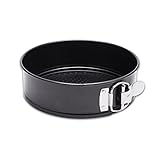
The base-to-ring fit is the most important construction detail. Look for a base that sits inside or firmly beneath the ring with a continuous contact area rather than a visibly loose, narrow edge. A small amount of movement when the ring is closed is normal; a base that rocks, spins freely, or leaves a visible gap is a warning sign.
The latch should close with firm, consistent resistance. It should not require excessive force, scrape against the ring, or open when you gently lift the filled pan. A latch that feels flimsy can loosen as the metal expands in the oven. Some pans include a protective outer sleeve or catcher; this can help contain drips but should not be mistaken for a watertight seal.
To test a new pan before mixing cheesecake batter, close the ring around the base and fill it with 2 to 3 cups of water over a sink. Leave it for five minutes, then inspect the seam and the underside. This is a practical screening test, not a guarantee under heat. For a water bath, place the pan in a roasting bag or wrap the lower portion with two wide layers of heavy-duty foil, pressing the foil high against the sides.
4. Comfort and Baking Performance
A springform pan should be easy to operate with one hand while the other supports the ring. A latch handle with a smooth, rounded edge is more comfortable than a thin stamped tab. The ring should release gradually instead of springing open abruptly, which can damage a soft cheesecake.
Weight is a useful, if imperfect, durability clue. A 9-inch budget pan may weigh about 1 to 1.5 pounds; a heavier midrange or premium pan may fall around 1.5 to 2.5 pounds. Weight alone does not prove better sealing, but extremely thin walls and a very light ring can distort more easily.
Check whether the base is flat enough for a cooling rack and serving plate. A raised edge can help keep batter contained but may make sliding the cheesecake onto a platter harder. Before buying, confirm whether the base is dishwasher-safe, hand-wash only, or likely to lose its finish in a dishwasher. Hand washing usually extends the life of nonstick coatings.
5. Price Tiers
Budget, $12 to $22: This tier includes many 9-inch nonstick pans and bundled protectors. Examples in the category include the Molgree model listed at $18.97, HIWARE at $15.99, and Hikolvol at $18.98. Expect useful everyday performance, but inspect the latch and base fit as soon as the pan arrives. Coating consistency and long-term hinge durability can vary.
Midrange, $23 to $35: You may get thicker steel, a more substantial latch, a better-finished rim, or clearer care instructions. The improvement is worthwhile for frequent bakers, especially if you make cheesecakes several times a month or regularly use a water bath.
Premium, $36 to $55 or more: Premium pricing should correspond to measurable construction benefits such as heavier-gauge material, a reinforced base, a reliable coating, replacement-part support, or a meaningful warranty. The USA Pan Global Leak-Proof Classic Nonstick 9-Inch model, listed at $39.99, sits in this type of price range. A higher price is not proof that the seam is actually watertight, so review the return policy and inspect the pan.
6. Warranty and Return Coverage
Look for at least a 30-day return window, and preferably 60 to 90 days when the pan is sold through a retailer with straightforward kitchenware returns. A warranty of one year is a reasonable baseline for a frequently used pan; longer coverage is more useful when it applies to coating failure, warped components, or a defective latch rather than only manufacturing defects.
Read the exclusions. Scratches from metal utensils, dishwasher damage, overheating, and normal coating wear are often excluded. Keep the order confirmation and photograph the seam, latch, and base before first use. If a pan leaks during the water test or the ring will not close evenly, return it before baking with it.
7. Delivery and Assembly
Springform pans require no assembly beyond closing the ring around the base, but shipping can bend a rim or misalign the latch. Check the pan within 24 to 48 hours of delivery. Confirm that the ring closes fully, the base sits level, and the latch does not rub or pop open.
For a 9-inch pan, allow at least 10 inches of clear shelf width and approximately 3.5 inches of vertical space for the pan itself. Add room for a cheesecake carrier or loose foil wrap. If ordering online, check the listed package dimensions and shipping weight; a pan advertised as 9 inches may have an outside width closer to 10 inches. Do not pay extra for fast delivery unless you have enough time to test the pan and replace it before your baking date.
Spec Checklist
| Spec | Budget | Mid | Premium |
|---|---|---|---|
| Typical price | $12–$22 | $23–$35 | $36–$55+ |
| Best diameter | 9 inches | 9 inches | 9 inches, or specialty sizes |
| Typical depth | 2.5–3 inches | 2.5–3 inches | 2.75–3.5 inches |
| Approximate weight target | 1–1.5 lb | 1.5–2 lb | 1.5–2.5 lb |
| Recommended max temperature | At least 400°F | At least 400°F | At least 425°F |
| Leak-control priorities | Even base fit and foil wrap | Firm latch and snug base | Reinforced seam and strong latch |
| Care | Hand wash preferred | Hand wash preferred | Follow manufacturer instructions |
Red Flags
- The listing says “leakproof” but does not show the base-to-ring design or explain testing.
- The latch is unusually thin, crooked, loose, or difficult to close.
- The coating type, maximum temperature, or care instructions are missing.
- The pan has a visible gap when closed or the base rocks on a flat counter.
- Reviews repeatedly mention warped rims, broken latches, peeling coating, or batter escaping.
- The product dimensions list only the shipping box, not the pan’s interior and exterior measurements.
- A protector is presented as a replacement for a proper water-bath barrier.
FAQ
Are springform pans truly leakproof for cheesecake?
Usually, “leakproof” means the pan is designed to minimize leakage, not that it is permanently watertight. Thin batter can pass through a removable-base seam. Use foil or an oven-safe roasting bag for water-bath baking, and test the empty pan with water before use.
Is a 9-inch springform pan best for cheesecake?
For most standard recipes, yes. A 9-inch pan usually provides about 2.5 to 3 inches of depth and a capacity near 9 to 10 cups. Always check the recipe’s specified size before substituting an 8- or 10-inch pan.
Should I choose nonstick or uncoated metal?
Nonstick is more convenient for releasing cheesecake and cleaning the ring, while uncoated metal can tolerate more aggressive handling. For most home bakers, a quality nonstick coating paired with silicone utensils and hand washing is the practical choice.
Can I bake cheesecake without a water bath?
Yes. A water bath helps moderate temperature and humidity, but it is not mandatory. You can place a pan of hot water on a lower oven rack or bake directly with careful temperature control. Regardless of method, a firm latch and well-fitted base reduce the chance of losing filling through the seam.