Key takeaways
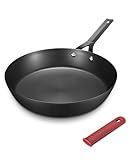
- Silicone: Usually the easiest option to wipe clean. A quality holder may be rated around 450°F to 500°F, but always distinguish the holder’s rating from the pan’s rating. Silicone is best for moving a skillet on the stovetop or briefly handling it after cooking.
- Cotton or quilted fabric: Comfortable and inexpensive, often sold in multipacks. Fabric can provide good insulation for short handling, but it may absorb grease and should not be assumed to be oven safe. Many cotton covers cost about $10 to $20 per set.
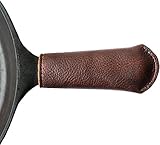
- Leather: Attractive, durable, and suitable for a rustic kitchen. Leather handle covers commonly cost $15 to $30. They can darken, stiffen, or develop an odor when exposed to oil and high heat, so they are generally better for stovetop handling than continuous oven use.
- Wood: Comfortable and naturally insulating, especially on fajita-style serving pans. Wood should stay dry and away from prolonged direct heat. Check whether the wood is sealed and whether the handle is removable for cleaning.
What's inside
Choosing a cast iron skillet handle is less about appearance than control. The wrong style can make a 10-pound pan awkward to lift, leave your hand too close to a hot oven wall, or add bulk that prevents the skillet from fitting in a cabinet. Many shoppers make the mistake of choosing a cover by color alone, assuming every “universal” sleeve fits every pan. Others buy a decorative leather or cotton handle without checking whether it is intended for stovetop use, oven use, or brief handling only.
This guide explains how to choose cast iron skillet handle styles based on fit, heat protection, grip, storage, and price. The goal is not to find one universally best handle. It is to match the handle style to the way you cook, the size of your skillet, and how often you move it while it is hot. These considerations remain useful in 2026, whether you are replacing a worn cover or buying accessories for a new pan.
As an Amazon Associate we earn from qualifying purchases at no extra cost to you. Product prices and availability are accurate as of the date shown and are subject to change.


Decide These 3 Things First
- How hot will the handle get? A stovetop-only cover may need to tolerate brief contact with a hot pan handle, while an oven-safe solution must be rated for the temperatures you actually use. Many fabric sleeves are heat resistant but not intended to remain on a skillet inside a hot oven.
- How heavy is your skillet? A 10-inch cast iron skillet commonly weighs about 5 to 6 pounds empty; a 12-inch model may weigh 7 to 9 pounds before food is added. Choose a handle that provides a secure grip rather than one that merely looks substantial.
- Do you need portability or storage efficiency? A short slip-on sleeve is easy to remove and store. A permanently attached auxiliary handle offers more control but can increase the skillet’s footprint by 4 to 6 inches and may interfere with lids, racks, or neighboring burners.
Size and Fit
Fit is the first decisive factor in how to choose cast iron skillet handle styles. Measure the straight portion of the main handle, not the curved end or the opening near the pan. Many standard covers are designed for a handle roughly 4 to 5 inches long, but the interior width may vary from about 1.25 to 2 inches.
A cover that is too loose can slide during lifting. One that is too tight may be difficult to pull over a thick handle and can split at the seam. Look for an interior opening at least 0.125 inch wider than the handle’s thickest section, but avoid excess space greater than about 0.25 inch. For a large skillet or a pan with a long, tapered handle, verify the dimensions rather than relying on the word “universal.”
Also account for helper handles. A 10- to 12-inch skillet often has a small opposite handle or thumb grip. If you regularly lift the pan with two hands, consider a second grip or a silicone mitt that covers more of the pan’s side. A single main-handle sleeve will not solve an unstable lift.
Material and Heat Rating
Handle materials generally fall into four categories: silicone, cotton or quilted fabric, leather, and wood. Each has a different balance of heat resistance, flexibility, cleaning convenience, and style.
- Silicone: Usually the easiest option to wipe clean. A quality holder may be rated around 450°F to 500°F, but always distinguish the holder’s rating from the pan’s rating. Silicone is best for moving a skillet on the stovetop or briefly handling it after cooking.
- Cotton or quilted fabric: Comfortable and inexpensive, often sold in multipacks. Fabric can provide good insulation for short handling, but it may absorb grease and should not be assumed to be oven safe. Many cotton covers cost about $10 to $20 per set.
- Leather: Attractive, durable, and suitable for a rustic kitchen. Leather handle covers commonly cost $15 to $30. They can darken, stiffen, or develop an odor when exposed to oil and high heat, so they are generally better for stovetop handling than continuous oven use.
- Wood: Comfortable and naturally insulating, especially on fajita-style serving pans. Wood should stay dry and away from prolonged direct heat. Check whether the wood is sealed and whether the handle is removable for cleaning.
Never leave a cotton, leather, or wooden sleeve on a skillet inside a hot oven unless the manufacturer specifically approves that use and temperature. A cover that protects your hand at 350°F for a few seconds may not safely tolerate 450°F for 30 minutes.
Construction and Attachment
Construction determines whether a handle cover stays in place when the pan is full. Slip-on sleeves are the simplest: they slide over the existing handle and can be removed for washing or oven use. Look for a snug opening, reinforced stitching, and a length of at least 4 inches for a standard skillet.
Silicone holders often use molded channels or internal ridges to prevent rotation. These are useful when pouring gravy or flipping food because the holder is less likely to twist. A thumb stop or closed end can further improve control, although a completely closed design may trap moisture if stored before it is dry.
Attached auxiliary handles use screws, brackets, or a pan-specific mounting system. They can improve leverage on larger skillets but require more attention to hardware. Stainless steel screws are preferable in a humid kitchen, and the attachment should not loosen when the pan is lifted with one hand. If the handle is removable, confirm whether a screwdriver is needed and whether the hardware is included.
For serving pans, wooden bases and anti-scald covers can add both presentation and protection. A two-piece fajita skillet set priced around $30 to $40 may be practical for entertaining, but it is not necessarily a substitute for a high-temperature handle holder used during oven cooking.
Comfort and Performance
A comfortable handle should let you wrap your fingers around it without pinching against the pan. For most adults, an exterior grip diameter or thickness of about 1.25 to 1.75 inches feels more substantial than a bare cast iron handle while remaining easy to control. Very bulky covers can reduce leverage, especially for smaller hands.
Consider the shape of your grip. A rounded silicone sleeve is easy to hold from multiple angles. A quilted cotton cover feels softer but may compress under a heavy load. Leather tends to become more comfortable over time but may offer less cushioning than silicone or padded fabric.
Heat protection should cover the portion of the handle that your hand actually touches. A short sleeve that leaves the last inch exposed may be acceptable for a cool stovetop handle but frustrating when transferring a skillet from a 400°F oven. For oven-to-table cooking, use a separate high-temperature mitt or silicone grip after removing the pan from the oven, and keep the handle cover away from direct heating elements.
Finally, assess cleaning. Silicone can usually be wiped or washed easily. Cotton should be machine washable only if the label says so; padding can retain oil and moisture. Leather generally needs spot cleaning rather than soaking. A removable design is valuable if you cook bacon, steak, or foods that splatter.
Price Tiers
Handle styles are available at several useful price levels:
- Budget: $7 to $15: Basic silicone holders and multipacks of cotton sleeves. These are suitable for occasional stovetop handling and households that want a spare cover.
- Midrange: $16 to $30: Better-finished leather covers, thicker fabric sets, and silicone designs with more secure interiors. This is often the best value for frequent home cooks.
- Premium or specialty: $31 to $60: Coordinated serving sets, custom-fit covers, or systems with auxiliary handles and wooden bases. Pay for a specific improvement, such as better fit or two-handed control, rather than decoration alone.
For context, an inexpensive silicone holder such as a Lodge-style 9-inch-and-larger model may sell for about $8, while a cotton multipack may be around $16. A standard leather cover may cost about $20. A two-skillet fajita serving set with wooden bases may be about $33. Prices change, so compare dimensions and use ratings rather than assuming the most expensive option is safest.
Warranty and Durability
A handle cover is a small purchase, but warranty language can reveal how seriously the manufacturer treats fit and construction. Look for at least a 30-day return period, clear material information, and a stated replacement policy for torn seams, cracked silicone, or defective hardware. A one-year limited warranty is a useful advantage for an attached or premium handle system.
Durability depends heavily on use. Silicone can harden or discolor over time, especially when exposed to direct flame. Cotton stitching may loosen after repeated washing. Leather can last for years if kept dry and lightly conditioned, but it is not maintenance-free. A cover used several times a week should have reinforced seams and a washable or easily cleanable surface.
Delivery and Assembly
Simple sleeves usually arrive ready to use, but check the listed dimensions before ordering because fit is more important than fast delivery. For attached handles or serving sets, confirm that screws, brackets, wooden bases, and care instructions are included. Assembly should generally take less than 10 minutes with a standard screwdriver; a complicated installation is a warning sign unless the handle provides a meaningful safety or control benefit.
Also inspect the packaging when it arrives. Silicone should not have deep cuts, fabric should have even stitching, and leather should not arrive damp or strongly chemical-smelling. If a skillet set includes a wooden base, make sure the pan sits level and that the base does not wobble on a counter.
Spec Checklist
| Spec | Budget | Mid | Premium |
|---|---|---|---|
| Typical price | $7–$15 | $16–$30 | $31–$60 |
| Best material | Silicone or cotton | Thick silicone, quilted cotton, or leather | Custom-fit silicone, leather, or multi-piece systems |
| Target handle length | About 4–5 inches | About 4–6 inches | Pan-specific or adjustable |
| Interior clearance | Handle width plus 0.125–0.25 inch | Snug molded or padded fit | Custom fit with anti-slip structure |
| Heat guidance | Brief stovetop handling | Stovetop and short transfers | Clearly stated temperature and use limits |
| Cleaning | Wipe-clean or basic wash | Removable and washable where specified | Replaceable parts or easy-care materials |
Red Flags
- No interior dimensions, handle-size guidance, or information about compatible skillet sizes.
- A claim such as “heatproof” without a temperature rating or instructions for oven use.
- Loose fabric, exposed stitching, sharp hardware, or silicone that feels thin and easily stretched.
- A leather cover that does not explain whether it is treated, washable, or intended only for brief handling.
- An attached handle with no information about screws, mounting, weight capacity, or replacement parts.
- A cover that blocks a helper handle, prevents a lid from sitting flat, or extends into the burner area.
- Care instructions that conflict with the material, such as soaking unfinished leather or placing an unrated fabric sleeve in the oven.
FAQ
What is the safest style for a cast iron skillet handle?
A snug silicone holder with a clearly stated heat rating is usually the most practical choice for stovetop handling. For removing a skillet from the oven, use a properly rated oven mitt or glove as well. No handle cover should replace appropriate protection for prolonged contact with a very hot pan.
Are cotton cast iron handle covers worth buying?
Yes, if you want an inexpensive, comfortable cover for short transfers and you follow the care instructions. Cotton covers are especially useful as multipacks, but they can absorb grease and should not be placed in the oven unless specifically rated for that use.
Should a leather handle cover be tight?
It should fit snugly enough that it does not slide or rotate when the skillet is lifted, but it should not require force that damages the seam. Compare the cover’s interior dimensions with the thickest part of your skillet handle before buying.
Do larger skillets need a different handle style?
Usually. A 12-inch skillet can weigh 7 to 9 pounds empty, so a secure, moderately padded grip and a usable helper handle matter more than they do on an 8-inch pan. For very heavy cookware, choose a style that supports two-handed lifting and does not interfere with lids or storage.