Key takeaways
- Table of Contents 7 sections 9 min read 1 Quick Verdict 2 Side by Side 3 Where Enamel Coated Cast Iron Wins 4 Where Raw Cast Iron Skillet Wins 5 Cost Over 5 Years 6 Which One for Your Home…
What's inside
Choosing between an enamel coated cast iron skillet and a raw cast iron skillet is less about which material is “better” and more about how you cook, clean, store, and move cookware around your home. Both retain heat exceptionally well, work on gas, electric, and many induction cooktops, and can move from stovetop to oven. The meaningful differences are in maintenance, acidic foods, surface feel, weight, price, and tolerance for everyday abuse.
Enamel coated cast iron gives you a glass-like cooking surface over a heavy iron body. It does not require seasoning and is especially convenient for tomato sauces, braises, and other acidic recipes. Raw cast iron has an exposed, seasoned iron surface. It generally costs less, develops a naturally slick cooking surface over time, and can handle high-heat searing, but it needs more careful cleaning and drying.
As an Amazon Associate we earn from qualifying purchases at no extra cost to you. Product prices and availability are accurate as of the date shown and are subject to change.


Quick Verdict
Choose enamel coated cast iron if you want the easiest care, cook acidic foods often, or prefer cookware that can go from the kitchen to the table without looking utilitarian. It is a strong choice for braises, skillet dinners, shallow frying, and households where several people share kitchen duties.
Choose a raw cast iron skillet if you want maximum value, high-heat versatility, and a pan that can improve with use. Raw cast iron is usually the better buy for steak, cornbread, burgers, outdoor cooking, and cooks who do not mind a short drying-and-oiling routine after washing.
For a single all-purpose pan, a 10- or 12-inch raw skillet is usually the budget winner. For low-maintenance daily cooking, an enameled 10-inch pan or a 3- to 4-quart enameled braiser is often the more comfortable long-term choice.
Side by Side
| Factor | Enamel Coated Cast Iron | Raw Cast Iron Skillet |
|---|---|---|
| Comfort | Heavy, usually about 5-9 pounds depending on size; smooth interior | Heavy, commonly about 4-8 pounds; helper handles vary by model |
| Durability | Iron body lasts for decades, but enamel can chip or craze if abused | Extremely durable; surface can be restored through reseasoning |
| Price range | About $45-$350, with many everyday pans around $50-$150 | About $20-$150; sets commonly cost $40-$100 |
| Maintenance | Wash with mild dish soap; no seasoning required | Dry immediately and apply a thin coat of oil as needed |
| Space needed | Similar footprint, but thick walls and lids can consume cabinet space | Similar footprint; nesting sets save room but may scratch surfaces |
| Look | Decorative colors and a presentable serving surface | Traditional black finish with a more utilitarian appearance |
| Resale | Recognizable brands and intact enamel hold value; chips reduce appeal | Well-known brands and vintage pieces can retain value exceptionally well |
| Best for | Acidic sauces, braises, easy cleanup, and table serving | Searing, baking, frying, camp cooking, and maximum value |
Where Enamel Coated Cast Iron Wins
The biggest advantage is convenience. Enamel creates a nonporous barrier between food and the iron, so you do not need to build or preserve a seasoning layer. You can cook tomato sauce, wine-based dishes, citrus-marinated foods, and vinegar-rich recipes without worrying that acidity will gradually strip seasoning or create a metallic taste.
Cleanup is more straightforward, too. After the pan cools, soak it briefly if necessary and wash it with warm water, dish soap, and a nonabrasive sponge. Avoid thermal shock: do not pour cold water into a blazing-hot pan, and do not place a hot enameled pan on a wet or cold surface. The iron remains heavy and slow to cool, so a sturdy trivet is useful.
Enamel also wins visually. A colored exterior can coordinate with a kitchen, while an enameled interior is suitable for serving at the table. That makes a braiser particularly useful for households that want one vessel to handle browning, oven cooking, and presentation. For example, the Lodge Essential Enamel Cast Iron Braiser, 3.6 Quart, Oyster White is listed at $79.90, placing a medium-size enameled braiser within reach of many home cooks. A 3.6-quart capacity is appropriate for a small roast, several chicken thighs, or a family-sized one-pot meal, though it will not replace a large stockpot.
There are tradeoffs. Enamel can chip if the pan is dropped or struck against a sink, and metal utensils may leave marks on some finishes. It is also not a truly nonstick surface: eggs and delicate fish still benefit from adequate preheating and fat. Once enamel is badly chipped on the cooking surface, replacement is generally safer than attempting a home repair.
Where Raw Cast Iron Skillet Wins
Raw cast iron offers more performance for less money. It is excellent for high-heat browning because the thick iron retains heat when cold food hits the surface. A properly seasoned skillet can also become quite slick, especially for potatoes, grilled sandwiches, cornbread, and burgers.
It is the more forgiving option when appearance matters less than toughness. Raw iron can tolerate metal spatulas, high oven temperatures within the manufacturer’s limits, grill grates, and even campfire cooking. If the surface becomes dull, sticky, or lightly rusty, it can usually be scrubbed, dried, oiled, and reseasoned.
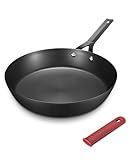
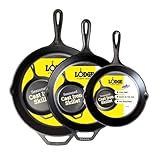
Sets make raw cast iron particularly economical. The Lodge Pre-Seasoned Cast Iron Skillet Set, with 8-, 10.25-, and 12-inch skillets, is listed at $64.90. That gives a household small, medium, and large cooking surfaces for less than many single premium enameled pieces. The WANGYUANJI three-piece raw iron set, in 6-, 8-, and 10-inch sizes, is listed at $42.99 and emphasizes compact portions and nesting storage.
Maintenance is manageable but real. Wash away food residue, dry the pan completely—on a warm burner if needed—and wipe on an extremely thin layer of cooking oil. Do not leave water standing in it. Occasional soap is acceptable for a well-seasoned pan; the key is drying and restoring the surface afterward. Raw cast iron can also add small amounts of dietary iron to food, particularly with acidic or moist recipes, but it should not be treated as a predictable supplement.
Cost Over 5 Years
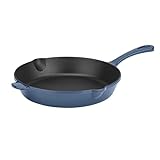
Assume one 10-inch pan used several times weekly. A basic raw cast iron skillet may cost $25-$45, while a mainstream enameled skillet often costs about $45-$120. A premium enameled piece can cost considerably more. The Cuisinart CI22-24BG Chef’s Classic Enameled Cast Iron Round Fry Pan, 10-Inch, Provencal Blue, for example, is listed at $45.22, showing that an enameled option does not always require a premium-brand budget.
Over five years, the purchase price is usually the main cost. Raw cast iron may require a few dollars of oil for seasoning and occasional replacement of a lid or accessory, but routine upkeep is minimal. Enamel needs no seasoning oil, although a damaged pan may be difficult or impossible to restore economically.
On a simple five-year ownership estimate, a $30 raw skillet costs about $6 per year, while a $60 enameled skillet costs about $12 per year. If the raw pan is neglected and rusts, refinishing takes time; if enamel is chipped through careless handling, replacing a $60-$150 pan can erase its initial savings. In practice, careful users can keep either type for decades.
Which One for Your Home
Small apartment
Pick one 10-inch pan unless you regularly cook for more than two people. An enameled pan is attractive when cabinet space is limited because it can serve directly at the table, but raw cast iron offers more capability per dollar. Check the pan’s diameter against your largest burner and plan for a stable storage spot; a 10-inch skillet often needs roughly 12-14 inches of vertical clearance when stored with its handle extended.
Family with kids or pets
Enamel is appealing for its easy cleanup and colorful appearance, but its weight requires caution. A 10-inch pan can weigh around 5-7 pounds before food, and a larger 12-inch pan may approach 8 pounds or more. Keep either type toward the back of the stove, turn handles inward, and use two hands for heavy, full pans. If frequent spills and shared cleanup are likely, enamel’s soap-friendly surface may be worth the additional cost.
Rental
Raw cast iron is the practical value choice if you need durable cookware without investing heavily in a temporary kitchen. It can tolerate rougher use and is inexpensive to replace. Enamel is preferable if you are concerned about acidic stains, complicated cleanup, or keeping the kitchen looking polished for an inspection. In either case, lift rather than slide the pan across a glass cooktop or countertop.
Long-term home
Consider owning one of each. Use raw cast iron for high-heat searing, baking, and foods that benefit from a deeply seasoned surface. Use enamel for stews, tomato-based meals, braises, and recipes that move from oven to dining table. This pairing covers more cooking styles than buying an oversized version of either pan.
FAQ
Is enamel coated cast iron safer than raw cast iron?
Both can be safe when used according to the manufacturer’s instructions. Enamel reduces direct contact with iron and avoids seasoning maintenance, while raw cast iron is safe when properly cleaned, dried, and maintained. Do not use cookware with exposed structural damage, severe rust, or badly chipped enamel on the cooking surface.
Can enamel coated cast iron go in the oven?
Usually, yes, but the maximum temperature depends on the cookware’s handles, lid knob, and manufacturer instructions. Some lids have lower limits than the pan itself. Avoid broiling unless the instructions specifically allow it, and never use an enameled pan on an open campfire unless it is designed for that purpose.
Can I cook tomatoes in a raw cast iron skillet?
Yes, especially in a well-seasoned skillet and for shorter cooking times. Long simmering of highly acidic foods can weaken seasoning and sometimes produce a metallic flavor. For extended tomato, wine, or vinegar-based cooking, enamel is the lower-maintenance choice.
Which size cast iron skillet should I buy first?
A 10-inch skillet is the most versatile starting point for one or two people, while a 12-inch skillet is better for families or batch cooking. An 8-inch pan is useful for eggs and small portions but is less flexible as a sole skillet. Remember that usable cooking area is smaller than the outside diameter because cast iron walls are thick.