Key takeaways
- Table of Contents 7 sections 10 min read 1 Quick Verdict 2 Side by Side 3 Where French Skillet Wins 4 Where Standard Frying Pan Differences Wins 5 Cost Over 5 Years 6 Which One for Your Home 6.1 Small…
What's inside
Choosing between a French skillet and a standard frying pan is less about finding a universally “better” shape and more about matching the pan to how you cook, store cookware, and maintain your kitchen. Both can sauté vegetables, brown meat, fry eggs, and build a weeknight meal, but their sidewalls, handles, materials, and maintenance demands create noticeably different experiences.
The real decision is whether you want the broader cooking surface and efficient tossing of a French skillet, or the lower sides, lighter handling, and often easier cleanup of a standard frying pan. Material matters just as much as shape: a carbon-steel French skillet behaves very differently from an 8-inch nonstick frying pan. The following guide breaks down the French skillet vs standard frying pan differences so you can make a practical choice for your home in 2026.
As an Amazon Associate we earn from qualifying purchases at no extra cost to you. Product prices and availability are accurate as of the date shown and are subject to change.


Quick Verdict
Choose a French skillet if you regularly sear, sauté, reduce sauces, or cook larger portions and want a pan that can last for many years. Its sloped sides provide more usable cooking area and make it easier to turn food with a spatula or toss ingredients. Carbon steel and stainless steel versions can also tolerate high heat and develop a durable cooking surface when cared for properly.
Choose a standard frying pan if you prioritize simple cleanup, low weight, compact storage, or a forgiving surface for foods such as eggs, pancakes, and delicate fish. Nonstick standard pans are especially convenient for smaller households, though their coating generally has a shorter useful life than bare carbon steel or stainless steel.
Side by Side
| Factor | French skillet | Standard frying pan |
|---|---|---|
| Shape | Broad base with moderately sloped sides, often about 2 to 3 inches high | Flatter profile with lower, straighter, or gently curved sides, commonly 1.5 to 2.5 inches high |
| Comfort | Good maneuverability for tossing and spatula access; carbon steel can feel heavy | Often lighter and easier for one-handed use, especially in 8-inch sizes |
| Durability | Carbon steel and stainless models can last decades with proper care | Nonstick models commonly last about 3 to 5 years; stainless can last much longer |
| Price range | About $30 to $150 or more, depending on steel thickness and finish | About $16 to $180, with basic nonstick at the low end and premium stainless higher |
| Maintenance | Bare carbon steel needs seasoning, drying, and occasional oiling | Nonstick needs gentle utensils and hand washing; stainless needs more attention to sticking |
| Space needed | A 10- to 12-inch model needs a wide cabinet slot and usually a larger burner | 8- to 10-inch models fit more easily in small cabinets and on compact stovetops |
| Look | Professional, traditional appearance; black carbon steel develops patina | Broad style range, from glossy nonstick finishes to polished stainless steel |
| Resale | Well-maintained, recognizable carbon-steel pans may retain useful value | Used nonstick pans typically have limited resale value once visibly worn |
| Best for | Searing, sautéing, browning, and cooking larger portions | Eggs, pancakes, quick meals, small portions, and easy cleanup |
Where French Skillet Wins
A French skillet’s most useful feature is its balance between a sauté pan and a traditional fry pan. The sloped sides expose more of the cooking surface, so a turner can slide beneath food without catching on a sharp corner. Those sides are also high enough to contain vegetables, ground meat, or a pan sauce better than a very shallow frying pan.
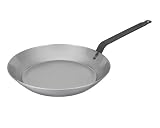
This shape is particularly effective for browning. A 10- to 12-inch French skillet usually provides roughly 80 to 100 square inches of usable base area, depending on the design. That gives ingredients room to contact the hot surface instead of steaming in a crowded pile. A 12 5/8-inch Matfer Bourgeat Black Carbon Steel Frying Pan, listed at $133, illustrates the larger, professional-style end of the category. It is the kind of size that suits multiple chicken breasts, a full batch of vegetables, or a family-size hash.
Carbon steel is another advantage. It can handle high stovetop heat and, when seasoned, develops a naturally slick surface without relying on a synthetic coating. The pan is also generally lighter than cast iron of a similar diameter, although a large carbon-steel skillet may still weigh several pounds and feel awkward when full.
French skillets also offer long-term value. With prompt drying and a thin coat of oil, a carbon-steel pan can remain useful for decades. The surface can be re-seasoned if food sticks or rust appears. The tradeoff is that acidic foods such as tomatoes, wine reductions, and vinegar-heavy sauces can temporarily affect seasoning, especially in a newer pan.
For shoppers seeking a lower entry price, the 10 3/8-inch Winco Carbon Steel Fry Pan French is listed at $35.33. That price point shows why French-style carbon steel can be accessible without moving immediately into premium cookware. The key question is whether you are willing to perform the maintenance that makes the material worthwhile.
Where Standard Frying Pan Differences Wins
Standard frying pans win on convenience and variety. They are available in compact 8-inch sizes, mid-size 10-inch options, and larger 12-inch versions, with nonstick, stainless steel, ceramic, hard-anodized, and coated aluminum constructions. That makes it easier to choose a pan around a specific task rather than committing to one all-purpose shape.
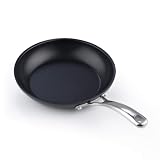
Nonstick is the clearest advantage for delicate foods. Eggs, crepes, flaky fish, and grilled cheese generally release with less effort, and cleanup can take only a few minutes. An 8-inch pan is also easier to lift with one hand and uses less storage space. The CAROTE Nonstick Frying Pan, 8 Inch Classic Granite Skillet, is listed at $15.99, while the Cooks Standard 8-inch Small Hard Anodized Nonstick Frying Pan, Heavy-Gauge, is listed at $34.99. Both price examples fit the compact-pan category, where affordability and convenience are often more important than maximum capacity.
Standard pans are also a practical choice for cooks who do not want to season cookware. A coated pan can go from cabinet to stovetop without a preparation step. However, the coating needs protection: use silicone, wood, or other manufacturer-approved utensils, avoid overheating an empty pan, and check the care instructions before putting it in a dishwasher.
The lower sides of a standard frying pan can be a disadvantage for saucy or crowded foods, but they make flipping easier. If you frequently turn pancakes, omelets, or individual portions of fish, the open profile gives your spatula more room. A standard pan may also be preferable on a small electric or induction cooktop, where a 12-inch French skillet could extend beyond the most efficient heating zone.
Cost Over 5 Years
Purchase price alone does not tell the whole story. A basic nonstick frying pan may cost $16 to $35, but replacing it once or twice over five years can bring the total to approximately $32 to $105, before considering shipping or accessories. A midrange standard pan priced at $40 to $80 may last the full period if its coating remains intact, but replacement depends heavily on heat exposure and daily use.
A carbon-steel French skillet may cost $35 to $135 initially. Add approximately $5 to $15 over five years for cooking oil used in seasoning and routine maintenance, and the ownership cost could remain near the original price. The expensive part is time: drying, oiling, and occasionally restoring the surface. Stainless-steel French or standard pans may cost $60 to $180 but usually avoid coating replacement and seasoning supplies.
For a realistic comparison, a $35 nonstick pan replaced twice costs about $105 over five years. A $133 carbon-steel skillet used for the same period may cost about $140 including maintenance supplies, but it could continue working well beyond year five. These are planning estimates, not guarantees; cooking frequency, care, storage, and heat levels make a major difference.
Which One for Your Home
Small apartment
Choose an 8- or 10-inch standard frying pan if cabinet space and burner size are limited. A nonstick model is especially useful when you cook one or two portions and want fast cleanup. If you cook mostly stir-fries, steaks, or large batches, a 10-inch French skillet can still work, but measure the cabinet and stovetop first. Allow about 12 to 14 inches of width for a pan and its handle.
Family with kids or pets
A 10- to 12-inch pan with a stable, heat-resistant handle is usually the better family choice. A French skillet provides room for larger portions and reduces the need to crowd food. Carbon steel is durable, but its exposed metal handle can become hot, so use a mitt and keep the handle turned away from traffic. A standard nonstick pan is convenient for quick meals, but replace it if the coating becomes deeply scratched or visibly deteriorated.
Rental
Renters who want low commitment should consider a standard frying pan in the $20 to $60 range. It is easy to replace if damaged during a move and does not require a seasoning routine. A French skillet makes sense if you already own basic nonstick cookware and want one durable pan that can travel with you. Confirm whether the cooktop is induction-compatible before buying, particularly if you are choosing an aluminum-based pan.
Long-term home
For a permanent kitchen, a carbon-steel French skillet is a strong investment if you enjoy cooking and do not mind maintenance. Pair it with a small nonstick standard pan for eggs and other delicate foods. This two-pan setup covers most daily tasks more effectively than asking one coated pan or one bare-metal pan to do everything.
FAQ
Is a French skillet the same as a frying pan?
Not exactly. A French skillet is a type of frying pan with sloped sides and a relatively broad cooking surface. The terms overlap in product listings, but “French skillet” usually signals a deeper, more angled profile than a shallow standard frying pan.
Which is better for steak?
Either can work, but carbon-steel or stainless-steel French skillets are generally better suited to high-heat searing and larger steaks. A nonstick standard frying pan is better reserved for moderate heat because excessive heat can shorten the coating’s life.
Can a French skillet go in the oven?
Many bare carbon-steel and stainless-steel French skillets are oven-safe, but the maximum temperature depends on the handle and construction. Check the manufacturer’s instructions. A pan with a silicone-covered or plastic handle may have a lower limit than an all-metal model.
Do I need both types of pan?
Not necessarily, but they complement each other. A French skillet handles browning, larger portions, and high-heat cooking, while a small standard nonstick pan makes eggs and quick cleanup easier. If you can buy only one, choose based on your most frequent meals and your willingness to maintain the cooking surface.