Key takeaways
- Excellent temperature responsiveness. Copper heats and cools more quickly than stainless steel alone, which is helpful for delicate sauces and foods that easily scorch.
- More even cooking. The copper layer reduces the harsh hot spots common with thin, inexpensive stainless-steel pans.
- Durable cooking surface. Stainless steel tolerates metal utensils, high heat, and acidic ingredients better than many nonstick coatings.
- Versatility. A saucepan can boil, simmer, steam with an insert, reduce liquids, warm milk, cook grains, and finish pan sauces.
- Induction compatibility. Copper itself does not work on induction, but a magnetic stainless exterior can make a copper core pan compatible. Always verify the specific model and cooktop.
- Long service life. With normal care, a well-made clad saucepan can last for decades, making the initial price easier to justify than the cost of repeatedly replacing budget cookware.
- Better control for small quantities. The heat distribution is especially useful when cooking a small amount of food in a pan that still needs to respond predictably.
What's inside
The Short Answer
Yes—if you regularly cook sauces, custards, grains, soups, or other foods that punish uneven heat and you will keep the pan for many years. A copper core saucepan is not worth the high price for occasional boiling or reheating; it is worth it only when precise temperature control matters enough to justify spending roughly $200 to $350 on one pan.
For context, the All-Clad Copper Core 3-quart saucepan is commonly listed around $215, while the 4-quart version can cost about $350. Those prices put copper core cookware firmly in the premium category. The improvement is real, but it is evolutionary rather than magical: you get faster, more responsive heating than with most stainless-steel pans, along with the durability and low-maintenance surface of stainless steel.
As an Amazon Associate we earn from qualifying purchases at no extra cost to you. Product prices and availability are accurate as of the date shown and are subject to change.

What You Actually Get
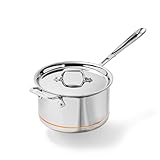
A copper core saucepan sandwiches a layer of copper between layers of stainless steel, usually with a stainless cooking surface and exterior. Copper conducts heat far more efficiently than stainless steel, so the pan spreads heat across the base and responds quickly when you turn the burner up or down. The stainless interior does the practical work: it is nonreactive, durable, and compatible with acidic ingredients such as tomatoes, wine, and citrus.
The main benefit is control. When making béchamel, caramel, pastry cream, risotto, or a reduced sauce, the difference between gentle heat and scorching heat can be a matter of seconds. A responsive pan gives you a better chance of correcting the temperature before food sticks or curdles. It does not eliminate the need to stir, use the right burner, or remove the pan from heat when a recipe calls for it.
The All-Clad Copper Core line is made in the United States and typically includes a fitted lid. The 3-quart model is approximately 8.5 inches across and is a useful size for oatmeal, rice, small batches of soup, gravy, and two-to-four servings of sauce. The 4-quart model is roughly 9.5 inches across and offers more room for pasta sauce, larger batches, and foods that foam while cooking. Exact dimensions and shipping weights can vary by retailer, but expect a premium saucepan in this category to weigh several pounds, especially with the lid.
There is no wattage rating for the saucepan itself. Your cooktop supplies the energy. On electric and induction ranges, a burner or element may provide roughly 1,200 to 2,000 watts for everyday saucepan cooking, while high-power induction zones can provide more. Copper helps the pan use that heat evenly and change temperature quickly; it does not make a 1,500-watt burner perform like a 3,000-watt burner.
Pros
- Excellent temperature responsiveness. Copper heats and cools more quickly than stainless steel alone, which is helpful for delicate sauces and foods that easily scorch.
- More even cooking. The copper layer reduces the harsh hot spots common with thin, inexpensive stainless-steel pans.
- Durable cooking surface. Stainless steel tolerates metal utensils, high heat, and acidic ingredients better than many nonstick coatings.
- Versatility. A saucepan can boil, simmer, steam with an insert, reduce liquids, warm milk, cook grains, and finish pan sauces.
- Induction compatibility. Copper itself does not work on induction, but a magnetic stainless exterior can make a copper core pan compatible. Always verify the specific model and cooktop.
- Long service life. With normal care, a well-made clad saucepan can last for decades, making the initial price easier to justify than the cost of repeatedly replacing budget cookware.
- Better control for small quantities. The heat distribution is especially useful when cooking a small amount of food in a pan that still needs to respond predictably.
Cons
- High upfront cost. Spending about $215 for a 3-quart pan or around $350 for a 4-quart pan is difficult to justify if you mostly boil water or reheat leftovers.
- Weight. Thick, multi-layer construction is reassuring on the stove but can feel heavy when pouring soup or lifting a full pan with one hand.
- Stainless steel requires technique. Food can stick if the pan is cold, the heat is too high, or the ingredients are moved too soon. Copper improves heat control but does not create a nonstick surface.
- Cleaning takes more effort than nonstick. Burnt milk, starch, and browned residue may require soaking and a cookware cleaner. Abrasive scrubbing can dull the finish.
- Exterior discoloration is normal. Heat tint, water spots, and fingerprints may appear over time. They are cosmetic, not evidence that the copper core has stopped working.
- Handles and lids add bulk. Premium construction can take up significant cabinet space, and a long handle may make refrigerator storage awkward.
- The performance gain depends on your recipes. If you cook mostly robust soups, pasta water, or canned foods, you may notice little difference from a good tri-ply stainless pan.
Who Should Buy It
Buy a copper core saucepan if you cook from scratch several times a week and often work with foods that require close heat management. It is particularly appealing for people who make custards, caramel, hollandaise, cream sauces, risotto, polenta, rice, reductions, or homemade baby food. Bakers and serious home cooks may also appreciate the quick response when a recipe changes from simmering to cooling.
It is a sensible purchase for someone replacing an old saucepan and wanting one long-term workhorse rather than a large cookware set. The 3-quart size is the better all-purpose choice for most households. Choose 4 quarts if you frequently cook for four or more people, make large batches, or dislike working near the top of a pan.
It also makes sense for cooks who prefer stainless steel but want more control than a basic single-layer or thin tri-ply pan offers. If you are comfortable paying for construction quality and plan to use the pan for 10 years or longer, the cost per year can become quite reasonable.
Who Should Skip It
Skip copper core if your priority is effortless cleanup. A quality nonstick saucepan will release eggs, dairy, and sticky foods more easily, although its coating may eventually wear and it generally requires more careful utensil use. Also skip it if your cooking is mostly boiling water, warming soup, steaming vegetables, or reheating prepared food. Those jobs rarely demand copper’s faster response.
Budget-conscious cooks should not feel they are settling for unsafe or poor cookware by choosing a less expensive clad stainless pan. A good tri-ply saucepan can distribute heat well enough for everyday cooking, especially on a properly sized burner. People with limited hand strength may also prefer a lighter pan, even if it gives up some heat retention and heft.
Cheaper Alternatives
| Option | Cost | Trade-off |
|---|---|---|
| Quality tri-ply stainless-steel saucepan | $50–$150 | Very good everyday performance, but generally less responsive and sometimes less even than copper core. |
| Five-ply stainless-steel saucepan | $90–$220 | Can offer excellent heat distribution, but may approach copper core pricing while remaining heavier. |
| Hard-anodized aluminum saucepan | $40–$120 | Light and responsive, but compatibility, interior coating, and durability vary by model. |
| Quality nonstick saucepan | $35–$120 | Easiest release and cleanup, but the coating can scratch or wear and usually requires gentler heat and utensils. |
| Traditional copper saucepan with lining | $150–$500+ | Exceptional responsiveness, but often needs more exterior care and may not work on induction. |
FAQ
Is copper core better than tri-ply stainless steel?
Usually, yes, for responsiveness and fine temperature control. The difference is most noticeable with delicate or sticky foods, not with routine boiling. A well-made tri-ply pan remains the better value for many kitchens.
Does a copper core saucepan work on induction?
It can, provided the exterior includes magnetic stainless steel. Copper alone is not induction-compatible. Check the manufacturer’s specifications before buying, particularly if your cooktop uses induction.
Is the 3-quart or 4-quart saucepan more useful?
The 3-quart size is more maneuverable and suits everyday portions, sauces, grains, and side dishes. The 4-quart model is better for family-sized batches and foamy foods, but it costs more and feels heavier when full.
How should you clean a copper core saucepan?
Let it cool, wash it with warm water and dish soap, and soak stuck food rather than attacking it with harsh abrasives. A cookware-safe stainless-steel cleaner can remove discoloration. Avoid heating an empty pan for long periods, and follow the manufacturer’s instructions for the lid and dishwasher use.
Ultimately, the answer to “is a copper core saucepan worth the high price” is conditional: buy one when precision cooking is a regular part of your life. Otherwise, a good tri-ply stainless saucepan delivers most of the practical value for substantially less.