Key takeaways
- Excellent heat retention: Once hot, cast iron stays hot better than thin stainless steel or aluminum. That helps maintain a steady simmer when you add ingredients, although it can also make temperature corrections slower.
- High-heat versatility: Bare cast iron tolerates stovetop, oven, grill, and campfire use when the handle and lid are oven-safe. This is useful for starting a sauce on the stove and finishing it in an oven.
- Durability: There is no synthetic nonstick coating to scratch or wear away. A well-cared-for pan can last for decades, and minor seasoning damage can usually be repaired with cleaning and re-seasoning.
- Stable cooking surface: The weight keeps the saucepan from skittering across the burner when stirring. It also makes the pan feel secure for whisking gravy, stirring beans, or reducing a sauce.
- Useful for small portions: A 1.5- or 2-quart size is practical when a large pot would be wasteful. It can handle roughly 4 to 8 cups of liquid, depending on the fill level needed to prevent splashing.
- Potentially inexpensive: Basic cast iron saucepans often cost less than premium clad stainless-steel pans. That makes them attractive for cooks who value longevity over light weight and fast response.
- Good heat distribution after preheating: Cast iron itself is not the fastest conductor of heat, but a few minutes of gradual preheating can reduce hot-and-cold spots across the cooking surface.
What's inside
The Short Answer
Yes, a bare cast iron saucepan can boil water, milk, pasta water, broth, and other liquids, but it is not the most convenient boiling pan. The deciding condition is that you are comfortable drying it immediately after use and maintaining its seasoning. If you want a lightweight, quick-clean saucepan for daily boiling, stainless steel or enameled cookware is usually the better choice.
For occasional small-batch boiling, bare cast iron works well. Its thick walls hold heat steadily, and it can move from a stovetop to an oven or grill without the temperature limits found on many pans with plastic handles. However, the same heavy construction that makes it stable also makes it slow to heat, heavy to lift, and less forgiving with acidic liquids and long simmering.
As an Amazon Associate we earn from qualifying purchases at no extra cost to you. Product prices and availability are accurate as of the date shown and are subject to change.


What You Actually Get
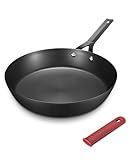
A bare cast iron saucepan is a small, deep cast iron vessel with a handle, and sometimes a helper handle or lid. Most models sold for this purpose hold about 1.5 to 2 quarts. That is enough for oatmeal, sauces, gravy, melted butter, a few servings of soup, or boiling water for one or two portions of food. It is not a replacement for a 4- to 8-quart stockpot.
Expect substantially more weight than the capacity suggests. A compact bare cast iron saucepan may weigh roughly 4 to 7 pounds before adding its contents. A full 2-quart pan can weigh approximately 12 pounds once water is included, so pouring from it requires a secure grip and a heat-safe surface. Check the handle design carefully: a long cast iron handle can become extremely hot, and a lid handle may also require a mitt.
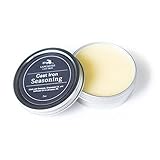
“Bare” means the cooking surface is exposed cast iron rather than coated with enamel. It is commonly sold pre-seasoned, but pre-seasoning is a starting layer, not a permanent nonstick finish. The surface may be smoother or rougher depending on the manufacturer. With regular use and thin applications of cooking oil, seasoning can improve over time.
Cast iron works on gas, electric coil, glass-top electric, and induction ranges when the base is flat enough and the manufacturer approves it. On a glass cooktop, lift rather than slide the pan. A rough or uneven base can scratch the surface, while the pan’s weight can make accidental bumps more consequential.
Pros
- Excellent heat retention: Once hot, cast iron stays hot better than thin stainless steel or aluminum. That helps maintain a steady simmer when you add ingredients, although it can also make temperature corrections slower.
- High-heat versatility: Bare cast iron tolerates stovetop, oven, grill, and campfire use when the handle and lid are oven-safe. This is useful for starting a sauce on the stove and finishing it in an oven.
- Durability: There is no synthetic nonstick coating to scratch or wear away. A well-cared-for pan can last for decades, and minor seasoning damage can usually be repaired with cleaning and re-seasoning.
- Stable cooking surface: The weight keeps the saucepan from skittering across the burner when stirring. It also makes the pan feel secure for whisking gravy, stirring beans, or reducing a sauce.
- Useful for small portions: A 1.5- or 2-quart size is practical when a large pot would be wasteful. It can handle roughly 4 to 8 cups of liquid, depending on the fill level needed to prevent splashing.
- Potentially inexpensive: Basic cast iron saucepans often cost less than premium clad stainless-steel pans. That makes them attractive for cooks who value longevity over light weight and fast response.
- Good heat distribution after preheating: Cast iron itself is not the fastest conductor of heat, but a few minutes of gradual preheating can reduce hot-and-cold spots across the cooking surface.
Cons
- Slow to heat and cool: A cast iron saucepan can take noticeably longer to reach a boil than a lighter aluminum or thin stainless-steel pan over the same burner. If your range has a 1,500- to 1,800-watt electric element, allow extra preheating time and avoid turning the heat aggressively high from cold.
- Heavy and awkward: Four to 7 pounds of empty cookware is a lot for a small saucepan. It is especially inconvenient for children, anyone with limited wrist strength, or cooks who regularly drain hot liquid.
- Seasoning needs protection: Prolonged boiling, especially with salt, can expose weak spots in the seasoning. The pan must be dried promptly, and a very thin coat of oil helps prevent rust.
- Acidic ingredients are a concern: Tomatoes, wine, vinegar, citrus, and some fruit preparations can strip seasoning or pick up a metallic flavor during extended cooking. Brief contact is often manageable in a well-seasoned pan, but a long acidic simmer is a poor match.
- Not naturally nonstick: Boiling plain water is easy, but milk, starch-heavy mixtures, and sticky sauces can cling if the pan is overheated or poorly seasoned. Cleaning requires more attention than rinsing a coated saucepan.
- Heat stays in the handle: The handle can become hot enough to burn skin, even when the pan has only been used on the stovetop. A dedicated mitt or handle cover is essential.
- Pouring can be less controlled: Many cast iron saucepans lack a sharp pouring spout. Moving boiling water or thin sauce to another container may cause drips and requires both hands.
- Maintenance is less convenient: Do not leave the pan soaking, put it away wet, or assume every dishwasher cycle is harmless. These habits can cause rust and degrade the seasoning.
Who Should Buy It
Buy a bare cast iron saucepan if you want a highly durable small pan for occasional boiling, reheating, simmering, and oven use. It suits cooks who already understand cast iron care, have enough hand strength to manage several pounds of cookware, and appreciate steady heat more than rapid temperature changes.
It is particularly useful in a small kitchen where one pan must cover multiple jobs. A 1.5- to 2-quart model can boil eggs, warm soup, prepare rice or grains, melt butter, make gravy, and finish a small baked dish. It is also a sensible option for a cabin, outdoor kitchen, or camping setup where ruggedness matters more than polished convenience.
Two budget examples illustrate the category. The Commercial Chef 2-Qt. Saucepan with Lid, Pre-Seasoned Cast Iron, CHCI20 is listed at $31.44, while the 1.5-quart VONOTO Cast Iron Basting Pot, Melting Pot, Saucepan is listed at $19.99. Compare handle shape, lid fit, interior smoothness, and total weight rather than choosing on price alone.
Who Should Skip It
Skip bare cast iron if boiling is your main reason for buying a saucepan and you want the fastest heating, easiest pouring, or simplest cleanup. It is also a poor fit if you frequently cook tomato sauce, wine reductions, vinegar-based recipes, or other acidic foods for 20 minutes or longer.
People with wrist, shoulder, or grip limitations should consider the full weight of a filled pan. A lightweight 2-quart saucepan may weigh 2 to 4 pounds empty; a cast iron alternative can weigh considerably more. Avoid it as well if you use a delicate glass cooktop and are uncomfortable lifting heavy cookware instead of sliding it.
Cheaper Alternatives
| Option | Cost | Trade-off |
|---|---|---|
| Thin stainless-steel saucepan, 1.5 to 2 quarts | $15-$35 | Much lighter and easier to clean, but it may develop hot spots and does not retain heat as long. |
| Aluminum saucepan, 1.5 to 2 quarts | $12-$30 | Heats quickly and is easy to lift, but basic aluminum can react with acidic foods and may dent. |
| Basic nonstick saucepan, 1.5 to 2 quarts | $18-$45 | Convenient for milk, oatmeal, and sticky sauces, but the coating has a limited lifespan and needs gentler utensils. |
| Enameled steel saucepan, 1.5 to 2 quarts | $20-$45 | Light, easy to maintain, and better for acidic foods, but enamel can chip and the thin body may heat unevenly. |
FAQ
Does boiling water damage bare cast iron?
Occasional boiling does not automatically damage a bare cast iron saucepan. The bigger risks are leaving water in the pan, soaking it for a long time, or storing it while damp. After boiling, empty the pan, wash it with a small amount of mild dish soap if needed, dry it thoroughly over low heat, and apply an extremely thin film of cooking oil.
Can you boil milk in a cast iron saucepan?
Yes, but use moderate heat and stir frequently. Milk can scorch onto a hot cast iron surface, especially because cast iron changes temperature slowly. Avoid prolonged acidic additions, and do not treat the pan as naturally nonstick. A stainless-steel or coated saucepan is generally easier for custards, milk sauces, and oatmeal.
How much water can a cast iron saucepan safely hold?
Use the stated capacity as a maximum, not a practical boiling fill line. In a 2-quart saucepan, keeping the liquid about 1 to 2 inches below the rim leaves room for bubbling and stirring. For vigorous boiling, this usually means using closer to 1.5 quarts or less, depending on the food and pan shape.
Is a bare cast iron saucepan worth buying in 2026?
It is worth buying when durability, heat retention, and multi-purpose use matter more than speed and convenience. For straightforward water boiling, a lighter stainless-steel or aluminum pan is the better everyday tool. Choose bare cast iron when you specifically want its rugged construction and are willing to maintain the seasoning after every use.