Key takeaways
- Table of Contents 7 sections 10 min read 1 Quick Verdict 2 Side by Side 3 Where Sauté Pan Wins 4 Where Skillet for Making Pasta Sauces Wins 5 Cost Over 5 Years 6 Which One for Your Home 6.1…
What's inside
When choosing between a sauté pan and a skillet for making pasta sauces, the real decision is not simply whether one pan is “better.” It is whether you want maximum capacity and control or a lighter, more versatile pan that heats quickly and stores easily. Both can simmer marinara, reduce cream sauces, sauté garlic, and finish pasta. The difference appears when you consider sauce volume, evaporation, cleanup, burner space, and how often you cook.
A sauté pan usually has straight, relatively tall sides and a broad, flat cooking surface. A skillet has sloped sides, which make tossing, stirring, and pouring easier but reduce usable capacity. For a household that frequently combines cooked pasta with sauce in the same pan, that distinction matters. In this guide, the comparison focuses on everyday home cooking in 2026, from a single serving of Alfredo to a large batch of tomato sauce.
As an Amazon Associate we earn from qualifying purchases at no extra cost to you. Product prices and availability are accurate as of the date shown and are subject to change.


Quick Verdict
Choose a sauté pan if you regularly make large batches, simmer sauce for more than two people, add meat or vegetables, or want extra room to toss pasta without splashing. Its straight sides typically hold more liquid, while a lid helps control simmering and prevents sauce from drying out too quickly.
Choose a skillet if you usually cook one to three servings, value quick heating, or want one pan for eggs, grilled sandwiches, vegetables, and sauce. The sloped sides are comfortable for stirring and pouring, and an 8- to 10-inch model takes up less room in a small kitchen.
For many homes, the most practical answer is a 10- or 12-inch sauté pan as the primary pasta-sauce pan, with a smaller skillet as a useful secondary piece. If you are buying only one, match the pan to your typical batch size rather than choosing based on shape alone.
Side by Side
| Factor | Sauté Pan | Skillet |
|---|---|---|
| Comfort | Stable and roomy; a helper handle is useful when full | Light and easy to maneuver, especially at 8 to 10 inches |
| Durability | Often available in stainless steel, cast iron, carbon steel, and nonstick | Wide range; material and coating quality matter more than shape |
| Price range | About $25 to $180 for common home sizes | About $15 to $160 for common home sizes |
| Maintenance | Nonstick is easy; stainless steel may need deglazing and careful heat control | Usually simple, though sloped edges can collect splatters |
| Space needed | Approximately 12 to 15 inches wide with handle; taller for storage | Approximately 9 to 14 inches wide with handle; usually easier to nest |
| Look | Polished, substantial, and suited to serving at the table | Classic and casual, with a familiar everyday-cookware profile |
| Resale | Higher-end stainless and enameled models generally retain more value | Recognizable cast iron and premium stainless models tend to resell well |
| Best for | Family-size sauces, braises, reductions, and pasta finished in the pan | Small sauces, fast sautéing, reheating, and multipurpose cooking |
| Typical useful capacity | About 3 to 5 quarts in a 10- to 12-inch pan | About 1.5 to 3 quarts in an 8- to 12-inch pan |
Where Sauté Pan Wins
The sauté pan’s main advantage is usable space. Straight sides make the entire bottom available for browning onions, garlic, ground meat, or mushrooms before liquid is added. A 12-inch model with a 4- to 5-quart capacity can accommodate a jar of sauce plus vegetables and roughly 12 to 16 ounces of cooked pasta, depending on the recipe and how much stirring room you want.
That extra room reduces spills. Pasta sauces often become more difficult to manage when noodles are added, because the volume rises and the strands need to be folded through the sauce. A broad sauté pan lets you use tongs or a spoon without pushing food over the rim. The straight sides also make it easier to maintain a gentle simmer without sauce traveling up the walls.
A lid is another advantage. It helps keep a tomato sauce warm while the pasta finishes cooking and limits splattering during a long simmer. For sauces that need to reduce, simply remove the lid. A pan with a helper handle is especially convenient when moving a full batch from the stove to the counter; a 5-quart pan filled with sauce and pasta can become awkwardly heavy.
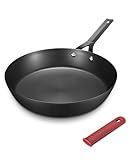
Nonstick sauté pans are particularly forgiving for cream sauces, cheese sauces, and recipes containing milk. The SENSARTE Nonstick Frying Pan Skillet with Lid, listed at $39.99, is an example of the type of large, deep covered nonstick pan shoppers may consider when they want sauté-pan capacity without moving into premium cookware pricing. Its advertised 12-inch, 5-quart format illustrates the amount of room that can be useful for family meals.
The tradeoff is bulk. A 12-inch sauté pan can require about 15 inches of cabinet or drawer length once the handle is included, and taller sides may make it harder to stack. Heavier stainless steel or enameled versions can also weigh 4 to 7 pounds before food is added. That is excellent for stability, but less convenient if you have limited strength or storage.
Where Skillet for Making Pasta Sauces Wins
A skillet is often the more pleasant tool for small, fast sauces. Its sloped sides expose more of the cooking surface and make it easy to stir, toss, and slide food onto a plate. When you are making one or two portions of garlic-and-oil sauce, a quick marinara, or a small Alfredo, an 8- or 10-inch skillet may feel less cumbersome than a deep pan.
Skillets also tend to heat quickly, particularly when made from aluminum or lightweight stainless steel. On a typical electric cooktop, a household burner may draw roughly 1,200 to 1,800 watts on high, but actual heating speed depends on the pan’s material, base thickness, burner size, and how full it is. A smaller skillet can reach sautéing temperature efficiently without using a large burner.
The sloped wall is useful when reducing sauce. More liquid is exposed to the open air, which can help a thin sauce thicken faster. However, faster evaporation requires attention. A cream sauce can tighten rapidly, and a tomato sauce can splatter more readily than it would in a taller pan. Lower the heat and stir frequently, especially after adding cheese.
Skillets are also easier to repurpose. The same pan can cook breakfast, sear chicken, warm leftovers, and make a small sauce. The CAROTE Nonstick Frying Pan, 8 Inch Classic Granite Skillet, priced at $15.99, represents the compact, budget-friendly end of this category. An 8-inch skillet is well suited to a single serving or a modest amount of sauce, but it will feel crowded with a full pound of pasta.
For pantry-based meals, portion size is important. A 45-ounce jar of Amazon Saver Traditional Pasta Sauce, listed at $2.24, is more sauce than most 8-inch skillets can comfortably hold along with pasta and add-ins. A sauté pan is the safer choice for heating the entire jar. By contrast, a 12-ounce package of Hoosier Hill Farm Instant Alfredo Sauce Powder Mix, listed at $14.99, can be prepared in smaller batches, making a medium skillet practical when cooking for one or two.
Cost Over 5 Years
Initial price is only part of the calculation. A basic nonstick skillet can cost $15 to $30, while a larger nonstick sauté pan may cost $30 to $60. Midrange stainless steel models commonly run $60 to $120, and premium clad or enameled pieces may cost $150 to $250 or more.
If you buy a $40 sauté pan and use it several times a week for five years, the cookware cost works out to about $0.15 per week before considering replacement. A $16 skillet costs less initially, but a heavily used nonstick coating may need replacement sooner if it is overheated, scratched, or cleaned with abrasive tools. Coated cookware commonly lasts several years with careful use, while stainless steel, cast iron, and carbon steel can last much longer.
Factor in accessories and energy, too. A lid may add $10 to $30 if it is not included. Matching the pan to the burner can reduce unnecessary preheating; a 10-inch pan on a similarly sized burner is generally more efficient than heating a large pan on a much smaller element. The biggest savings, however, come from buying one appropriately sized pan instead of replacing an unsuitable one.
Which One for Your Home
Small apartment
Choose an 8- or 10-inch skillet if cabinet space is tight and you usually cook one or two servings. It can handle a small sauce while fitting easily in a narrow cabinet. If you often cook for guests, select a 10-inch sauté pan with a lid rather than trying to force a large batch into a compact skillet.
Family with kids or pets
A 10- or 12-inch sauté pan is usually the safer practical choice. The taller sides help contain splashes, and a helper handle makes a full pan easier to carry. Look for a stable base, a lid with a secure knob, and a handle that stays clear of busy walkways. Keep the pan pushed toward the back of the cooktop and never leave a long handle extending where it can be bumped.
Rental
Prioritize versatility and moderate weight. A 10-inch nonstick skillet or a 3- to 4-quart sauté pan can cover most pasta-sauce needs without requiring special storage. Avoid cookware that needs extensive seasoning or delicate maintenance if you share a kitchen or expect to move soon.
Long-term home
Invest in a durable stainless steel sauté pan if you make sauce frequently and want cookware that can remain useful for many years. Add a smaller nonstick skillet for delicate or quick foods. This two-pan combination covers batch cooking, small portions, browning, reheating, and finishing pasta.
FAQ
Can I make pasta sauce in any skillet?
Yes, provided the skillet is large enough for the sauce and any ingredients you plan to add. An 8-inch skillet is best for one or two servings; a 10- or 12-inch skillet can handle more. Avoid filling the pan so high that stirring causes splashes.
Is a sauté pan better for simmering tomato sauce?
Usually. Its taller, straighter sides provide more capacity and help contain bubbling and splattering. Use the lid for gentle simmering, then remove it when you need to reduce the sauce. A skillet can simmer tomato sauce effectively when you want faster evaporation and have a smaller batch.
What size pan is best for a pound of pasta?
A 10- to 12-inch sauté pan with at least 3 quarts of usable capacity is the most comfortable choice. A 12-inch skillet may work, but its sloped sides leave less room for folding the noodles through the sauce.
Should I choose nonstick or stainless steel?
Nonstick is easiest for cream, cheese, and low-fat sauces and generally simplifies cleanup. Stainless steel is more durable and better suited to browning ingredients, but it rewards moderate heat and prompt cleaning. For a first and only pan, choose the material you are most willing to maintain consistently.