Key takeaways
- 3-in-1 roller-and-cutter units like the Sailnovo or GVODE motorize the crank so both hands stay free to guide the sheet.
- Extruder machines such as the VEVOR or Philips 7000 mix and push dough through shaped discs, producing penne, macaroni, or spaghetti directly.
- Rollers give you the classic silky sheet for lasagna and ribbon pasta; extruders excel at tube and short shapes.
- Feed dough steadily and let the motor set the pace rather than forcing it.
Fresh pasta tastes nothing like the dried boxes, and a pasta maker is what turns it from an all-afternoon project into a weeknight-possible dinner. Whether you use a hand-crank roller or an electric extruder, the machine does the two hard parts, rolling the dough thin and evenly and cutting it into uniform strands, so you can focus on getting the dough right. With a little practice you can go from flour and eggs to a plate of tagliatelle in under an hour.
This guide walks through making the dough, rolling it down through the settings, and cutting your first batch, plus the differences between manual and electric machines so you can pick the right tool. The dough is only two or three ingredients; the technique is where the payoff lives.
Our top picks
 Sailnovo 3-in-1 Pasta Maker with 9-Setting Pasta
- 【FOODS GRADE MATERIAL & CLEANING METHOD】 Tired of…
- 【9 ADJUSTABLE THICKNESS SETTINGS】Pasta Maker customized adjustment knob…
- 【DIFFERENT WIDTH SETTINGS SUIT VARIOUS PASTA】Choose different pasta…
 MARCATO Made in Italy Atlas 150 Classic
- Material Type: Nickel-Plated Steel, Chrome-Plated Steel, ABS
- Included Components: User Manual
 VEVOR Electric Pasta Maker
- User-Friendly Operation: Designed for ease of use, this…
- Versatile for Many Tastes: With a generous 500g…
- Authentic Kneading Technology: Our pasta extruder employs a…
| Product | Key specs | |
|---|---|---|
| Sailnovo 3-in-1 Pasta Maker with 9-Setting Pasta | 【FOODS GRADE MATERIAL & CLEANING METHOD】 Tired of… 【9 ADJUSTABLE THICKNESS SETTINGS】Pasta Maker customized adjustment knob… 【DIFFERENT WIDTH SETTINGS SUIT VARIOUS PASTA】Choose different pasta… | Check price |
| MARCATO Made in Italy Atlas 150 Classic | Material Type: Nickel-Plated Steel, Chrome-Plated Steel, ABS Included Components: User Manual | Check price |
| VEVOR Electric Pasta Maker | User-Friendly Operation: Designed for ease of use, this… Versatile for Many Tastes: With a generous 500g… Authentic Kneading Technology: Our pasta extruder employs a… | Check price |
 Nuvantee Pasta Maker with Adjustable Thickness Settings | Say goodbye to pasta machines with unpleasant metal… With 7 adjustable thickness settings, the Nuvantee pasta… Craving a certain type of pasta? This machine… | Check price |
 Philips 7000 Series Pasta Maker | Enjoy fresh homemade pasta effortlessly in under 10… Makes up to 8 portions⁴ of homemade pasta… Thanks to the versatile mixing function, pasta is… | Check price |
 GVODE Electric Pasta Maker Machine | 700W maximum power, 8 THICKNESS SETTINGS: Roll sheets… The durable plastic housing keeps the whole machine… Run in 15-minute batches with a 5-minute cool-down… | Check price |
 Aptovpvp 260W Electric Pasta Maker | 13 Pasta Discs for More Homemade Choices Includes… 260W Automatic Mixing and Extruding This electric pasta… 500g Flour Capacity for Family Meals Designed with… | Check price |
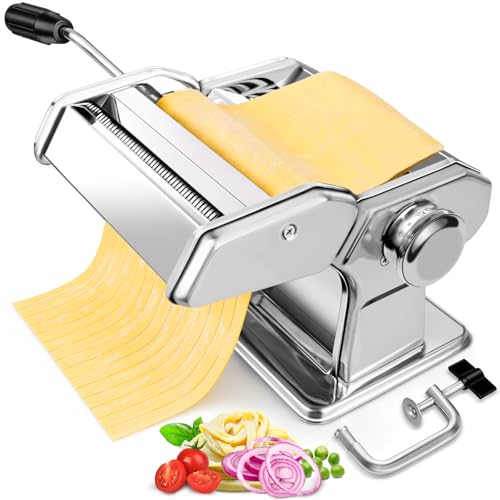 Pasta Maker | Check price |
As an Amazon Associate we earn from qualifying purchases at no extra cost to you.
⚡ Save on Your Next PC — Amazon Prime
Prime members get fast free shipping on the systems above, plus early access to Prime Day & Black Friday PC deals. New members get a 30-day free trial.
Watch: How to Make Homemade Pasta with a Pasta Maker Machine — Video Review
Making the Dough
The classic ratio is 100 grams of flour to one large egg per serving. Mound the flour, make a well, crack in the eggs, and work them together until a shaggy dough forms, then knead by hand for 8-10 minutes until smooth and elastic. Wrap it and let it rest 30 minutes; this relaxes the gluten so the dough rolls without snapping back. A slightly tacky, firm dough is what you want, not sticky.
Rolling With a Manual Machine
A hand-crank roller like the MARCATO Atlas 150 has numbered thickness settings. Start at the widest (usually 0 or 1), pass the dough through, fold it in thirds, and pass again a few times to laminate it, then step down one setting per pass without folding. Work down to setting 5-6 for tagliatelle or 6-7 for thinner noodles. Dust with flour between passes if the sheet feels tacky.
Rolling and Cutting With an Electric Machine
- 3-in-1 roller-and-cutter units like the Sailnovo or GVODE motorize the crank so both hands stay free to guide the sheet.
- Extruder machines such as the VEVOR or Philips 7000 mix and push dough through shaped discs, producing penne, macaroni, or spaghetti directly.
- Rollers give you the classic silky sheet for lasagna and ribbon pasta; extruders excel at tube and short shapes.
- Feed dough steadily and let the motor set the pace rather than forcing it.
Cutting and Cooking
Run the finished sheet through the cutter attachment for fettuccine or tagliatelle, or roll and slice by hand for pappardelle. Dust the cut strands with flour or semolina and coil them into loose nests so they don’t stick. Fresh pasta cooks fast, just 2-4 minutes in well-salted boiling water, so have your sauce ready before the pasta goes in.
Tips
- Rest the dough at least 30 minutes; skipping this makes it rubbery and hard to roll thin.
- Keep dough you’re not using covered so it doesn’t dry out and crack at the edges.
- Don’t over-flour the sheet before cutting, or strands won’t hold sauce; a light dusting is enough.
- Clean roller machines with a dry brush, never water, to keep dried dough from rusting the mechanism.
Frequently Asked Questions
Should I get a manual or electric pasta maker?
A manual roller like the Marcato Atlas is durable, affordable, and great for learning. An electric roller frees your hands, and an extruder is best if you want tube shapes like penne. Start manual unless you’ll make pasta often.
What flour is best for fresh pasta?
Italian 00 flour gives a silky, tender texture, while all-purpose works well and is easier to find. Some cooks blend in semolina for extra bite. Any of these rolls fine through a standard machine.
Why does my dough tear when rolling?
Usually it’s under-rested or too dry. Let it rest a full 30 minutes and, if it’s crumbly, work in a tiny bit of water. Laminating (fold and re-roll) at the widest setting also strengthens the sheet.
How long does fresh pasta take to cook?
Only 2-4 minutes in boiling salted water, far less than dried pasta. It’s done as soon as it floats and is tender; taste a strand to be sure.
Conclusion
Homemade pasta comes down to a well-rested dough, patient rolling down through the thickness settings, and a light hand with flour at the cutting stage. A manual roller teaches you the feel of the dough, while electric rollers and extruders speed things up once you’re hooked. Master the basic egg dough and a single machine will turn out fresher, better pasta than any box, on nights you’d never have thought you had time.
FAQ
Should I get a manual or electric pasta maker?
What flour is best for fresh pasta?
Why does my dough tear when rolling?
How long does fresh pasta take to cook?
More from Amazon
Programs that pair well with the guide above. Offers and eligibility are set by Amazon and may change.
Set up recurring deliveries of everyday items on eligible products. Terms and savings are set by Amazon.
Explore Subscribe & SaveCollect the home and kitchen items you want in one registry that guests can shop from.
Create a wedding registryFree shipping on eligible items, Prime Video and more. Eligible new members can start with a free trial.
Start a Prime free trialAudiobooks and podcasts to listen to on the go. Eligible new members can start with a free trial.
Try Audible freeAs an Amazon Associate we earn from qualifying purchases.