Shopping for a new cookware collection can quickly become overwhelming, especially with the sheer number of finishes, materials, and marketing buzzwords thrown around by manufacturers. Among all the available options, hard anodized aluminum has earned a stellar reputation for bridging the gap between professional-grade durability and everyday home-cook convenience. It resists warping, distributes heat efficiently, and provides a dependable cooking surface that handles everything from delicate eggs to high-heat sautés without missing a beat.
However, not all hard anodized sets are created equal, and paying top dollar does not automatically guarantee that a collection will suit your specific kitchen habits. Navigating this category successfully requires looking past flashy packaging to focus on construction specs, thermal performance, and long-term usability. Whether you are outfitting a brand-new kitchen or upgrading older pots and pans for 2026, understanding what truly matters will save you money and frustration.
As an Amazon Associate we earn from qualifying purchases at no extra cost to you.

Understanding the Anodization Process and Durability
To understand why hard anodized aluminum performs so well, it helps to look at how it is made. Standard aluminum is soft, lightweight, and prone to reacting with acidic foods like tomatoes and citrus, but the anodization process uses an electrochemical bath to significantly thicken the outer oxide layer of the metal. This transforms the soft exterior into a surface that is twice as hard as stainless steel. It will not chip, flake, or rust under normal kitchen conditions, meaning your pans maintain their structural integrity even after years of heavy daily use on the stovetop.
Gauge, Thickness, and Weight: Why Heft Matters
One of the most common mistakes home cooks make is judging a pan solely by its diameter or brand name rather than its physical weight. Thin aluminum pans heat up quickly, but they also create hot spots that burn your food and warp easily when exposed to thermal shock. When evaluating a hard anodized set, look for heavy-gauge construction. Heavier pans require slightly more time to preheat, but they retain and distribute thermal energy evenly across the entire bottom and up the sides, ensuring consistent cooking results for searing meats and simmering sauces.
Navigating Nonstick Coatings: What Lies Inside
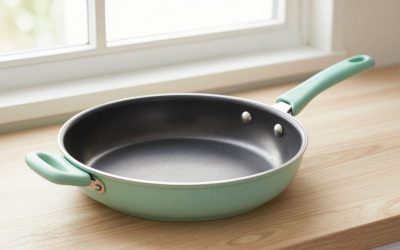
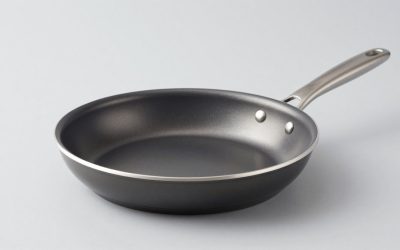
While the hard anodized body provides the structural strength of the cookware, the interior coating dictates how your food releases from the surface. Most hard anodized sets feature a multi-layer PTFE nonstick interior, though ceramic-infused options are becoming increasingly common. PTFE offers superior food release and requires very little oil, making cleanup exceptionally fast. If you choose a PTFE-coated set, look for PFOA-free formulations and reinforced top coats designed to withstand metal utensils, though using silicone or wooden tools will always extend the lifespan of your coating.
Handle Construction, Rivets, and Ergonomics
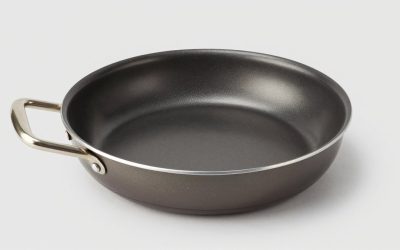
A cookware set can feature the most advanced metallurgy available, but if the handles are uncomfortable or insecure, the collection becomes a chore to use. Cast stainless steel handles that are securely riveted to the pan body offer the best safety and longevity. Avoid welded handles on heavy pieces, as they can loosen over time under the strain of a fully loaded stockpot. Additionally, check for ergonomic curves and handles designed to stay cool on the stovetop, as well as helper handles on larger Dutch ovens and skillets to assist with safe lifting.
Heat Source Compatibility and Induction Bases
Traditional aluminum is naturally non-magnetic, meaning standard hard anodized cookware will not work on induction cooktops out of the box. If you currently cook with induction—or plan to upgrade your range in the near future—you must specifically verify that the hard anodized set features a bonded stainless steel induction plate embedded in the base. For gas and electric coil cooktops, standard flat-bottomed hard anodized pans work wonderfully, but always match the burner size to the base diameter of the pan to prevent handle overheating.
Related Guides
To help you compare specific options on the market, we have evaluated top performers across different categories. If you want to dive deeper into our top picks, read our guide to the best hard anodized cookware sets for detailed testing notes. Alternatively, if you are looking for stunning thermal conductivity and a classic aesthetic, check out our roundup of the best copper cookware sets. Finally, to ensure your prep work matches your cooking precision, browse our expert recommendations for the best Japanese knife sets.
FAQ
Can I put hard anodized cookware in the dishwasher?
While some modern hard anodized sets claim to be dishwasher safe, harsh dishwasher detergents and high heat will eventually degrade the nonstick coating and dull the exterior finish. Hand washing with warm soapy water and a soft sponge is always recommended to maximize the lifespan of your cookware.
Are hard anodized pans safe to use with metal utensils?
Most hard anodized surfaces feature a nonstick interior that can be scratched or compromised by sharp metal spatulas, forks, or whisks. To protect your investment, stick to wooden, silicone, or heat-resistant plastic utensils whenever you are actively cooking.
Why is my hard anodized pan losing its nonstick properties?
Loss of nonstick performance is usually caused by a microscopic buildup of burned-on oil residue and food proteins rather than the coating wearing away entirely. Cleaning the pan thoroughly with a specialized cleanser or a baking soda paste can often restore its original release capabilities.
Can hard anodized cookware go in the oven?
Yes, most hard anodized cookware is oven safe, but you must check the manufacturer’s specific temperature limit. While the metal pans themselves can withstand high heat, components like nonstick coatings, glass lids, or silicone handle grips usually limit safe oven temperatures to between 350 and 500 degrees Fahrenheit.