Our Top Picks
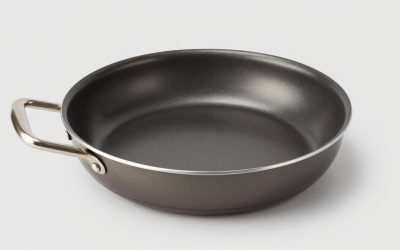
 Utopia Kitchen Nonstick Frying Pan Set 3 PieceVariety Pack7 x 11 x 2 inches1.1 PoundsCheck on Amazon
 Tramontina Professional 10-Inch Non Stick Frying Pan10 Inch18.54 x 10.43 x 4.25 inches0.93 KilogramsCheck on Amazon
 Blue Diamond 8" Diamond Infused Ceramic Nonstick Frying8" Frying Pan Skillet2.75 x 8.26 x 14.45 inches1.1 PoundsCheck on Amazon
The best non stick frying pan for most home kitchens is the Tramontina Professional 12-Inch Non Stick Frying Pan: a heavy-gauge aluminum, restaurant-style pan with a reinforced PTFE coating that releases eggs and fish easily and costs far less than premium brands. If you want a PFAS-free coating, the OXO Enhanced 12″ Ceramic Nonstick is the strongest ceramic option, and if you want a pan that tolerates metal utensils and induction, the HexClad 12″ Hybrid is the pick.
No nonstick coating lasts forever, so this guide focuses on what makes one coating outlast another: the base metal, the coating type, how hot you cook and how you clean. Below are seven main picks, four more worth a look, a clear explanation of PTFE, ceramic, titanium-reinforced and hybrid pans, and a buying guide with concrete numbers.
Utopia Kitchen Nonstick Frying Pan Set 3 Piece 8 9.5 11 Inch PFOA Free Grey | Omelette Pan, 3 Piece Skillet Set, Induction Bottom, Cookware, Heat Resistant, Bakelite Handle, Kitchen Use
Chosen because it specifies Omelette Pan and 3 Piece Skillet Set.
View on AmazonTramontina Professional 10-Inch Non Stick Frying Pan | Heavy-Gauge Aluminum Skillet with Reinforced Nonstick Coating, Red Handle, Dishwasher and Oven Safe, Made in Brazil
Chosen because it specifies Red Handle and Dishwasher and Oven Safe.
View on Amazon
SENSARTE Nonstick Frying Pan Skillet with Lid, 12 Inch Large Deep Frying Pan, 5 Qt Non Stick Saute Pan with Cover, Induction Pan, Healthy Non Toxic Cooking Pan with Helper Handle, PFOA PFOS Free
Chosen because it specifies 12 Inch Large Deep Frying Pan and 5 Qt Non Stick Saute Pan with Cover.
View on AmazonBlue Diamond 8" Diamond Infused Ceramic Nonstick Frying Pan Skillet, Blue | PFAS-Free Ceramic Nonstick, Dishwasher & Oven Safe, Stay Cool Handle, Durable Metal Utensil Safe, Egg & Omelet Pan
Chosen because it specifies Blue and PFAS-Free Ceramic Nonstick.
View on AmazonKey takeaways
- Best overall: Tramontina Professional 12-Inch, a simple, durable PTFE pan.
- Best ceramic non stick pan: OXO Enhanced 12″ Ceramic on a hard-anodized body.
- PTFE coatings usually keep their slickness longer than ceramic; ceramic avoids PTFE but loses release faster.
- Most coatings fail from overheating and abrasive cleaning, not age. Medium heat and soft tools double their life.
- “Titanium” on a label usually means a titanium-reinforced coating, not a solid titanium pan.
Best Non Stick Frying Pan: Quick Comparison
| Pick | Best for | Coating | Body | Induction | Price tier |
|---|---|---|---|---|---|
| Tramontina Professional 12-Inch | Best overall | Reinforced PTFE | Heavy-gauge aluminum | No | Budget |
| OXO Enhanced 12″ Ceramic | Best ceramic | PFAS-free ceramic | Hard-anodized aluminum | Check listing | Mid |
| T-Fal Ultimate Hard Anodized 12″ with Lid | Best with a lid | Titanium-reinforced PTFE | Hard-anodized aluminum | No | Budget-mid |
| Calphalon Hard-Anodized Nonstick 12-Inch | Best mid-range | Multi-layer PTFE | Hard-anodized aluminum | No | Mid |
| HexClad 12″ Hybrid with Lid | Best hybrid | Stainless lattice over nonstick | Tri-ply clad | Yes | Premium |
| Viking PureGlide Pro 3-Ply 12-Inch | Best titanium-reinforced, PFAS-free | PFAS-free titanium-reinforced | 3-ply clad | Yes | Premium |
| Blue Diamond 12″ Ceramic | Best budget ceramic | Diamond-infused ceramic | Aluminum | No | Budget |
1. Tramontina Professional 12-Inch: Best Overall
Spec line: 12-inch · heavy-gauge aluminum · reinforced PTFE nonstick
- Restaurant-style design, NSF-certified per Tramontina
- Cast stainless steel handle with a removable silicone soft-grip sleeve
- Oven-safe to 400°F per the maker (remove the sleeve first)
- Works on gas, electric and ceramic glass; not induction-compatible
- Light enough to toss vegetables one-handed
Tramontina’s Professional pan is what many restaurant line cooks use for eggs and omelets, and it translates well to home kitchens. Thick aluminum heats quickly and evenly, the coating releases cleanly, and the plain, riveted design has few parts to fail. Because it is relatively inexpensive, it is also the easiest pan to replace when the coating finally wears, which is the realistic way to think about any PTFE pan.
Best for: everyday eggs, pancakes, fish and stir-fries on gas or electric.
Skip if: you cook on induction or want to avoid PTFE.
Pros
- Excellent release for the price tier
- Even heating from thick aluminum
- Simple, durable build
Cons
- No induction compatibility
- Silicone sleeve must come off for oven use
2. OXO Enhanced 12″ Ceramic: Best Ceramic Non Stick Pan
Spec line: 12-inch · PFAS-free ceramic nonstick · hard-anodized aluminum body
- Ceramic coating made without PFAS, per OXO
- Hard-anodized aluminum body resists warping and scratching
- Stainless steel handle designed to stay cooler on the stovetop
- Oven-safe; check OXO’s listing for the exact rating and cooktop compatibility
- Scratch-resistant ceramic surface rated for regular home use
If you want to avoid PTFE entirely, ceramic is the main alternative, and the OXO Enhanced pan pairs it with a sturdier hard-anodized body than most budget ceramic pans. Ceramic releases food very well when new and handles higher oven temperatures than most PTFE pans, but it is more sensitive to oil residue and high heat, which slowly reduce its slickness. Treat it gently and it stays useful for daily eggs and sautés.
Best for: cooks avoiding PTFE who still want strong release.
Skip if: you want the longest-lasting nonstick performance per dollar; PTFE still wins there.
Pros
- PFAS-free ceramic coating
- Sturdy hard-anodized construction
- Good heat tolerance
Cons
- Ceramic release fades faster than PTFE
- Higher price tier than basic ceramic pans
3. T-Fal Ultimate Hard Anodized 12″ with Lid: Best Value With a Lid
Spec line: 12-inch with glass lid · titanium-reinforced PTFE · Thermo-Spot heat indicator
- Hard-anodized aluminum body
- Thermo-Spot center turns solid red when the pan is preheated
- Oven and broiler-safe to 400°F; lid oven-safe to 350°F (per T-Fal)
- Riveted silicone-wrapped stainless handle
- Not induction-compatible
T-Fal’s Ultimate line is one of the most widely sold nonstick ranges, and this 12-inch version with a lid adds a lot of versatility: you can steam vegetables, finish frittatas or keep food warm. The Thermo-Spot indicator sounds like a gimmick, but it helps prevent the most common coating killer, which is overheating an empty pan. The “titanium” here refers to reinforcement in the PTFE coating, not a titanium pan body.
Best for: beginners and busy households who want a lid included.
Skip if: you cook on induction.
Pros
- Includes a glass lid
- Preheat indicator protects the coating
- Durable hard-anodized body
Cons
- Heavier than plain aluminum pans
- No induction support
4. Calphalon Hard-Anodized Nonstick 12-Inch: Best Mid-Range
Spec line: 12-inch · hard-anodized aluminum · multi-layer PTFE nonstick
- Multi-layer nonstick designed for durability
- Long stainless steel handle that stays cool on the stovetop
- Flared sides for sliding food out easily
- Oven-safe per Calphalon’s listing; not induction-compatible
Calphalon’s hard-anodized pan is a step up in heft and finish from budget pans without moving into premium pricing. The thicker body holds heat better when you add cold food, so searing chicken thighs or browning potatoes is more forgiving. It is a good match for cooks who want one nonstick pan that feels solid and looks good on an open shelf.
Best for: cooks who want a heavier, more stable nonstick pan.
Skip if: you prefer a lightweight pan for flipping.
Pros
- Solid, warp-resistant body
- Good heat retention
- Comfortable stay-cool handle
Cons
- Heavier than Tramontina
- No induction base
5. HexClad 12″ Hybrid with Lid: Best Hybrid Pan
Spec line: 12-inch · tri-ply clad · laser-etched stainless lattice over nonstick
- Stainless steel, aluminum and stainless steel layers
- Raised stainless hex pattern protects the nonstick valleys
- Induction-compatible
- Dishwasher-safe and oven-safe at high temperatures per HexClad
- Includes a tempered glass lid
Hybrid pans try to combine the browning of stainless steel with the easy release of nonstick. The stainless peaks take the abuse from spatulas and scrubbing, which is why HexClad says metal utensils are fine. The trade-off is release: eggs need a little more fat than on a fresh PTFE pan, and some cooks find hybrid surfaces need occasional seasoning to stay slick. In exchange you get a pan that sears well, works on induction and should resist the scratches that end most nonstick pans.
Best for: induction cooktops and cooks who want one pan for searing and eggs.
Skip if: you want the slickest possible egg pan for very little oil.
Pros
- Tolerates metal utensils
- Sears better than traditional nonstick
- Induction-ready, lid included
Cons
- Premium price tier
- Less slick than new PTFE
6. Viking PureGlide Pro 3-Ply 12-Inch: Best Titanium-Reinforced, PFAS-Free
Spec line: 12-inch · 3-ply clad · PFAS-free titanium-reinforced nonstick
- Nonstick made without PFAS, per Viking
- Titanium-reinforced surface rated as metal-utensil safe
- 3-ply construction with an induction-ready exterior
- Stainless handle and professional-style build
For readers searching for titanium non stick pans, this is the clearest example of what “titanium” means on a good pan: a clad stainless-and-aluminum body with a PFAS-free coating reinforced with titanium particles for hardness. The clad body heats evenly and works on induction, and the coating is designed to stand up to metal tools better than standard ceramic. It sits in the premium tier, so it suits cooks who want PFAS-free and durable in one pan.
Best for: induction users who want a PFAS-free coating built for tougher use.
Skip if: budget is the priority.
Pros
- PFAS-free yet utensil-tough
- Even heating from clad construction
- Induction-compatible
Cons
- Premium price tier
- Heavier than aluminum pans
7. Blue Diamond 12″ Ceramic: Best Budget Ceramic Non Stick Pan
Spec line: 12-inch · diamond-infused ceramic · PFAS-free
- Ceramic coating with diamond particles for added hardness, per the maker
- PFAS-free
- Dishwasher and oven-safe per the listing
- Lightweight aluminum body
Blue Diamond is one of the most affordable ways to try ceramic nonstick in a large size. It heats quickly and releases well when new. Like all budget ceramic pans, expect its slickness to fade within a year or two of daily use, faster if it sees high heat or cooking sprays. It is a sensible choice for occasional cooks or as a second pan for eggs.
Best for: trying ceramic on a budget, light-duty cooking.
Skip if: you cook daily on high heat.
Pros
- Low cost for a 12-inch ceramic pan
- PFAS-free
- Light and quick to heat
Cons
- Shorter coating life
- Thin body can develop hot spots
Also Consider
- CAROTE 12 Inch Classic Granite: granite-look nonstick · light aluminum · budget tier. Popular for its look and low weight; treat it as a fairly short-life pan.
- SENSARTE Ceramic Deep 12 Inch with Lid: 5-quart sauté depth · PFAS/PTFE-free ceramic · induction base. A good fit if you want nonstick for braises and one-pan meals rather than flat frying.
- Farberware Cookstart DiamondMax 12.25-Inch: reinforced nonstick · heavy-gauge aluminum · budget tier. A simple, very affordable everyday pan.
- Plateful Titanium 12 Inch (uncoated): pure titanium cooking surface with lid · no coating. Marketed as nonstick, but uncoated metal pans behave more like stainless steel; expect to use fat and preheat properly.
Titanium Non Stick Pans: What the Label Actually Means
Searches for titanium non stick pans reviews have climbed, and the term covers three very different products:
| Type | What it is | Release | Durability | Examples |
|---|---|---|---|---|
| Titanium-reinforced PTFE | PTFE coating with titanium particles for hardness | Excellent | Good; still avoid metal tools on most | T-Fal Ultimate |
| Titanium-reinforced PFAS-free | Non-PTFE coating with titanium reinforcement | Very good when new | Good; some rated metal-utensil safe | Viking PureGlide Pro |
| Pure or solid titanium (uncoated) | Titanium cooking surface, no coating | Moderate; needs fat | Very high; nothing to wear off | Plateful, Toutrop, Siraats |
When you read owner feedback on titanium pans, check which type it is. Complaints that a “titanium” pan sticks usually come from uncoated titanium being used like a PTFE pan. Praise for durability usually refers to reinforced coatings or uncoated titanium. Neither claim transfers automatically to the other type.
How Long Does a Nonstick Coating Last?
Manufacturers rarely publish lifespans, but cookware industry guidance and long-term owner reports point to typical ranges. These assume daily or near-daily use.
| Coating | Typical useful life | Biggest killers |
|---|---|---|
| PTFE (standard or reinforced) | 3-5 years | Empty preheating on high, metal tools, dishwasher |
| Ceramic | 1-3 years | High heat, cooking sprays, oil residue buildup |
| Hybrid stainless/nonstick | 5+ years | Burnt-on residue in valleys; gradually reduced release |
| Uncoated titanium | Many years | Not coating wear; mostly technique and discoloration |
Matching a Nonstick Pan to Your Cooking Style
The “best” pan changes with what you cook, how often and on what stove. Use this matrix to narrow the field before comparing individual models.
| Your situation | Coating to favor | Body to favor | Suggested pick |
|---|---|---|---|
| Eggs every morning, gas or electric stove | PTFE | Heavy-gauge aluminum | Tramontina Professional |
| Induction cooktop | Hybrid or reinforced PFAS-free | Clad stainless | HexClad Hybrid or Viking PureGlide Pro |
| Prefer to avoid PTFE | Ceramic | Hard-anodized aluminum | OXO Enhanced Ceramic |
| Cooking for 4+ with sauces and steaming | PTFE or ceramic | Deep pan with lid | T-Fal Ultimate with lid or SENSARTE deep pan |
| Shared kitchen, rough handling, metal tools | Hybrid | Clad stainless | HexClad Hybrid |
| Occasional cook, tight budget | PTFE or ceramic | Aluminum | Farberware DiamondMax or Blue Diamond |
When a Nonstick Pan Is the Wrong Tool
Nonstick shines for eggs, pancakes, delicate fish, crepes, reheating rice and anything sticky or starchy. It is a poor fit for a few jobs, and using it for them is the fastest way to wear out the coating:
- Hard searing steaks and chops. A deep crust needs heat above what PTFE should see. Use cast iron or carbon steel for that.
- Building a pan sauce from browned bits. Nonstick prevents the fond that gives pan sauces their flavor. Stainless steel is better.
- Broiling at maximum heat. Many nonstick pans and lids are rated well below broiler temperatures.
- Long, acidic simmering. Tomato sauces and wine reductions are fine occasionally but harder on ceramic coatings when done daily.
A practical kitchen setup is one nonstick pan for delicate food plus one cast iron or stainless pan for high heat. That pairing lets each pan do what it does best and stretches the life of the nonstick coating considerably.
How We Chose
We did not personally use these pans. We researched current 12-inch nonstick frying pans from established cookware brands, read manufacturer specifications for body material, coating type, oven limits and cooktop compatibility, and reviewed published guidance from cookware makers and food-safety sources on nonstick care. We favored pans with thicker or hard-anodized bodies (which resist warping), clear oven and cooktop ratings, and a coating type that matches a specific need. We limited the list to two pans per brand and included different coating types so every reader has a realistic option.
Buying Guide: How to Choose a Nonstick Frying Pan
Pick the right size
Pan sizes are measured across the top rim, not the flat cooking surface. A 12-inch pan typically has about 9.5-10 inches of flat surface, enough for four eggs or two chicken breasts. A 10-inch pan offers about 8 inches, fine for one or two people. An 8-inch pan is an egg pan. If you only buy one, 12 inches is the most versatile.
Choose a coating for how you cook
- PTFE: the slickest and longest-lasting release. Keep it below about 500°F (260°C), which in practice means medium heat and never preheating it empty on high.
- Ceramic: PFAS-free and heat-tolerant, but release fades faster. Best for cooks who prefer to avoid PTFE and accept replacing pans more often.
- Hybrid: long-lasting and good for searing, less slick for delicate eggs.
- Uncoated titanium: extremely durable but not truly nonstick.
Check the body thickness and material
Aluminum heats fast and evenly. Look for heavy-gauge or hard-anodized aluminum; thin pans under about 2.5 mm warp more easily, especially when cold water hits a hot pan. Clad (stainless-aluminum-stainless) bodies are heavier but more stable and induction-ready.
Confirm cooktop compatibility
Induction requires a magnetic base. If you have an induction cooktop or plan to buy one, choose a clad pan or one marked induction-compatible. A simple test: a fridge magnet should stick firmly to the bottom.
Look at oven limits
Most PTFE pans are rated to 350-500°F, often lower if the handle has silicone or plastic. If you finish frittatas under the broiler, choose a pan rated to at least 450°F and check lid ratings separately.
Weight and handle
A 12-inch aluminum pan usually weighs about 2-3 pounds; clad or hybrid pans often weigh 3-4 pounds. If you have wrist or grip issues, stay toward the lighter end and look for a helper handle on larger pans.
PFAS and regulations
PFOA has been out of US nonstick manufacturing for more than a decade. Some states, starting with Minnesota in 2025, now restrict selling cookware with intentionally added PFAS, which is one reason PFAS-free ceramic and reinforced coatings are spreading. If avoiding PFAS matters to you, look for an explicit “made without PFAS” claim rather than just “PFOA-free.”
First use and break-in
New nonstick pans ship with a light film from manufacturing and packaging. Wash the pan in warm soapy water, dry it, and wipe a few drops of neutral oil over the surface before the first use; some makers call this “conditioning.” It is not seasoning in the cast iron sense, but it helps the first few cooks release cleanly. For the first week, stick to medium heat and fatty foods so you learn how quickly your burner heats this particular pan.
Warping and the flat-base test
Warped bases are a common reason nonstick pans get replaced early, especially on glass and induction cooktops where full contact matters. Set the pan on a flat counter and press each edge: if it rocks or spins, heat transfer will be uneven and oil will pool to one side. Thicker bases, hard-anodized bodies and clad construction warp less. Avoid rinsing a hot pan under cold water and match the burner to the pan’s base diameter so the edges are not overheated.
Care that makes coatings last
- Cook on low to medium heat and add oil before the pan gets hot.
- Use wood, silicone or nylon tools unless the maker says metal is fine.
- Hand-wash with a soft sponge even if the pan is labeled dishwasher-safe.
- Skip aerosol cooking sprays; their additives leave a sticky film.
- Let the pan cool before washing to prevent warping.
- Stack with a pan protector or paper towel between pans.
Which One Should You Buy?
- Most kitchens: Tramontina Professional 12-Inch.
- Avoiding PTFE: OXO Enhanced 12″ Ceramic, or Blue Diamond on a budget.
- Want a lid included: T-Fal Ultimate Hard Anodized 12″.
- Induction and searing: HexClad 12″ Hybrid.
- PFAS-free and tough: Viking PureGlide Pro 3-Ply.
- Solid mid-range all-rounder: Calphalon Hard-Anodized 12-Inch.
Frequently Asked Questions
What is the best nonstick frying pan for eggs?
A PTFE pan such as the Tramontina Professional gives the easiest egg release with very little fat. For a dedicated egg pan, an 8- or 10-inch size heats more evenly on small burners.
Are ceramic non stick pans better than PTFE?
They are not better overall, just different. Ceramic avoids PTFE and handles higher oven heat, but its release typically fades within one to three years, while PTFE pans often last three to five years with careful use.
Are titanium non stick pans safe?
Titanium-reinforced pans are standard nonstick pans with added hardness, and the same care rules apply. Uncoated titanium pans have no coating to wear off but are less slick. If you have specific health concerns about cookware materials, consult official guidance or a medical professional.
When should I replace a nonstick frying pan?
Replace it when food sticks even with proper preheating and oil, or when the coating is visibly scratched through, peeling or flaking. A warped base that spins on a flat cooktop is another reason to replace it.
Can nonstick pans go in the oven?
Most can, but limits vary from about 350°F to 500°F or more depending on coating and handle material. Always check the maker’s rating and remember lids are often rated lower than the pan.
Why does my nonstick pan stick now?
Usually a thin, invisible layer of polymerized oil or cooking spray has built up. Clean with a paste of baking soda and water using a soft sponge, then cook on medium heat with a little fat.
Is a 10-inch or 12-inch nonstick pan better?
A 12-inch pan is more versatile for families and batch cooking. A 10-inch pan heats more evenly on small burners and is easier to handle for one or two people.
Sources
Manufacturer specifications from Tramontina, OXO, T-Fal, Calphalon, HexClad, Viking and Blue Diamond; manufacturer care and use instructions; Minnesota Pollution Control Agency information on PFAS in cookware.
Last updated: October 2026