Key takeaways
- Easy release: You can lift the ring away from a delicate cake rather than forcing a knife around the edge or flipping the dessert onto a rack.
- Excellent for cheesecake: Tall, soft cheesecakes are difficult to remove from a fixed pan without damaging the crust or sides.
- Helpful for layered desserts: Cakes with mousse, fruit fillings, cookie crusts, or chilled layers can be assembled and served without turning them over.
- Useful for presentation: Releasing the side preserves a clean edge, which is valuable when the cake will be served directly from a platter or cake stand.
- Good capacity: A typical 9-inch, 10-cup pan handles many standard recipes without requiring a specialty size.
- Versatile beyond cake: You can use it for deep-dish tarts, savory tortes, baked pasta, quiche, icebox desserts, and some no-bake recipes.
- Reasonable cost: Basic pans often cost less than $20, so the purchase can make sense if you bake cheesecake even a few times a year.
What's inside
The Short Answer
Usually, no—unless you regularly bake cakes that are difficult or risky to lift out of a standard pan. A springform pan is especially useful for cheesecake, mousse cake, tortes, crumbly coffee cakes, and other desserts with delicate sides or a bottom that cannot be inverted.
For an ordinary layer cake, sheet cake, pound cake, or snack cake, a regular round cake pan lined with parchment will usually do the job just as well for less money and with fewer opportunities for leaking. A springform pan is a convenience tool, not a requirement for most cake recipes.
As an Amazon Associate we earn from qualifying purchases at no extra cost to you. Product prices and availability are accurate as of the date shown and are subject to change.

What You Actually Get
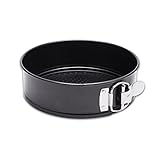
A springform pan has two parts: a round pan base and a removable ring secured by a latch. After baking and cooling, you release the latch and lift away the ring instead of turning the cake upside down. That matters when the top is decorated, the cake is soft, or the sides would stick and tear during removal.
Most home models are 9 inches in diameter and roughly 2.5 to 3 inches tall. A 9-inch pan commonly holds about 10 cups, although capacity varies by manufacturer. That is a useful size for many cheesecake recipes and for cakes that serve approximately 8 to 12 people. A 9-inch pan generally weighs about 1.5 to 3 pounds, depending on whether it is made from lighter aluminum or heavier steel.
The trade-off is the seam between the removable base and the ring. The seam makes release easy, but it also creates a possible path for thin batter, butter, or water to escape. “Leakproof” usually means the design includes a tighter-fitting base or a silicone seal; it does not mean every liquid batter is guaranteed to stay inside under every condition.
For baked cheesecake, many recipes recommend a water bath. A springform pan can be wrapped in two or three layers of heavy-duty foil, or placed inside a larger oven-safe pan, to reduce the chance of water reaching the crust. A springform pan is not automatically waterproof simply because it is labeled leakproof.
Current examples illustrate the typical price range. The 9-inch HIWARE nonstick cheesecake pan with removable bottom is listed around $15.99, while the 9-inch Nordic Ware two-piece springform, with a stated 10-cup capacity, is around $18. Prices can move with color, retailer, and promotions, but a practical budget is about $15 to $30 for a basic home-use model.
Pros
- Easy release: You can lift the ring away from a delicate cake rather than forcing a knife around the edge or flipping the dessert onto a rack.
- Excellent for cheesecake: Tall, soft cheesecakes are difficult to remove from a fixed pan without damaging the crust or sides.
- Helpful for layered desserts: Cakes with mousse, fruit fillings, cookie crusts, or chilled layers can be assembled and served without turning them over.
- Useful for presentation: Releasing the side preserves a clean edge, which is valuable when the cake will be served directly from a platter or cake stand.
- Good capacity: A typical 9-inch, 10-cup pan handles many standard recipes without requiring a specialty size.
- Versatile beyond cake: You can use it for deep-dish tarts, savory tortes, baked pasta, quiche, icebox desserts, and some no-bake recipes.
- Reasonable cost: Basic pans often cost less than $20, so the purchase can make sense if you bake cheesecake even a few times a year.
Cons
- It can leak: Very thin batters, melted butter, and water-bath liquid may escape through the seam. A baking sheet underneath can protect the oven, but it cannot rescue a lost crust.
- More cleanup: You must wash both the ring and base, and crumbs can collect around the latch and rim.
- Bulkier storage: The tall ring takes more cabinet space than a shallow 9-inch cake pan and may not stack neatly.
- Not ideal for every batter: Thin cake batter is safer in a solid pan. If you use a springform pan, line the base with parchment and check the seam before filling.
- Coatings can wear: Nonstick surfaces may scratch if you use metal knives or sharp utensils. Once the coating deteriorates, release may become less predictable.
- The latch is a failure point: A bent latch or warped base can cause poor alignment and more leakage.
- It does not replace other pans: A springform pan is not a substitute for a loaf pan, muffin tin, sheet pan, or a pair of standard layer-cake pans.
Who Should Buy It
Buy a springform pan if cheesecake is part of your regular baking rotation. It is also a smart choice if you make cakes with graham-cracker or cookie crusts, dense tortes, flourless chocolate cake, baked mousse, or chilled desserts that must remain upright during release.
It is particularly worthwhile for bakers who dislike lining a fixed pan with parchment slings or who have struggled to remove a fragile cake cleanly. A 9-inch model is the most practical first size because recipes commonly use it and the capacity is large enough for a family dessert without becoming unwieldy.
Look for a sturdy latch, a base that sits level, a rim that fits tightly, and a coating that is clearly labeled nonstick if easy cleanup matters to you. A removable base with a raised edge can help contain crumbs, while a flat base may make it easier to slide the finished cake onto a serving plate. If you bake water-bath cheesecakes, plan to use foil or a larger protective pan regardless of marketing claims.
Who Should Skip It
Skip it if you mainly bake cupcakes, brownies, loaf cakes, sheet cakes, or standard round layer cakes. Those desserts are generally easier in solid pans, where there is no seam to leak and no latch to clean. A 9-inch fixed cake pan often costs about $8 to $15, and two matching pans may cost about $15 to $30.
You should also skip a springform pan if storage space is tight or if you only bake cake once or twice a year. Parchment, a well-greased solid pan, and a cooling period usually solve removal problems for ordinary cakes. For recipes that specifically call for a springform pan, however, borrowing one may be more practical than improvising with a pan that is too shallow or too small.
Cheaper Alternatives
| Option | Cost | Trade-off |
|---|---|---|
| 9-inch solid round cake pan | $8–$15 | Less expensive and less likely to leak, but you must loosen and invert the cake or use a parchment sling. |
| 9-inch cake pan with parchment liner | $9–$18 | Works well for ordinary cakes; less convenient for tall cheesecake or desserts that cannot be flipped. |
| 9-inch deep-dish pie plate | $10–$25 | Useful for some cheesecakes and tarts, but the shape and capacity may not match the recipe. |
| Removable-bottom tart pan | $12–$25 | Releases delicate desserts easily, but the shallow sides are unsuitable for tall cheesecake. |
| Disposable foil cake pan | $1–$4 each | Very inexpensive and easy to discard, but it is less rigid and usually gives poorer support for tall or heavy cakes. |
FAQ
Can I bake a regular cake in a springform pan?
Yes, but it is not always the best choice. Use a parchment circle on the base, grease the sides, and place the pan on a rimmed baking sheet in case batter escapes. Avoid filling it more than two-thirds full, especially if the pan is less than 3 inches tall. A standard solid cake pan is safer for thin batter.
Are springform pans truly leakproof?
Not universally. A well-made pan with a tight-fitting base may contain thicker batters, but thin liquids can still find their way through the seam. For a water bath, wrap the exterior with heavy-duty foil or place the springform pan inside a larger pan. Check the manufacturer’s care and use instructions before putting it directly in water.
What size springform pan should I buy?
A 9-inch pan is the best general-purpose choice for most households. It commonly holds about 10 cups and serves roughly 8 to 12 people, depending on the cake. An 8-inch pan produces a taller, smaller cake and may require a longer baking time; a 10-inch pan produces a wider, thinner cake and may bake faster. Follow the recipe before changing sizes.
Is a nonstick springform pan worth it?
Usually, yes, if easy release and cleanup are priorities. Nonstick coating can reduce sticking around the sides, but parchment is still useful on the base. Use silicone, wood, or plastic utensils rather than a metal knife, wash by hand if recommended, and replace the pan if the coating is badly scratched or peeling.