Key takeaways
- Budget ceramic: An $15–$30 pan bought twice over five years costs approximately $30–$60, before tax.
- Midrange ceramic: A $30–$45 pan bought twice costs about $60–$90.
- Hard anodized: A $40–$70 pan that lasts the full period costs approximately $8–$14 per year. If it needs replacement once, the five-year total is about $80–$140.
- Two-pan setup: A ceramic 8-inch pan plus a larger hard anodized pan may cost $70–$140 initially, but it can cover both delicate single servings and family-size meals.
What's inside
Choosing between a ceramic nonstick vs hard anodized frying pan is less about finding a universal winner and more about matching the pan to your cooking habits, storage space, and tolerance for replacement. Both options can make eggs, pancakes, fish, and vegetables easier to release than stainless steel. The meaningful differences are in coating behavior, longevity, care, weight, appearance, and what you want to avoid in your kitchen.
Ceramic nonstick pans typically use a sol-gel coating made with a ceramic-based material over an aluminum body. Hard anodized pans use specially treated aluminum for a tougher cooking surface, often paired with a conventional nonstick coating. In other words, “hard anodized” describes the pan body and treatment, while “nonstick” describes the release coating added to the surface. As you shop in 2026, read the full product description rather than assuming every hard anodized pan has the same interior.
As an Amazon Associate we earn from qualifying purchases at no extra cost to you. Product prices and availability are accurate as of the date shown and are subject to change.


Quick Verdict
Choose ceramic nonstick if you prioritize a PFAS-free option, a bright modern look, easy cleanup, and a relatively low purchase price. It is especially appealing for low- to medium-heat cooking and households that are comfortable replacing a pan when release performance declines.
Choose a hard anodized frying pan if you want a more substantial pan for frequent cooking, better resistance to everyday bumps, and generally longer-lasting nonstick performance. It is often the better practical choice for family meals, repeated sautéing, and cooks who prefer a darker, understated finish.
Neither type should be treated as a high-heat searing pan. For browning steaks or using metal utensils aggressively, stainless steel or cast iron is a better companion.
Side by Side
| Factor | Ceramic nonstick | Hard anodized |
|---|---|---|
| Comfort | Usually lighter, often about 1.5–3 pounds for an 8-inch pan | Typically sturdier, about 2–4 pounds for an 8- to 10-inch pan |
| Durability | Good at first, but release can decline with high heat and abrasive cleaning | Strong body and usually better resistance to daily wear; coating still needs care |
| Price range | About $15–$45 for common 8- to 10-inch pans | About $30–$90 for common 8- to 12-inch pans |
| Maintenance | Hand-wash, low to medium heat, and soft utensils are safest | Hand-wash is preferred; avoid overheating and sharp metal tools |
| Space needed | Compact 8-inch pans fit small cabinets and two-burner setups | 12-inch models need more shelf or drawer clearance |
| Look | Often available in white, cream, or other light colors | Usually black, charcoal, or dark gray with a professional appearance |
| Resale | Limited resale value once used, especially if the finish shows wear | Brand-name sets may retain modest value, but used nonstick cookware still sells poorly |
| Best for | Eggs, pancakes, delicate foods, small kitchens, and PFAS-free shopping | Frequent cooking, larger portions, sautéing, and buyers seeking a sturdier pan |
| Induction | Only if the pan includes a magnetic base | Only if the pan includes a magnetic base |
Where Ceramic Nonstick Wins
The strongest reason to choose ceramic is material preference. Many ceramic nonstick products are advertised as PFAS-free, making them attractive to shoppers who want to avoid fluoropolymer coatings. Check the exact label and care instructions, since “ceramic” can be used broadly in product marketing and not every light-colored nonstick pan has the same construction.
Ceramic also tends to look less utilitarian. A white or cream exterior can make a small kitchen feel lighter, while a compact 8-inch skillet is useful for one egg, a grilled cheese sandwich, or a single serving of vegetables. For example, the SENSARTE 8-inch ceramic frying pan is listed at $20.89 and combines the small format with a PFAS-free ceramic positioning. That price makes it a relatively accessible choice for a first apartment, guest suite, or backup pan.
Another advantage is easy initial cleanup. A new ceramic surface can release eggs and pancakes with very little fat, and its smooth finish typically wipes clean quickly after low-temperature cooking. Ceramic is also a good fit for cooks who use silicone, wood, or plastic utensils and do not want the visual bulk of a heavy skillet.
There are tradeoffs. Ceramic coatings commonly lose some of their slickness faster when repeatedly exposed to high heat, cooking sprays, or dishwasher detergents. Preheating an empty ceramic pan for several minutes is a particularly poor habit. Use the lowest heat that gets the job done, add food or oil soon after the pan warms, and allow it to cool before washing.
Where Hard Anodized Frying Pan Wins
Hard anodized aluminum is valued for its rigid, dense feel and resistance to corrosion. The anodizing process creates a hardened aluminum surface, but it does not make the pan indestructible. If the interior is nonstick, that coating remains the part most vulnerable to overheating, scratching, and wear.
For everyday cooking, hard anodized pans often feel more stable on the burner. A 10- or 12-inch model gives you room to brown chicken pieces, sauté a full package of vegetables, or cook several servings without crowding. A larger pan may weigh 3–5 pounds, so it is less convenient for cooks with limited wrist strength, but the added mass can feel reassuring during stirring.
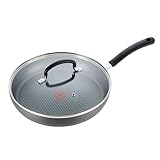
Hard anodized cookware is also widely available in useful sets. The Calphalon Hard-Anodized Nonstick 8-inch and 10-inch Frying Pan Set is listed at $64.99, giving a buyer two sizes for separate tasks. The T-Fal Ultimate Hard Anodized Nonstick 12-inch Fry Pan with Lid is listed at $54.99 and is designed for larger meals. Its stated oven limit is 400°F, with the lid rated to 350°F, so the specific limits matter more than the general “oven safe” label.
Hard anodized is not automatically induction-compatible. Aluminum does not work on induction by itself, so look for a magnetic stainless steel plate or an explicit induction designation. The same check applies to ceramic pans, which also commonly use aluminum bodies.
Cost Over 5 Years
The purchase price is only part of the calculation. A reasonable five-year budget assumes one replacement for a frequently used ceramic pan and either one replacement or a longer life for a better-maintained hard anodized pan. Actual results depend on heat, utensils, dishwasher use, and how often you cook.
- Budget ceramic: An $15–$30 pan bought twice over five years costs approximately $30–$60, before tax.
- Midrange ceramic: A $30–$45 pan bought twice costs about $60–$90.
- Hard anodized: A $40–$70 pan that lasts the full period costs approximately $8–$14 per year. If it needs replacement once, the five-year total is about $80–$140.
- Two-pan setup: A ceramic 8-inch pan plus a larger hard anodized pan may cost $70–$140 initially, but it can cover both delicate single servings and family-size meals.
These estimates do not prove that one coating always lasts longer. They simply show why a $20 pan can be economical even if replaced sooner, while a $60 pan may offer better value if its coating remains effective for several years.
Which One for Your Home
Small apartment
Choose an 8-inch ceramic nonstick pan if cabinet space, weight, and quick cleanup matter most. It works well on a compact 1,200–1,500-watt electric burner for eggs, toast, and small portions. Confirm the handle length and storage footprint; a long handle can take more room than the pan itself.
Family with kids or pets
A 10- or 12-inch hard anodized frying pan is usually the more practical primary skillet. Its larger cooking area reduces crowding, and the sturdier construction is better suited to frequent movement around a busy kitchen. Keep the pan on a rear burner when possible, and choose a handle with a secure hanging hole or a removable storage solution.
Rental
Start with the least expensive size that covers your meals. A $15.99 CAROTE 8-inch classic granite skillet, for example, may make sense for occasional cooking or a temporary home. Just verify whether “granite” refers to a nonstick appearance rather than a stone cooking surface, and check compatibility with the rental’s electric, gas, or induction range.
Long-term home
Buy one hard anodized pan in the size you use most, then add a smaller ceramic pan if you regularly cook eggs or delicate foods. This two-pan approach is more versatile than expecting one skillet to handle everything. Store pans with a cloth or protector between them, and keep a stainless steel or cast iron pan available for high-heat work.
FAQ
Is ceramic nonstick safer than hard anodized?
“Safer” depends on the materials and the way each pan is used. Many ceramic pans are marketed as PFAS-free, while many hard anodized pans use a nonstick coating that may contain fluoropolymers. Both should be used according to the manufacturer’s temperature limits, and neither should be heated empty for long periods.
Which pan lasts longer?
Hard anodized cookware generally has the tougher body and may deliver longer everyday service, but its nonstick coating can still wear out. Ceramic often provides excellent release when new but can lose slickness sooner under high heat, abrasive cleaning, or heavy use. Care matters as much as the category.
Can either pan go in the dishwasher?
Some products are labeled dishwasher-safe, but hand-washing with mild soap and a soft sponge is usually gentler for both coatings. Dishwasher heat, detergent, and contact with other cookware can shorten the useful life of a nonstick surface.
What size frying pan should I buy?
An 8-inch pan is suitable for one or two eggs and small portions. A 10-inch pan is the most flexible choice for one to three people, while a 12-inch pan is better for family meals and larger ingredients. Allow at least 2 inches of open space around the pan on the burner for comfortable handling.