Our Top Picks
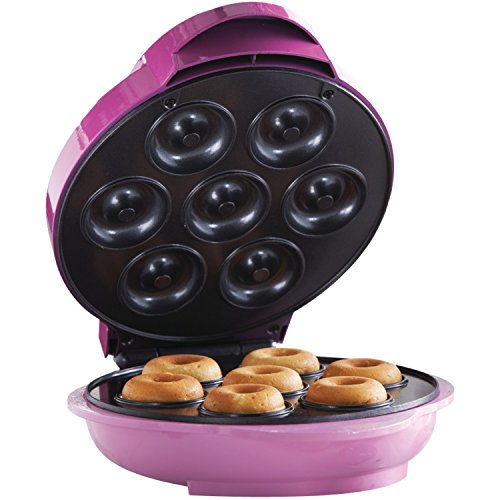


An electric donut maker bakes batter in ring-shaped molds between two heated plates, so you get warm donuts in minutes without a deep fryer, a pot of oil, or an oven preheat. Almost every home model makes mini donuts rather than full-size rings, and most bake seven at a time. The differences that matter are batch size, plate coating, storage shape, and what else the machine can do. These five picks cover the main shapes the category takes, from a compact seven-donut press to a sixteen-donut batch machine and an interchangeable-plate system.
As an Amazon Associate, we earn from qualifying purchases.
Quick answer
For most households, the Dash Express Mini Donut Maker is the default buy: seven donuts per batch, a compact footprint, and a recipe guide in the box. The Brentwood TS-250 matches it on capacity with an overheat shut-off, the DSP bakes sixteen at once for parties, and the Dash MultiMaker swaps plates for cupcakes and waffles.
Dash Express Mini Donut Maker (Aqua)

The Dash Express is the machine most people picture when they think of a countertop donut maker. Model DDM007GBAQ04 bakes seven mini donuts at a time on double-sided nonstick plates, so the rings cook from both sides and release without a fight. Dash rates the unit at 760 watts on a standard 120-volt outlet, and the plates are listed as PFOA free. There is a single heat setting and a power indicator light, which keeps operation to plug in, wait for the light, pipe in batter, and close the lid.
Size is the real selling point. The housing measures about 8.7 by 10.6 by 3.9 inches and weighs a little over three pounds, so it stores in a cabinet or deep drawer instead of living on the counter. Dash includes a recipe guide with the maker and backs it with a one-year manufacturer warranty. The same machine comes in other colors and a donut-print finish under separate listings, all built on the same seven-donut format.
The limits are the format’s limits. Seven minis disappear fast with more than two or three eaters, there is no timer or temperature control, and the plates are fixed, so the machine does one job. As a first donut maker for a small household, though, it covers the basics with the least storage cost.
Brentwood TS-250 Mini Donut Maker Machine
Brentwood’s TS-250 takes the same seven-donut idea and adds a couple of practical touches. The 750-watt unit bakes seven mini donuts per batch on non-stick plates, with power and preheat indicator lights so you know when the plates are ready for batter. Brentwood lists an overheat safety shut-off, a feature worth having on a small appliance that children will inevitably want to use, and the housing stores upright with a cord wrap underneath to save cupboard space.
The pink finish is the common listing, and the machine weighs about 3.1 pounds, light enough to pull out for a weekend breakfast and put away again. Recipes are included in the box. Like the Dash, it runs on one heat setting, so browning is controlled by how long you leave the lid closed rather than by a dial. Checking the first batch a minute early is the reliable way to learn your batter.
Choose the TS-250 if the shut-off and upright storage matter more to you than brand familiarity. It is a straightforward press with no removable plates and no accessories beyond the manual, and cleanup is a wipe of the cooled plates, since the non-stick surface is not meant for soaking or scrubbing.
CucinaPro Mini Donut Maker
The CucinaPro Mini Donut Maker is the plain, gift-friendly entry in this group. It bakes seven small doughnuts per batch on an electric nonstick surface, and the listing notes the finished donuts come out over half an inch thick, plumper than the flatter rings some mini machines produce. An instruction manual and recipe guide are included, which makes it a reasonable starter set for someone who has never piped batter into a mold before.
The housing is compact and designed to store upright, so it suits apartments, dorm rooms, and RV kitchens where a deep cabinet is not available. Operation is the familiar single-setting routine: preheat, fill each ring about two-thirds full, close the lid, and give the batch a few minutes. Because the plates are fixed and nonstick, metal utensils are off limits; a silicone spatula or wooden skewer is the right tool for lifting the rings out.
There is little here that the Dash or Brentwood does not also offer, and that is the honest summary. The CucinaPro earns its place on a slightly thicker donut, a tidy storage shape, and a presentation that works well as a boxed gift for a new baker. Buy it when those points matter; otherwise the choice among the three seven-donut presses comes down to finish and which listing is in stock.
DSP All in One Mini Donut Maker, 16 Donuts
The DSP maker is the batch-size outlier. Its plates hold sixteen two-inch mini donuts at once, more than double the output of the seven-donut presses, which changes the machine from a snack gadget into something that can feed a classroom party or a bake-sale table in a few rounds. The listing describes a cool-touch, scratch-resistant housing in plastic and stainless steel, with a non-stick coating and an indicator light.
It also arrives with the most complete accessory kit in this roundup: one hundred piping bags, a spatula, a balloon whisk, kitchen tongs, and a cooking brush. Piping bags are not a luxury with donut makers, since spooning batter into small rings is slow and messy, so having a supply in the box is a genuine head start. The maker is listed under part number KC1174-110V, a 110-volt unit for North American outlets.
The trade-off is counter and storage space, plus a longer preheat than the small presses. Sixteen cavities also mean sixteen rings to fill before the first ones start overcooking, so work in a steady rhythm. For a household that bakes donuts twice a year, this is more machine than needed; for anyone who regularly feeds a crowd of kids, it is the pick that keeps up.
Dash MultiMaker Treat Maker System
The MultiMaker is Dash’s answer for people who like the mini format but do not want three separate appliances. Model DIM823GBAQ04 uses interchangeable plates: one set bakes mini donuts, another makes mini cupcakes, and a third presses heart-shaped waffles. The plates swap in and out and are removable for cleaning, and the listing describes them as dishwasher safe, which no fixed-plate press here can claim.
For donut duty specifically, it behaves like the rest of the Dash mini line, with the same plug-in, single-setting operation and a compact aqua housing. The value is in the other two plate sets. A household that will realistically use the cupcake and waffle plates gets three small appliances’ worth of novelty out of one storage footprint, and the removable plates also solve the mini maker’s usual cleanup complaint, since batter that bakes onto a plate can go in the sink instead of being picked out with a damp cloth.
The compromise is that a plate system costs more than a single-purpose press and the donut batch is the standard mini size, not a step up in capacity. If donuts are the only treat on your list, the Express above is the simpler buy. If your counter already holds a waffle maker you rarely use, the MultiMaker is the consolidation play.
How to choose
Start with batch size. Seven-donut presses suit one to three eaters; the sixteen-donut DSP suits parties and batch baking. Then look at the plates. Fixed nonstick plates are the norm and must be wiped clean and kept away from metal tools; removable plates, offered by the MultiMaker, are easier to wash properly. Single heat settings dominate this category, so judge browning by time, and prefer a model with a preheat light so you are not guessing when the plates are ready.
Storage shape matters more than it sounds. Upright-storing models like the Brentwood and CucinaPro fit narrow cabinets, while the DSP needs real shelf space. On safety, a dedicated search found no CPSC recall covering electric donut makers as a class or any of the five models here, but treat that as a snapshot, not a guarantee: check the exact model in the CPSC database before buying, especially secondhand, and favor listings that name basic protections such as the Brentwood’s overheat shut-off. Finally, remember these machines bake cake-style donuts. No countertop press reproduces a fried yeast donut, whatever the box implies.
Who should skip
Skip a donut maker if you want full-size, bakery-style yeast donuts; every machine here bakes small cake rings, and a stand mixer, a donut pan, and a fryer or oven serve that goal better. Skip it, too, if your household already owns a mini waffle or sandwich press that rarely leaves the cabinet, since a single-treat appliance follows the same pattern for most people. And if you bake donuts once a year for one event, a pair of oven donut pans costs less, stores flat, and needs no counter space at all.
Frequently asked questions
Do donut makers fry or bake the donuts?
They bake. Batter sits in ring-shaped cavities between two heated plates, so the result is a cake-style donut with a soft crumb, closer to a muffin in texture than to a fried ring. There is no oil bath involved, which is why cleanup is light and the donuts are best eaten warm, glazed, or rolled in cinnamon sugar straight from the press.
How long does a batch take?
Most mini makers preheat in a few minutes and bake a batch in roughly three to five minutes once the plates are hot, though the first batch usually runs slower while the plates settle. Exact times vary with batter thickness and how full each ring is. A piping bag keeps filling fast and even, which matters most on the sixteen-donut machine.
Can I use regular cake mix or pancake batter?
Yes. Boxed cake mix is the common starter because it is consistent, and pancake batter works if it is mixed thick rather than pourable. Scratch donut batters designed for pans also work. Fill each cavity about two-thirds full, since thin batters rise less and overfilled rings spill onto the plate and bake into a web between donuts.
How do I clean a donut maker?
Let the plates cool completely, then wipe them with a damp cloth or a soft sponge. A drop of mild dish soap handles greasy residue. Never immerse the unit, never use abrasive pads, and keep metal utensils away from the coating. The exception is the MultiMaker, whose removable plates are listed as dishwasher safe once they have been taken out of the housing.
Final verdict
Buy the Dash Express if you want the standard seven-donut press in the smallest package. Take the Brentwood TS-250 for its overheat shut-off and upright storage, or the CucinaPro for a slightly thicker donut and gift-ready box. The DSP is the crowd feeder, and the Dash MultiMaker is the one to choose when removable, swappable plates matter more than a dedicated machine. Match the batch size to your table, and any of the five will do the job.
Product and ASIN Reference
| Product | ASIN |
|---|---|
| Dash Express Mini Donut Maker (Aqua) | B087RQZ3GH |
| Brentwood TS-250 Mini Donut Maker Machine | B00HSHS1Y0 |
| CucinaPro Mini Donut Maker | B08XM5NY89 |
| DSP All in One Mini Donut Maker, 16 Donuts | B0CGWV5WZN |
| Dash MultiMaker Treat Maker System | B0DFK274K1 |
FAQ
Do donut makers fry or bake the donuts?
How long does a batch take?
Can I use regular cake mix or pancake batter?
How do I clean a donut maker?
More from Amazon
Programs that pair well with the guide above. Offers and eligibility are set by Amazon and may change.
Set up recurring deliveries of everyday items on eligible products. Terms and savings are set by Amazon.
Explore Subscribe & SaveCollect the home and kitchen items you want in one registry that guests can shop from.
Create a wedding registryFree shipping on eligible items, Prime Video and more. Eligible new members can start with a free trial.
Start a Prime free trialAudiobooks and podcasts to listen to on the go. Eligible new members can start with a free trial.
Try Audible freeAs an Amazon Associate we earn from qualifying purchases.