Our Top Picks
 Consciot 11-Piece Blender for Kitchen and Personal Size11 Piece Blender Set10.83 x 4.81 x 8.35 InchesCheck on Amazon
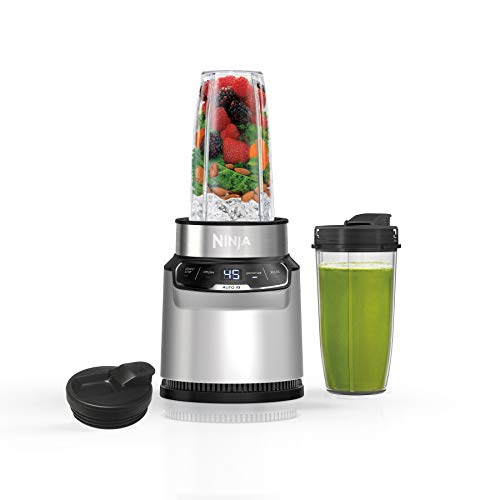 Ninja Nutri-Blender Pro with Auto iQ1000-Peak-Watts6.34 x 6.93 x 14.29 Inches6.28 poundsCheck on Amazon
The best personal blender for most people is a mid-range cup-style unit with a motor in the 600 to 1,000 watt area and at least one 20-ounce-plus cup, because that covers daily smoothies and shakes without the bulk of a full countertop blender. Budget models can handle soft fruit and protein powder, and the larger Ninja and nutribullet units are the safer picks for frozen fruit and ice. All ten listings below are single-serve, cup-based blenders, so they fit one person or a couple rather than a family batch. Use the table below to shortlist, then read the individual sections for the caveats each title leaves out.
Compare the ten personal blenders at a glance

Ninja Fit Compact Personal Blender, 700W, (2) 16oz Cups, QB3001SS | 700-watt base blends smoothies, shakes & frozen drinks. (2) 16-oz to-go cups w/ spout lids. Dishwasher safe.
One of the home product options compared in this guide.
View on Amazon
magic bullet® Personal Blender, 22 oz Cup, 250 Watt, Silver, MBR-1101 | 250-watt base blends smoothies, shakes & frozen drinks. Includes (3) To-Go Cups (1) Travel Lid. Dishwasher safe.
One of the home product options compared in this guide.
View on Amazon
KOIOS Smoothie Blender Kitchen, 900W Personal Blenders with 3 To-Go Cups | (2) 23oz & 16oz Cups, Blend Smoothies Shakes Juices Frozen Drinks, Dishwasher Safe Part, Twist-Lock, 14Pcs, Recipe, Grey Blue
One of the home product options compared in this guide.
View on Amazon
Ganiza Smoothie Blender, 14Pcs Portable Personal Blender Shakes & Smoothies | With 3 Portable Cups (1*24oz & 2*17oz), Peak Power 900W Single Serve Smoothie Maker for Kitchen, BPA-Free, Nutritious Recipe
One of the home product options compared in this guide.
View on AmazonConsciot 11-Piece Blender for Kitchen and Personal Size, 900 Peak Watts | Blend Shakes & Smoothies, Frozen Drinks, Baby Food, Spreads & More, 3 Portable BPA-Free To-Go Cups, 2 Spout-Lids & 1 Flat-Lid
One of the home product options compared in this guide.
View on AmazonNinja Nutri-Blender Pro with Auto iQ, 1100PW, (2) 24oz Cups, BN401 | 1100-peak-watt motor + 2 Auto-iQ programs for smoothies, salsa & dips. (2) 24-oz to-go cups. Dishwasher safe.
One of the home product options compared in this guide.
View on Amazon
nutribullet Personal Blender, 600W, 24oz Cup, NBR-0601WM | 600-watt base blends smoothies, shakes & frozen drinks. Includes (1) Cups (1) Travel Lid. Dishwasher safe.
One of the home product options compared in this guide.
View on Amazon
Ninja Nutri-Plus Personal Blender, 900PW, (3) 20oz Cups, Silver, BN301 | 900-peak-watt push-to-blend motor for smoothies & sauces. (3) 20-oz cups, 2 spout lids & storage lid. Dishwasher safe.
One of the home product options compared in this guide.
View on Amazon
Hamilton Beach Portable Blender for Smoothies With 14 oz. Travel Jar | BPA Free Jar & Lid | Durable Stainless Steel Blades | 300 Watts Peak Power | Personal Smoothie Blender | Blue | 51172G
One of the home product options compared in this guide.
View on Amazon
nutribullet Pro+ Personal Blender, Pulse, 1200W, Matte Black, N12-1001MK | 1200W Blender with Pulse button, 32 oz & 24 oz To-Go Cups with travel lids. Dishwasher Safe.
One of the home product options compared in this guide.
View on Amazon| Model | Key point from title | Price tier | Best for |
|---|---|---|---|
| Ninja Fit QB3001SS | 700W base, two 16 oz cups | Mid-range | Compact daily smoothies |
| Magic Bullet MBR-1101 | 250W, 22 oz cup, three to-go cups | Budget | Light shakes and small jobs |
| KOIOS 900W Smoothie Blender | 900W claim, 23 oz and 16 oz cups | Budget | Low-cost smoothies with recipes |
| Ganiza 14-Piece Blender | 900W peak, one 24 oz and two 17 oz cups | Budget | Value cup variety |
| Consciot 11-Piece Blender | 900 peak watts, three to-go cups | Budget | Entry-level blending |
| Ninja Nutri-Blender Pro BN401 | 1100 peak watts, Auto-iQ programs | Premium | Frozen blends, salsa and dips |
| nutribullet NBR-0601WM | 600W, 24 oz cup | Mid-range | Simple one-cup routine |
| Ninja Nutri-Plus BN301 | 900 peak watts, three 20 oz cups | Mid-range | Shared kitchens, multiple cups |
| Hamilton Beach Portable 51172G | 300W peak, 14 oz travel jar | Budget | Very small, light-duty drinks |
| nutribullet Pro+ N12-1001MK | 1200W, pulse button, 32 oz and 24 oz cups | Premium | Heavier frozen and fibrous blends |
Where personal blenders are heading
Look across these ten listings and one pattern stands out: the headline number has become wattage. Almost every title leads with a watt figure, and several use “peak” or “PW,” which describes a brief maximum rather than steady power. Because brands do not all use the same convention, a 900-peak-watt model and a 600-watt model are not directly comparable, and cup design and blade shape probably matter as much as the figure itself.
A second pattern is accessory bundling. Titles list 11-piece and 14-piece kits with extra cups, spout lids, flat lids and recipe books. Extra cups are genuinely handy for meal prep, but they are also an inexpensive way to make a listing look larger than its motor deserves.
Third, programmable blending has started to filter down. The Ninja Auto-iQ listing mentions preset programs, and the nutribullet Pro+ adds a pulse button, a feature that gives you more control over texture than a simple twist-and-hold cup. Meanwhile, the very low-wattage portable category, represented by the Hamilton Beach listing, keeps shrinking in size and price. Expect more cordless and travel-friendly designs, though the titles here do not confirm which models are cordless, so check each listing. All of this is general market direction, not a forecast. Finally, shoppers have become more alert to material claims such as BPA-free plastic and stainless steel blades, which show up in several titles. These are reassuring words, but they only describe one aspect of a product, so keep reading the full listing.
How this list was put together
We worked from the product titles, published specifications, manufacturer documentation and the general tone of buyer reviews. The aim was a spread of motor strengths, cup counts and price tiers, from a compact light-duty blender up to the larger, higher-wattage cups. Nobody on the team used or measured these units, so there are no speed, noise or durability scores here. Where a title is ambiguous or contains what looks like a typo, we say so. Price tiers are relative within this group, not live prices. If a model has been revised since a listing was written, the box contents may differ from the title, so treat the title as a starting point and verify the details on the page before ordering.
The ten personal blenders, listing by listing
Ninja Fit Compact Personal Blender, 700W, Two 16 oz Cups (QB3001SS)
The title gives a 700-watt base and two 16-ounce to-go cups with spout lids, and says the parts are dishwasher safe. It is small enough for a crowded counter and is pitched at smoothies, shakes and frozen drinks.
The two-cup setup suits a couple who each want a drink in the morning, or one person prepping tomorrow’s smoothie in the second cup. Sixteen ounces is modest, so it is more of a single-serving blender than a big-batch one.
- Pros: two to-go cups with spout lids
- Pros: mid-range motor claim in a compact format
- Cons: 16 oz cups limit portion size
- Cons: the title does not say whether the cups handle ice well
Check the listing for the cup material, the blade assembly and what is included. Because the cups double as drinking vessels, it is also worth asking how the spout lid seals when tossed into a bag, and whether the cup walls feel sturdy enough for daily washing. A compact base like this usually means a small footprint, which helps in a narrow kitchen, but it also means less room for large pieces of frozen fruit. Cut ingredients small and add liquid first. Question to ask: is 16 ounces enough for a meal-replacement shake, or will I want a bigger cup?
Magic Bullet Personal Blender, 22 oz Cup, 250 Watt (MBR-1101)
This is the low-wattage veteran of the group. The title states 250 watts, a 22-ounce cup, three to-go cups, one travel lid, and dishwasher-safe parts. It is the right size for a quick shake, a sauce or a small chop job.
It suits a person who blends soft ingredients such as banana, milk and powder, or makes a dip now and then, and who does not want to pay for a heavy motor. Frozen fruit is where a 250-watt base may struggle, so thaw or use smaller pieces.
- Pros: budget tier, three cups included
- Pros: easy to store and clean
- Cons: lowest wattage on the list besides the portable jar
- Cons: not an obvious fit for ice-heavy drinks
Check the listing for the cup types and the blade options, and read buyer comments about frozen ingredients. Many buyers of low-wattage units report using them for sauces, spices and small chopping jobs as well as shakes, though that is general buyer behavior rather than a promise on the title. If you do try ice, work in short pulses, stop if the motor strains, and follow the manufacturer’s instructions on run time. Question to ask: will I use ice or frozen fruit, or mostly soft ingredients?
KOIOS 900W Personal Smoothie Blender with Three To-Go Cups
KOIOS leads with a 900-watt claim and a 14-piece kit with a recipe book. One ambiguity: the title mentions three to-go cups but lists only two sizes, 23 ounces and 16 ounces, so check what the third cup is before relying on it.
This kind of listing attracts someone setting up a first kitchen who wants a lot of accessories at a low tier, such as a student sharing a flat. The twist-lock design in the title suggests cups attach by turning, which is common for this style.
- Pros: low price tier with many pieces
- Pros: a recipe book and several cup sizes
- Cons: the wattage is a seller claim, not a standard measurement
- Cons: ambiguous cup count in the title
Check the listing for the cup list, whether the 900 W figure is peak or rated, and the warranty. Accessory-heavy kits are easy to love on day one and easy to ignore by week three, when most people settle on a single favorite cup. If you share a kitchen, extra cups with their own lids can at least keep each person’s drink separate in the fridge. Question to ask: do I need the extra cups, or just a stronger motor?
Ganiza 14-Piece Portable Personal Blender with Three Cups
The title describes a 14-piece set with three portable cups (one 24-ounce, two 17-ounce), a peak power of 900 watts, BPA-free parts and a nutrition recipe guide. It is a close cousin of the KOIOS listing, with a slightly clearer cup description.
Think of a gym-bag routine: one 17-ounce cup for a morning shake, a second for a pre-workout drink, and the 24-ounce for something bigger at home.
- Pros: clearly described cup sizes
- Pros: budget tier with several accessories
- Cons: “peak power” is not sustained power
- Cons: nearly interchangeable with other budget 900-watt kits
Check the listing for the accessory list, the blade type and the cup lid design. Because the three 900-watt kits in this group read so similarly, the practical differences are likely to be cup sizes, lid designs and warranty terms, so line those up side by side. Plastic cups can pick up odors and stains from turmeric or berries over time, which is a general trait of the material. Question to ask: if I strip away the extras, is this really different from the KOIOS and Consciot units?
Consciot 11-Piece Personal Blender, 900 Peak Watts
The title offers 11 pieces, 900 peak watts, three BPA-free to-go cups, two spout lids and one flat lid, and it mentions baby food and spreads in addition to smoothies. It is the least expensive of the three 900-watt kits here.
The flat lid is the useful detail: you can store a prepped cup in the fridge without a spout. The baby food mention is a general capability claim; follow the manufacturer’s instructions and food-safety guidance if you use any blender for infants, and consult a pediatrician about what a baby can eat.
- Pros: lowest cost of the 900-watt kits
- Pros: flat lid for storage
- Cons: smaller piece count than the 14-piece kits
- Cons: cup sizes are not given in the title
Check the listing for the cup volumes, since the title leaves them out. If you will make baby food, wash every part carefully before first use, follow the manufacturer’s cleaning guidance, and treat the title’s mention of baby food as a capability note, not a food-safety assurance. The three-lid arrangement is handy, but each lid is another small part to wash and keep track of. Question to ask: do I want the lowest price, or the clearer specifications of other kits?
Ninja Nutri-Blender Pro with Auto-iQ, 1100PW, Two 24 oz Cups (BN401)
This is the most feature-rich Ninja listing in the group. The title names a 1100-peak-watt motor, two Auto-iQ programs for smoothies, salsa and dips, two 24-ounce to-go cups, and dishwasher-safe parts.
The programs are the point: instead of holding the cup down and judging time by ear, you press a preset. For someone who blends frozen fruit and greens most mornings, or makes salsa for a weekend gathering, that consistency is attractive.
- Pros: preset programs reduce guesswork
- Pros: larger 24 oz cups
- Cons: premium tier within this set
- Cons: “PW” is a peak figure, not sustained power
Check the listing for how the programs run and for the cup material. Auto-iQ style programs generally cycle the blades through pulses and pauses automatically, which can help break up frozen ingredients without constant attention. It is a convenience, though, not a guarantee of a smoother result, and the title says nothing about noise. Shorter cycles also mean you can start a drink and walk away to pack a lunch. Question to ask: do I need automatic programs, or is a manual push-to-blend enough?
nutribullet Personal Blender, 600W, 24 oz Cup (NBR-0601WM)
The title gives 600 watts and a 24-ounce cup with a travel lid, and says the parts are dishwasher safe. It also contains a small typo, “Includes (1) Cups (1) Travel Lid,” so confirm exactly what ships in the box.
It suits a minimalist who wants one cup, one lid and a straightforward routine. It sits in the middle of the pack for price but offers fewer accessories than the budget kits.
- Pros: simple, uncluttered set
- Pros: single 24 oz cup is a practical size
- Cons: fewer cups than competing kits
- Cons: 600W is mid-pack for frozen work
Check the listing for the box contents and for whether extra cups are sold separately. If the box really contains one cup and one travel lid, a daily routine means rinsing that cup every morning, which is no hardship for a single person but gets tedious for a household. Extra cups are sold separately by many brands, but check compatibility before ordering. Question to ask: will one cup be enough, or will I be washing it between every use?
Ninja Nutri-Plus Personal Blender, 900PW, Three 20 oz Cups (BN301)
The title cites a 900-peak-watt push-to-blend motor, three 20-ounce cups, two spout lids and a storage lid, and dishwasher-safe parts. Push-to-blend means you press the cup into the base to run it, which some people find more convenient than a twist.
It suits a household where two or three people want their own cup ready, or someone who preps drinks for the day ahead. Twenty ounces is a comfortable single serving.
- Pros: three equal-size cups
- Pros: push-to-blend operation described in the title
- Cons: still a 900 peak-watt claim, not a sustained rating
- Cons: no programs or pulse mentioned
Check the listing for blade type and the lid options. A shared household can assign one cup to each person and keep a third for prep, which makes three equal cups a sensible layout. The storage lid also lets a blended dip or dressing sit in the fridge without a separate container. Blades and gaskets are the parts that wear, so look for replacement availability. Question to ask: do I want the extra cups here, or the stronger motor of the Pro listing?
Hamilton Beach Portable Blender, 14 oz Travel Jar, 300W Peak (51172G)
The smallest and cheapest listing: a 14-ounce BPA-free travel jar, stainless steel blades and 300 watts of peak power. The word “portable” appears in the title, but it does not say whether the unit is cordless, so check the listing before assuming it works away from an outlet.
It is built for a single soft-ingredient drink at your desk or in a dorm: fruit, milk, powder. It is not built for ice or large batches, and it stands apart from the larger cups in this roundup as a lighter class.
- Pros: lowest price tier
- Pros: compact jar doubles as a travel cup
- Cons: 300W peak and 14 oz limit what it can do
- Cons: portability details are not confirmed by the title
Check the listing for power source and any ice guidance. Frozen ingredients and thick mixes are beyond what a 300-watt peak figure suggests, so keep expectations modest and cut ingredients small. If the unit is rechargeable, battery safety rules apply: use the supplied charger and follow the manufacturer’s instructions. Question to ask: do I want a tiny drink maker, or a real personal blender?
nutribullet Pro+ Personal Blender, 1200W, Pulse Button (N12-1001MK)
The most powerful number in the group. The title lists 1200 watts, a pulse button, 32-ounce and 24-ounce to-go cups with travel lids, and dishwasher-safe parts. A pulse button lets you control texture, which helps with chunky salsa or crushing ice in short bursts.
It suits a frequent smoothie maker with frozen fruit, greens or ice who wants a bigger cup, such as an athlete making a large post-workout drink.
- Pros: highest wattage and the largest cup
- Pros: pulse button for control
- Cons: bulkier than the compact units
- Cons: not the cheapest way to get a basic shake
Check the listing for noise comments and the warranty. A strong motor and a big cup also mean more noise and a larger footprint, and a full 32-ounce cup is heavy to carry once filled. Blend with the lid firmly locked and never run the motor with the cup empty. Question to ask: will I really use 32 ounces and a pulse button, or is that more machine than I need?
Buying guide: how to choose a personal blender
Match wattage to the ingredients
For soft fruit, yogurt and powders, a lower-wattage base is acceptable. For frozen fruit, ice and leafy greens, more power helps, and blade design matters too. Because these listings mix “peak” and plain watt figures, compare the type of number before the size of it. A model with fewer watts and a sound design can outperform a bigger number, so buyer comments about frozen ingredients are worth reading. Also consider how often you blend. A once-a-week shake barely taxes a small motor, whereas a daily frozen smoothie is a steady workload, and the gap between a 250-watt and a 1,000-watt base shows up fastest there. If you mostly want a smooth texture with leafy greens, give extra weight to the blade shape and the amount of liquid you can add, not only the watt figure.
Cup size and count
Sixteen to 24 ounces suits a single serving. Thirty-two ounces suits a larger shake. Extra cups help with prep, but be honest about how many you will actually use, since each one needs cleaning. Spout lids are for drinking, flat lids are for storage, and a travel lid keeps a drink from spilling in a bag. Check also whether the cup is tall and narrow or short and wide, because a narrow cup tends to pull ingredients toward the blades more easily, while a wide one is easier to scoop out and clean. If you want to blend straight from the cup you drink from, a to-go design saves washing a second vessel.
Controls and programs
Twist-and-hold designs are simple. Push-to-blend, pulse buttons and preset programs add control and convenience. If you only ever blend one thing, simplicity wins; if you make salsa, dips or textured blends, pulse and presets can help. Push-to-blend can feel more natural for people who dislike twisting a cup against a base, and it keeps a hand on the cup, which is a small safety plus because the blades stop when you let go. Whichever style you choose, read how the interlock works so you do not start the motor by accident while the cup is loose.
Cleaning, safety and care
Dishwasher-safe claims in titles often cover cups and lids, not the base. Blades are sharp, so unplug the unit before attaching or removing the blade assembly. Do not blend hot liquids in sealed cups, never exceed the fill line, and keep the base away from water. Follow the manufacturer’s instructions for run times, because small motors can overheat if run continuously. Let the unit rest between cycles, and wipe the base with a damp cloth rather than rinsing it. If a cup cracks, clouds heavily or stops sealing, replace it instead of pushing on. Handle blade assemblies by the cup rim or the plastic housing, never by the cutting edges, and keep spare blades away from children.
Worked example with stated assumptions
Assume a person who makes one smoothie each weekday morning with a banana, frozen berries, a handful of spinach, milk and a scoop of protein powder, with roughly one cup of frozen fruit. Assume 20 ounces is a comfortable serving and no sharing with a partner. That pushes the shortlist toward a 600 to 1,000 watt cup with a 24-ounce capacity, such as the nutribullet 600W or the Ninja Nutri-Plus. A 250-watt or 300-watt unit would probably struggle with the frozen berries. If the person also wanted to batch prep three drinks on Sunday, the three-cup Ninja or the larger-count budget kits start to look appealing.
| Spec concept | What to look for | Why it matters |
|---|---|---|
| Wattage type | Peak versus rated, stated clearly | Figures are not directly comparable |
| Cup volume | 16 to 32 oz, matched to your serving | Fill lines limit real capacity |
| Lid options | Spout, flat and travel lids | Affects storage and commuting |
| Controls | Pulse, preset or twist | Texture control for dips and salsa |
| Cleaning | Which parts are dishwasher safe | Claims often exclude the base |
Mistakes buyers make with personal blenders
The biggest mistake is shopping on wattage alone. Because peak and sustained watts are different measurements, a big number can mislead. Look at the cup size and the type of ingredients you blend.
The second is overfilling. Blending expands contents, and filling past the line causes leaks and strain on the motor. The third is blending hot liquids in a sealed cup, which can force the lid off. Let ingredients cool.
The fourth is running the motor non-stop. Small blenders are designed for short bursts, and the manufacturer’s instructions usually give a maximum run time. The fifth is buying a kit for its piece count. Eleven and 14-piece bundles include lids, cups and rings that do not improve the blending. Choose a motor and cup you will use, then treat extras as a bonus.
A sixth mistake is ignoring the noise and counter space. Small blenders are loud for their size, and a tall unit may not fit under a low cabinet. Measure the spot where you plan to keep it, and decide whether you will leave it out or put it away each time.
Verdict by use case
For light shakes and small jobs, the Magic Bullet or the Hamilton Beach jar keeps cost down but sets modest expectations. For budget cup variety, the Ganiza, KOIOS or Consciot kits give several cups at a low tier; compare their cup details first. For a balanced daily blender, the nutribullet 600W and the Ninja Nutri-Plus sit in the middle. For frozen fruit, ice and larger portions, the Ninja BN401 and the nutribullet Pro+ are the stronger choices. If you need a bigger family-size batch than any of these provide, a countertop model may suit you better. Whichever you choose, confirm each claim on the listing before buying, and follow the manufacturer’s instructions for blending limits, cleaning and safe handling of the blades.
Frequently asked questions
Are personal blenders powerful enough for daily smoothies?
For soft fruit, yogurt, protein powder and milk, most personal blenders cope fine. Frozen fruit, ice and fibrous greens are the harder jobs, and they separate stronger motors from weaker ones. Wattage labels are a rough guide only, since some titles list peak watts rather than sustained power. If you blend frozen ingredients daily, lean toward the higher-wattage listings, add liquid first, and follow the manufacturer’s fill-line and run-time instructions.
What is the difference between watts and peak watts?
Peak watts describe a brief maximum, often at startup, while rated watts describe a more sustained draw. Several titles in this roundup use “peak” or “PW,” and they are not directly comparable to a plain wattage figure from another brand. Treat both as marketing starting points. Blade design, cup shape and how much liquid you add can matter as much as the number, so read the listing for what the figure actually refers to.
Can I blend hot liquids in a personal blender cup?
Usually you should not. Hot liquids create steam and pressure inside a sealed cup, and the lid can be forced off, causing burns. Most manufacturers warn against blending hot ingredients in sealed to-go style cups. If you want warm soup or sauce, let ingredients cool first, work in small batches, or use a vessel designed for it. Always follow the manufacturer’s instructions for your exact model.
Are the to-go cups dishwasher safe?
Several titles here state that parts are dishwasher safe, but the claim may cover only some pieces, such as cups and lids, and not the motor base. Blades and rubber seals can wear faster with heavy dishwasher use, so some owners hand wash them. Never submerge the base in water. Check the listing and the care sheet for which parts are rated and whether the top rack is recommended.
How do I stop a personal blender from leaking at the blade base?
Leaks usually come from a misaligned or worn gasket, overfilling, or a cup that is not fully twisted on. Fill below the marked line, check that the rubber ring is seated and undamaged, and tighten until the cup locks in place. Replace worn seals if the manufacturer sells them. If a cup keeps leaking after those checks, contact the seller rather than forcing it, and follow the manufacturer’s instructions throughout.
When should I choose a different type of blender instead?
If you regularly blend for three or more people, make hot soups, or grind nut butters, a cup-style personal blender will feel limiting. A full-size countertop blender or one of the high-powered blenders handles bigger batches, and if soup is the goal, an immersion blender lets you work directly in the pot. Personal blenders shine for one or two servings, not family-scale cooking.