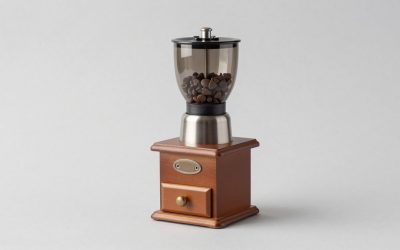
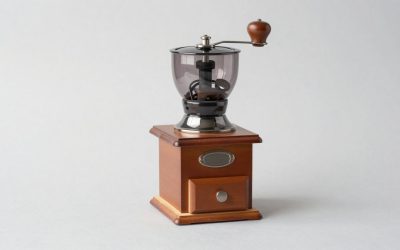
Our Top Picks
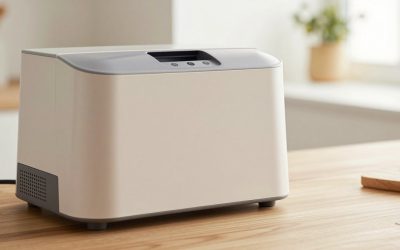
 Proctor Silex Fresh Grind Electric Coffee Grinder For12 Cups3.43 x 3.31 x 7.01 Inches1.08 poundsCheck on Amazon
 Hamilton Beach Fresh Grind Electric Coffee Grinder ForMakes up to 12 Cups3.74 x 3.54 x 7.13 inches1.3 PoundsCheck on Amazon
The best inexpensive coffee grinder for a stovetop kitchen is the Bodum Bistro burr grinder if you want evenness, the Hamilton Beach Fresh Grind if you want the simplest low-cost blade grinder, and the Hario Skerton Pro if you would rather turn a handle than plug in. The Cuisinart DBM-8 sits in the middle as a low-cost electric burr with 18 settings, and the KRUPS Precision and the Secura two-bowl grinder are blade options that also handle spices. Which is right depends on the pot on your stove: a moka pot is fussier than a French press, and a drip machine is the most forgiving.
This guide is for kitchens that make coffee the traditional way: a moka pot on the burner, a press on the counter, a drip machine on a busy morning. In these setups an inexpensive grinder is a sensible choice, because you do not need espresso-fine precision, but you do need to avoid the dust that makes coffee bitter and the chunks that make it sour. We compare six low-cost grinders that are sold in the shop catalog, explain which brew method each suits, and give a pulse-and-shake routine for blade grinders. It is research-based: we did not personally use these grinders, and sources are listed at the end.

Aromvel Electric Coffee Grinder, 2-in-1 Cleaning Brush & Scoop, Safety Lid | One Touch Coffee Mill with Stainless Steel Blades, Adjustable Coarse to Fine for Coffee Beans, Spice & Dry Grinding
Chosen because it specifies 2-in-1 Cleaning Brush & Scoop and Safety Lid.
View on Amazon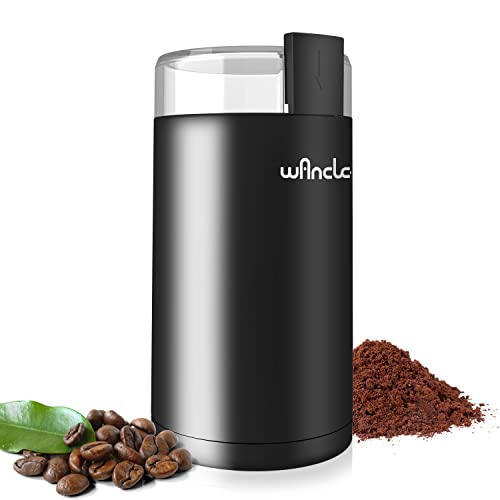
Wancle Electric Coffee Grinder, Spice Grinder, One Touch Coffee Mill for Beans, Spices and More, with Clean Brush Black
Chosen because it specifies Spice Grinder and One Touch Coffee Mill for Beans.
View on AmazonProctor Silex Fresh Grind Electric Coffee Grinder For Up To 12 Cups | Grinds Coffee Beans, Spices & More | Stainless Steel Blades | White | 80301PS
Chosen because it specifies Grinds Coffee Beans and Spices & More.
View on AmazonHamilton Beach Fresh Grind Electric Coffee Grinder For Up To 12 Cups | Grinds Coffee Beans, Spices & More | Stainless Steel Blades | Easy-Clean Removable Chamber | Black | 80335RG
Chosen because it specifies Grinds Coffee Beans and Spices & More.
View on AmazonTop Picks at a Glance
- Best Overall Inexpensive Burr: Bodum Bistro burr grinder, with 12 settings, conical burrs and a dishwasher-safe catcher.
- Best Low-Cost Electric Burr: Cuisinart DBM-8 Supreme Grind, with 18 settings and a cup dial.
- Best Simple Blade Grinder: Hamilton Beach Fresh Grind, with a 4.5 oz removable bowl and one-button control.
- Best Blade Grinder for Coffee and Spices: Secura two-bowl grinder, with a grinding bowl and a chopper bowl.
- Best Compact Blade: KRUPS Precision, with 3 oz capacity and a 200W motor.
- Best No-Power Option: Hario Skerton Pro, with ceramic burrs and 100g capacity.
Comparison Table
| Product | Best for | Key specs | Watch for | Price tier |
|---|---|---|---|---|
| Bodum Bistro burr | Moka pot, press and drip with one tool | 12 settings; conical burrs; 220g bean container; preset timer | Glass and plastic versions differ | Budget to mid-range |
| Cuisinart DBM-8 | Drip and press for a family | 18 positions; 8 oz hopper; 4 to 18 cup dial | Coarse evenness | Budget |
| Hamilton Beach Fresh Grind | Casual drip | Blade; 4.5 oz; 125W; no settings | Uneven grounds | Budget |
| Secura two-bowl grinder | Coffee plus spices | Blade; two stainless bowls; 200W (manual) | Small batch limits | Budget |
| KRUPS Precision (F203) | Small drip batches | Blade; 3 oz; 200W | Uneven grounds | Budget |
| Hario Skerton Pro | Press, cold brew, kitchens without outlets | Ceramic burrs; 100g capacity; about 10 steps | Slow; coarse steps | Budget |
Match the Grinder to the Pot on Your Stove
Different brewers punish different mistakes. A French press tolerates a rough grind better than a moka pot, but it hates fine dust, because dust passes through the mesh and makes the cup muddy. A moka pot needs a medium-fine grind, finer than drip and coarser than espresso, usually described as like fine sand or table salt. If the grind is too fine, the coffee tastes bitter and the pot can sputter. If it is too coarse, the cup is sour and weak. Never tamp the grounds in a moka pot basket.
| Brewer | Grind target | Blade grinder OK? | Best pick here |
|---|---|---|---|
| Moka pot | Medium-fine | With effort (pulse and shake) | Bodum Bistro burr |
| French press | Coarse | Poor; fines muddy the cup | Hario Skerton Pro, Cuisinart DBM-8 |
| Drip machine | Medium | Yes | Hamilton Beach, KRUPS, Cuisinart |
| Cold brew | Coarse | Poor; fines cloud the brew | Hario Skerton Pro |
| Pour over | Medium-fine to medium | Not recommended | Bodum Bistro burr |
1. Bodum Bistro Burr Grinder: Best Inexpensive Burr
- 12 grind settings, set by twisting the upper bean container
- Stainless steel conical burrs, about 160W
- Up to 220g (about 7 oz) bean container with a measuring guide in the lid
- Preset timer; the borosilicate glass catcher version resists static
- Catcher and lid are dishwasher safe; two-year manufacturer warranty
Best for: a kitchen that uses a moka pot, a press and a drip machine and wants one grinder that covers all three. Skip if: you need many steps for dialing a particular brewer.
Bodum’s Bistro is the most coffee-minded inexpensive grinder in this guide. Conical burrs crush rather than chop, so the grounds are far more even than from a blade, and the 12 settings cover coarse for press through medium-fine for moka. The timer lets you set a dose by time, and the lid doubles as a measuring guide. Bodum sells a plastic-catcher “standard” model and a glass-catcher timer model, so read the listing before ordering. The glass version is better for static.
The weakness is resolution: with only 12 steps, a jump from one setting to the next may overshoot your ideal moka grind. If that happens, adjust by a small amount of dose or tamp-free filling instead. Burr size is reported as 35mm by one review, but this is not confirmed by the maker, so we mark it as not listed.
Pros: conical burrs; glass catcher option; dishwasher-safe parts; two-year warranty. Cons: few settings; small catcher; easy to confuse versions.
2. Cuisinart DBM-8 Supreme Grind: Best Low-Cost Electric Burr
- 18-position grind selector, ultra-fine to extra-coarse
- 8 oz removable bean hopper
- Grind chamber sized for up to 32 cups
- Cup slide dial for 4 to 18 cups with an electric timer
- Around 140W; limited 18-month warranty
Best for: family-size drip and French press. Skip if: you mostly make small amounts for a moka pot.
The DBM-8’s cup dial suits a kitchen that brews pots rather than single cups. Select the number of cups, press the bar and walk away. The 18 positions give a bit more room than the Bodum. One independent reviewer noted less even grounds at coarse settings, which matters for press, so sift the fines if your press tastes muddy.
One Cuisinart page labels the base DBM-8 as discontinued while the DBM-8P1 is listed as current, so confirm the model when you order.
Pros: more settings; cup dial; large chamber; easy to find. Cons: coarse unevenness; mostly plastic; bulk for small batches.
3. Hamilton Beach Fresh Grind: Best Simple Blade Grinder
- Stainless steel blade, single speed, no grind settings
- 4.5 oz capacity, enough for up to 12 cups
- 125W motor; removable, dishwasher-safe stainless bowl
- One-button press-and-hold control; cord stores in the base
- About 1.3 lb and 7 inches tall
Best for: casual drip coffee on a very small budget. Skip if: you press coffee or use a moka pot every day.
The Fresh Grind is one of the simplest tools you can buy. You hold the button for the time you want, and the longer you hold, the finer the grind. The removable bowl is a real advantage over many blade grinders because you can wash it rather than wipe it. Because there are no settings, you control fineness by timing, which is a skill that takes a few tries.
Pros: very low cost; removable bowl; compact; versatile for spices. Cons: uneven particles; no settings; one speed.
4. Secura Two-Bowl Coffee and Spice Grinder: Best for Coffee Plus Spices
- Two removable stainless steel bowls (a grinder bowl and a chopper bowl)
- Stainless steel blades and exterior, safety-lock lid, overheat protection
- 200W per the official manual (listings vary)
- Per-batch limits are given in tablespoons rather than ounces: about 1 to 2 tablespoons of hard items per batch
- Two-year limited warranty; bowl and lid are top-rack dishwasher safe per the manual
Best for: cooks who want one grinder for spices, herbs and the occasional pot of coffee. Skip if: you make large pots of coffee at once.
In a kitchen that cooks, the Secura’s two bowls solve a common problem: coffee and spices should not share a bowl, or the flavors carry over. Keep one bowl for beans and one for spices. Per-batch limits are small, so grind in stages for a larger pot, and expect a few rounds for a full carafe. As with all blade grinders, evenness depends on technique.
Pros: two bowls; dishwasher-safe parts; useful for spices; overheat protection. Cons: small batch size; uneven grind; model variants.
5. KRUPS Precision Grinder (F203): Best Compact Blade
- Stainless steel blades, 200W motor (one listing of a different part number says 150W)
- 3 oz capacity, up to 12 cups per the maker
- Grind time sets the fineness; lid-safety switch
- Grinds coffee, spices, nuts and seeds
Best for: drip coffee for one or two people and spices. Skip if: you need even grounds for moka or press.
The KRUPS F203 is a standard in many kitchens because it is small, quick and cheap. It has a clear lid so you can watch the grind. Use pulses and shake the grinder between pulses to even out the results. If you use it for spices, wipe the bowl with a dry cloth and a bit of rice or bread to absorb residue, or keep a second grinder for coffee.
Pros: compact; clear lid; fast. Cons: uneven; flavor carryover; small capacity.
6. Hario Skerton Pro: Best No-Power Option
- Conical ceramic burrs; about 10 usable grind steps
- 100g capacity of grounds; the hopper holds roughly 60g of beans
- Stabilizer bar on the upper burr carrier
- Glass catcher and aluminum handle; weight listed from about 480g to 650g
Best for: French press, cold brew and drip in a kitchen where you like quiet mornings. Skip if: you need a precise moka pot grind.
Hand mills have a long tradition in Italian and European kitchens, and the Skerton Pro keeps that tradition at a low cost. Ceramic burrs do not rust, stay quiet and produce a coarse, fairly even grind that suits a press. The adjustment by a nut means you set the burr gap by counting turns, so write your numbers down. Expect about two minutes for a full press dose. It is slower than electric, but the process can be part of the morning.
Pros: quiet; large capacity for a hand mill; no electricity; easy to clean. Cons: slow; coarse steps; glass jar can break.
The Pulse-and-Shake Method for Blade Grinders
- Fill only halfway. A half-full bowl lets beans move; overfilling leaves fines at the bottom.
- Pulse in 3 to 5 second bursts. Hold the lid, press and release.
- Shake between pulses. Tilt and shake the grinder so unground beans fall back toward the blade.
- Stop earlier than you think. About 8 to 10 pulses gives a medium grind for drip; for coarser press grounds, stop after 5 or 6.
- Sift if you press. A fine mesh strainer removes dust, which is the main source of mud in a French press.
This routine will not make a blade grinder equal to a burr, but it can noticeably improve the grind. For a moka pot, a sieve helps too: shake the grounds through a mesh and discard the dust.
A Worked Example: A Week of Stovetop Coffee
Imagine a household that makes a three-cup moka pot every weekday morning and a French press on Saturday and Sunday. A three-cup moka pot basket holds roughly 15 grams of coffee, so five weekday brews use about 75 grams. A 34 oz French press uses about 58 grams, so two weekend brews use about 116 grams. The weekly total is around 190 grams, which is a little under 7 oz of beans, or about three-quarters of a standard 12 oz bag every week.
That number guides three decisions. First, hopper size does not matter much: the 220g container on the Bodum or the 8 oz hopper on the Cuisinart is more than a week of beans, so fill it only for a few days. Second, the grinder’s batch limit matters for blade models. The KRUPS holds 3 oz (about 85g), which covers the weekend press in one go but needs two batches if you ever brew 120 grams at once. The Secura’s tablespoon limits (roughly 1 to 2 tablespoons of hard items per batch) mean a 58 gram press dose takes several rounds, which is a real reason to prefer another grinder for the weekend press. Third, hand grinding time adds up: a Hario Skerton Pro takes around two minutes for 58 grams, which is fine on a Saturday and annoying on a weekday.
A sensible split for this household is a Bodum Bistro or Cuisinart DBM-8 for weekday moka and press, with a blade grinder reserved for spices. If you only buy one grinder, choose the burr.
Keeping Beans Fresh Between Brews
An inexpensive grinder is only as good as the beans you feed it. Buy whole beans in bags you will finish within two to four weeks, store them in an airtight container away from the stove, and avoid the freezer for daily use because condensation can damage the beans. Heat, light, air and moisture are the main enemies of freshness, and a spot above the burner is the worst place to keep a hopper full of beans. Fill the grinder only for the brew in front of you, and return the rest to the container.
It also helps to match roast to brewer. Medium and medium-dark roasts are traditional for moka pots, and they tend to be forgiving in an inexpensive grinder. Very light roasts are dense and hard, and they demand more from a blade or a ceramic hand mill. If you use a blade grinder, a medium roast is usually the easiest place to start.
Cleaning Routine for a Low-Cost Grinder
Every inexpensive grinder gets better with a simple routine. After each use, tap out loose grounds and wipe the bowl or catcher with a dry cloth. Once a week, use a small brush on the burrs or blade area and wash any removable stainless or glass parts according to the manual. For a burr grinder, never rinse the burrs under water. For a ceramic hand mill, the burrs can be brushed and the glass jar washed by hand. Oil from the beans is what turns stale and bitter, and keeping it off the grinder is the cheapest flavor upgrade you can make.
Also Consider
- BLACK+DECKER One Touch Coffee Grinder: a 150W blade grinder with 2/3 cup bean capacity and push-button control; very compact.
- Capresso Cool Grind: a low-cost blade grinder from a brand known for burr models; limited specs verified, so details are not listed.
- Timemore Chestnut C3S: a hand grinder with a 38mm burr and about 36 clicks; a step above the Skerton in precision.
- Hario Mini-Slim Plus: a compact ceramic mill for a single cup.
How We Chose
We started from grinders in the shop catalog and kept the inexpensive ones that suit stovetop and press brewing. We checked each against maker pages, retailer spec tables and independent reviews, including Barista Manual, Coffee Gear Zone and Balance Journal. We favored burrs where the budget allows, removable bowls for cleaning, and clear capacity figures. Where sources disagreed (Secura wattage, Cuisinart status), we say so. This is a research-based guide and we did not personally use these grinders. We use price tiers rather than exact amounts, because prices change.
Buying Guide
Blade, Burr or Hand Mill
Burrs give the most even result per brew. Hand mills give burr quality without a motor. Blades are cheapest and handle spices. Choose by what you brew most often.
Capacity
A moka pot uses 7 to 15 grams of coffee for 1 to 3 cups, a six-cup pot about 25 to 30 grams, and a 34 oz French press about 55 to 60 grams. A 3 oz grinder (85g) is enough for a single press, but you may need two batches for a large pot of drip.
Cleaning and Flavor Carryover
Choose a removable bowl or a dishwasher-safe catcher. If you grind spices, keep separate bowls for coffee and spices.
Noise and Counter Space
Blade grinders are loud but fast. Burrs are quieter. Hand mills are silent. Consider early mornings in a shared home.
Warranty
Two-year warranties (Bodum, Secura) are a sign of maker confidence. Shorter terms, like the 18 months on the Cuisinart, are still reasonable at this level.
Common Mistakes
- Using espresso-fine grounds in a moka pot, which makes it bitter and can clog the filter.
- Tamping moka pot grounds; level them gently and leave them loose.
- Grinding a week of coffee at once, which flattens the flavor.
- Using the same blade bowl for spices and coffee.
Frequently Asked Questions
What is the best inexpensive coffee grinder?
For evenness, the Bodum Bistro burr grinder is the pick. For the lowest cost, the Hamilton Beach Fresh Grind is the simple choice, and the Hario Skerton Pro is the best no-power option.
Is a blade grinder good enough for moka pot coffee?
It can work with the pulse-and-shake method, but results vary. A burr grinder is more reliable because moka pots are sensitive to fines.
What grind size is right for a moka pot?
Medium-fine, like fine sand or table salt, and finer than drip but coarser than espresso. Do not tamp.
Can I grind spices in a coffee grinder?
Yes, with a blade grinder, though flavors carry over. Use a separate bowl or grinder, or clean the bowl thoroughly between uses.
How do I clean a blade coffee grinder?
Unplug it, wipe the bowl with a dry cloth, and use a small brush for corners. Removable bowls such as the Hamilton Beach and Secura can be washed according to the manual.
How much coffee should I grind for a French press?
About 55 to 60 grams for a 34 oz press, using a coarse grind and roughly a 1:15 ratio.
How long should I grind in a blade grinder?
For drip, about 8 to 10 short pulses; for press, 5 to 6. Stop sooner for coarser results and shake between pulses.
Is it worth paying more than the budget tier?
Only if you notice a problem. If your moka pot coffee tastes harsh or your press is always muddy even after sifting, a burr grinder with more steps, such as the Baratza Encore, is the next move. If you are happy with the cup, an inexpensive grinder that you clean and use on fresh beans is a perfectly sound choice, and the money is better spent on good beans.
Can I use the same grinder for a moka pot and a French press?
Yes with a burr grinder that has at least 12 settings, such as the Bodum Bistro or the Cuisinart DBM-8. Just change the setting between brews and write down your numbers. With a blade grinder, it is harder to repeat both grinds, so a sieve and a timer help.
Which One Should You Buy?
Buy the Bodum Bistro if you want one inexpensive burr grinder for moka, press and drip. Pick the Cuisinart DBM-8 for family-size batches, the Hamilton Beach Fresh Grind or KRUPS for the lowest cost, the Secura if you also grind spices, and the Hario Skerton Pro if you want a quiet, no-power option. Whichever you choose, grind per brew and sift out the dust before pressing.
Sources
- Bodum Bistro product page and Coffeeness review
- Cuisinart Supreme Grind DBM-8 product pages
- Hamilton Beach Fresh Grind 80335 product pages
- Secura SP-7446 instruction manual and Barista Manual review
- KRUPS F203 retailer listings
- Hario Skerton Pro retailer listings
Last updated: October 2026