Our Top Picks
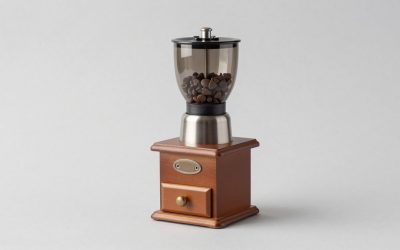
 OXO Brew Conical Burr Electric Coffee Bean GrinderOne Size6.8 x 11.8 x 14.8 Inches4.5 PoundsCheck on Amazon
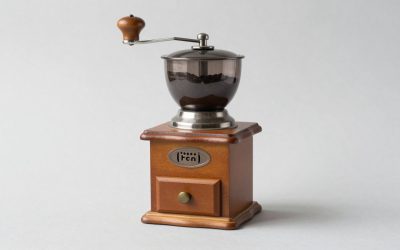
 CEVING Mini Manual Coffee Grinder With 40 AdjustableCeramic Burr7.4 x 2.3 x 6.7 Inches0.8 poundsCheck on Amazon
The best coffee grinder for French press is a burr grinder that can produce a truly coarse, even grind, and the OXO Brew Conical Burr Grinder is the pick for most kitchens because it offers 43 settings, stainless steel burrs and a one-touch automatic start at a mid-range tier. The Baratza Encore is the runner-up for readers who want a long-established grinder with 40 steps and simple repair options.
French press is the brew method where grinder quality is easiest to taste. The coffee steeps in water for about four minutes, then a metal mesh filter separates the grounds. If the grounds are uneven, the fine particles slip through the mesh and leave silt in the cup, and they over-extract into bitterness while the boulders under-extract and taste sour. A blade grinder makes exactly that mix. A good burr grinder with a real coarse setting gives a cleaner, rounder cup.
OXO Brew Conical Burr Electric Coffee Bean Grinder - 12 Oz, Silver | Stainless Steel Burrs, One-Touch Automatic, 43 Grind Settings For Drip Coffee, French Press, Cold Brew
Chosen because it specifies 12 Oz and Silver.
View on Amazon
Aromaster Conical Coffee Bean Grinder, 48 Settings, Anti-Static, Sliver | Stainless Steel, 40S Adjustable Timer, Removable Burr, Brush for Easy Cleaning, for Espresso French Press Home Use, Quiet
Chosen because it specifies 48 Settings and Anti-Static.
View on Amazon
SHARDOR Electric Coffee Grinder, 70g Large Capacity Spice Grinder with Visual Timing Knob for Precise Grind, Quiet Coffee Bean Grinder for Espresso, French Press, Herbs and Grains, Black
Chosen because it specifies Quiet Coffee Bean Grinder for Espresso and French Press.
View on AmazonCEVING Mini Manual Coffee Grinder With 40 Adjustable Settings, Black | Portable Hand Coffee Bean Mill with Ceramic Conical Burrs, 30g Capacity, Ideal for Travel, Camping, French Press, Pour Over
Chosen because it specifies Black and Portable Hand Coffee Bean Mill with Ceramic Conical Burrs.
View on AmazonThis guide compares seven grinders that cover the coarse end of the range, from electric hopper models to hand-cranked grinders, and explains what to look for: coarse settings, burr type, hopper size and cleaning. It is a research-based guide, so we did not personally use these products, and we rely on maker pages, listings and independent coverage. Where a detail is not listed, we say so.
Top Picks at a Glance
- Best Overall: OXO Brew Conical Burr Grinder: 43 settings, stainless steel burrs, 12 oz hopper, one-touch start
- Best Established Brand: Baratza Encore: 40 steps, 40 mm conical steel burrs, espresso to coarse brew range
- Best Budget Electric: Hamilton Beach Electric Burr Grinder: 18 settings, 16 oz hopper
- Best Mid-Range Electric: Cuisinart Supreme Grind: 18 settings from drip to French press
- Best Value Conical: Ollygrin Conical Burr Grinder: 30 settings, sized for 2 to 12 cups
- Best Manual: TIMEMORE Chestnut C3S Pro: stainless steel S2C conical burr, hand-cranked
- Best Premium Manual: KINGrinder K6: straight handle, stainless burr, wide range of settings per the listing
Comparison Table
| Product | Best for | Key specs | Watch for | Price tier |
|---|---|---|---|---|
| OXO Brew Conical Burr | Daily French press | 43 settings; stainless conical burrs; 12 oz hopper; one-touch start | Larger footprint than a manual | Mid-range |
| Baratza Encore | Long-term ownership | 40 settings; 40 mm conical steel burrs; hopper twist adjust | No timer; hopper figures vary by source | Premium |
| Hamilton Beach Electric Burr | Large batches on a budget | 18 settings; 16 oz hopper | Fewer steps, less uniform | Budget |
| Cuisinart Supreme Grind | Simple countertop use | 18 settings; drip, espresso, French press | Hopper size not listed in our snippet | Mid-range |
| Ollygrin Conical Burr | Mid-priced conical | 30 settings; 2 to 12 cups | Limited coverage | Mid-range |
| TIMEMORE Chestnut C3S Pro | Travel and quiet mornings | Stainless S2C conical burr; hand-cranked | Takes effort for big batches | Mid-range |
| KINGrinder K6 | Serious manual use | Stainless burr; straight handle; many settings | Premium for a manual | Premium |
For a French press, the key number is not the maximum setting count but how coarse the coarsest settings are and how even the grounds look. Raw setting counts only matter if the coarse end is usable.
A quick way to judge any grinder on this list is to spread a spoonful of its coarsest output on a white plate. You should see roughly uniform, salt-sized pieces with a thin film of dust at most. If you see a lot of powder or a mix of dust and large chunks, the grinder will send silt into your cup, no matter how many settings it advertises. That plate check takes thirty seconds and is worth repeating whenever you change beans or clean the burrs.
1. OXO Brew Conical Burr Grinder: Best Overall for French Press
- Settings: 43 grind settings including micro-adjustments (listing)
- Burrs: stainless steel conical
- Hopper: 12 oz of beans
- One-touch automatic start with a timer-based dose
- Available in several colors; a compact version also exists with a 50 g capacity
- Mid-range tier
Best for: Households that make French press most mornings and want a grinder that sets and forgets.
Skip if: You want the smallest possible footprint or a hand-cranked grinder for travel.
The OXO’s strength is how it matches French press needs. A coarse brew calls for grounds about the size of coarse sea salt, and the OXO offers enough steps at the coarse end to dial that in. The conical burrs are made of stainless steel, and the one-touch start with a timer means you can set a dose for the size of your press and walk away.
The hopper holds 12 oz of beans, which is more than most households use in a week. Because coffee beans lose aroma when exposed to air, many users fill the hopper with only a few days of beans and keep the rest sealed. The grounds container is easy to remove, and the burrs can be taken out for cleaning, which matters because coarse grinds leave oils that can turn stale.
The trade-off is size. It is a countertop machine that needs space and an outlet. If you travel or have a tiny kitchen, a manual grinder like the Timemore below is a better choice. For a French press at home, though, it is easy to use and consistent.
Pros
- 43 settings with a usable coarse range
- One-touch automatic grinding
- Stainless steel conical burrs
- 12 oz hopper
Cons
- Takes counter space
- Static can cling to the container
- Mid-range cost compared with basic burr grinders
2. Baratza Encore: Best Long-Running Choice
- Settings: 40 grind settings, adjusted by twisting the hopper
- Burrs: 40 mm conical steel (maker)
- Grind range quoted by one source: about 250 to 1200 microns
- Hopper: 300 g per the official sheet; some retailers list 8 oz
- Power: 70 W
- Weight about 7 lb
- 1-year warranty
Best for: Anyone who wants a grinder that can be serviced for years and covers French press through espresso-adjacent settings.
Skip if: You want a timer, automatic dosing or a very low profile.
The Encore is often recommended as the reference entry-level burr grinder, and for French press it earns that status. It reaches a coarse range suitable for immersion brewing and keeps the particle size reasonably even. The 40 mm conical burrs are the same size as many higher-priced grinders.
Sources disagree on hopper capacity, with the official product sheet giving 300 g and some retailers quoting 8 oz, so check the sheet if capacity matters. The grinder has an on/off switch and a pulse button, but no timer, so you start and stop it by eye or by weighing the beans first.
The long-term appeal is serviceability. The maker sells parts, which means a worn burr set can be replaced instead of the whole machine. That is a practical reason to pay a premium tier cost compared with generic grinders.
Pros
- 40 settings spanning fine to coarse
- 40 mm conical steel burrs
- Replacement parts available
- Proven design
Cons
- No timer or auto dose
- Hopper capacity figures conflict
- Premium tier
3. Hamilton Beach Electric Burr Grinder: Best Budget Electric
- Settings: 18, from espresso to French press (listing)
- Hopper: 16 oz
- Electric burr design
- Budget tier
Best for: Large households that make a big press and want a low-cost burr grinder.
Skip if: You want fine control over coarse sizes or very even particles.
With 18 settings and a large 16 oz hopper, this is an entry-level burr grinder aimed at people who want a step up from a blade grinder without a big spend. The French press setting sits at the coarse end, and burr grinding already gives a more uniform grind than blades.
The limit is step count. With only 18 settings across the whole range, there are fewer coarse steps to tune. That is fine if the preset coarse position suits your press, but frustrating if you need a slightly finer or coarser grind than the available steps.
Expect some dust in a lower-tier burr grinder. Sift the grounds or rinse the press with a lighter pour to reduce silt.
Pros
- Lowest tier burr grinder on the list
- Large hopper
- Simple controls
Cons
- Only 18 settings
- More fines than higher-end grinders
- Burr details not listed
4. Cuisinart Supreme Grind: Best Simple Countertop Grinder
- Settings: 18, covering drip, espresso and French press (listing)
- Electric burr grinder, model DBM-8P1
- Hopper size: not listed in the snippet we reviewed
- Mid-range tier
Best for: Cooks who want a familiar brand and a simple grinder for several brew methods.
Skip if: You want a very large hopper, a timer or fine adjustments.
The Supreme Grind is a long-running countertop model. The listing says it has 18 settings for drip, espresso and French press, which means the coarse end is built in. You twist the selector, choose a quantity and press start.
Like other 18-step grinders, it is not designed for fine tuning, but for a French press the coarse step is usually all you need. Check how the grounds look: they should resemble coarse salt, with few fines.
Cleaning matters here. Most owners will need to brush the burr chamber periodically. Oils from the beans build up, so keep it clean for the best taste.
Pros
- Familiar brand
- Settings labeled for brew methods
- Straightforward controls
Cons
- Only 18 settings
- Hopper size not listed
- Not designed for fine tuning
5. Ollygrin Conical Burr Grinder: Best Value Conical
- Settings: 30 adjustable (listing)
- Sized for 2 to 12 cups
- Electric conical burr
- Mid-range tier
Best for: Buyers who want a conical burr at a lower tier than the OXO or Baratza.
Skip if: You need an established brand with parts support.
The Ollygrin offers 30 settings and a conical burr, which puts it between the Hamilton Beach and the OXO in terms of adjustability. It is aimed at home brewers who make anything from two to twelve cups.
As a newer brand, independent coverage is limited, so check the return policy and test the coarse end on your first batch. Spread a spoonful on a white plate: you want even, coarse pieces with little powder.
If the coarse end produces many fines, step up to one of the more established burr grinders.
Pros
- 30 settings
- Conical burr
- Mid-range tier
Cons
- Limited independent coverage
- Burr material not listed
- No parts support information
6. TIMEMORE Chestnut C3S Pro: Best Manual for Travel and Small Kitchens
- Stainless steel S2C conical burr (listing)
- Hand-cranked
- Number of settings: not listed in the snippet
- Compact
- Mid-range tier
Best for: People who brew one or two cups at a time, travel, or want a quiet grinder.
Skip if: You brew large batches every day or dislike cranking.
A manual grinder gives you control and silence. The C3S Pro uses a stainless steel conical burr and is built for brew methods from espresso to French press, according to the listing. The crank takes more effort at coarse settings than you might expect only for large doses.
For a typical 350 ml press, you may need about 30 g of coffee. That can take a minute or two of cranking. If you do that daily, it can be a pleasant ritual or an annoyance.
The upside is portability and the lack of static and noise. It also requires no electricity, which is helpful for camping or office use.
Pros
- Quiet
- Compact
- Stainless steel conical burr
- No electricity needed
Cons
- Effort for large doses
- Setting details not listed
- Slower than electric
7. KINGrinder K6: Best Premium Manual Grinder
- Straight handle with a stainless burr (listing)
- Supports a wide range of brewing methods per the listing
- Setting count: not listed in the snippet
- Premium tier
Best for: Manual-grinder fans who want fine adjustment and a solid build.
Skip if: You want an inexpensive grinder or an automatic one.
The K6 is an enthusiast hand grinder, and the listing says it supports many brewing styles. For French press, it should reach a coarse setting with an even particle size, though we cannot confirm exact numbers from what we reviewed.
A straight handle can feel more comfortable than a folding crank for some people, but the grinder requires the same effort as other manuals for large doses.
If you only make French press, a cheaper electric model may be more practical. The K6 makes sense if you also brew pour-over or espresso, since it spans a wide range.
Pros
- Wide range of brewing methods
- Stainless burr
- Quiet
Cons
- Premium tier for a manual
- Setting numbers not listed
- Effort for big doses
Also Consider
SHARDOR Electric Burr Coffee Grinder 2.0
A budget burr grinder with 16 precision settings per the listing. Fewer steps, but a low entry point.
Aromaster Conical Coffee Bean Grinder
A conical burr model with 48 settings and a timer at a mid-range tier. Newer, with limited independent coverage.
CEVING Manual Coffee Grinder (60 g)
A large-capacity manual grinder with 40 settings and ceramic conical burr according to the listing. A low-cost option for a hand-cranked grinder.
Breville Smart Grinder Pro
A step up with 60 settings and a large hopper. It reaches French press coarseness and also handles espresso, but costs more.
How We Chose
We began with the French press requirement: a coarse, even grind with minimal fines. For each product we looked at burr type, number of settings, coarse range and hopper size, using maker pages and listing details, then compared them with independent coverage.
We left out blade grinders and spice mills, which chop beans unevenly and tend to leave silt in a French press. We also avoided products where the coarse range was not listed unless they had other strengths. Each brand appears once.
This guide is research-based and we did not personally use these products. We do not quote prices, only relative tiers. Where specs conflicted, such as the Baratza hopper size, we say so.
Buying Guide
Burr or blade?
A burr grinder crushes beans between two surfaces set at a fixed distance, which produces grounds of similar size. A blade grinder chops randomly. French press suffers most from the fines a blade creates, because they pass through the mesh and over-extract. If you only change one thing about your French press routine, switch to a burr grinder.
Conical burrs and flat burrs both work. Conical burrs are common at home-grinder prices.
How coarse is coarse enough?
A typical French press grind looks like coarse sea salt, with pieces about 0.8 to 1.0 mm. If your coffee is cloudy and bitter, try a coarser step. If it tastes weak and sour, go finer by one step.
Use about 1 part coffee to 15 parts water as a start. For a 500 ml press, that is roughly 33 g of coffee. Steep for about four minutes, then press slowly.
Hopper, dose and workflow
Electric grinders with timers let you set a dose, while others need you to stop by eye. A 12 to 16 oz hopper is large enough for a week or two, but stale beans taste flat. Weigh doses on a kitchen scale for consistency.
Manual grinders need no hopper in the same sense, but note the capacity of the bean chamber. A 40 g chamber covers a typical press, while smaller chambers need refilling.
Cleaning and static
Coarse grinds leave oils and chaff that can go rancid. Brush the burrs every week or two and wipe the container. Static is common in plastic containers. A drop of water on the beans before grinding, often called the Ross droplet technique, can cut static.
Never wash electric components in water. Follow the maker’s instructions.
A worked example: grinding for a 34 oz press
A standard 34 oz (1 liter) press is the usual family size. Using the 1:15 ratio, you need roughly 65 g of whole beans. On an electric grinder with a timer, run one test grind, weigh the output, and note the seconds it took. A grinder that delivers about 3 to 5 g per second at a coarse setting will finish a 65 g dose in 13 to 22 seconds, while a hand grinder may take well over a minute at the same dose.
If you brew a smaller 12 oz press, you need only about 24 g, which is why manual grinders suit single servings so well. Whatever grinder you use, write the coarse setting that works for your press on a sticky note inside a cupboard door, so you do not have to rediscover it after cleaning or moving the dial.
Finally, rinse the press with hot water before brewing and decant the coffee immediately after pressing. Leaving it on the grounds keeps extracting, so even the best grind will turn bitter if it sits for twenty minutes.
Noise and kitchen space
Electric burr grinders are loud for about 20 to 30 seconds. Manual grinders are quiet, but they take effort. Choose based on how you use your kitchen and who sleeps nearby.
Common Mistakes to Avoid
- Using a blade grinder and expecting a clean press
- Grinding too fine, which causes silt and bitterness
- Skipping cleaning and letting oils go stale
- Storing a month of beans in the hopper
- Eyeballing doses instead of weighing them
- Choosing a grinder with too few coarse steps
Frequently Asked Questions
What is the best coffee grinder for French press?
A burr grinder with a true coarse setting is best. The OXO Brew Conical Burr Grinder is our top pick for most kitchens, and the Baratza Encore is an excellent long-term choice. Manual options such as the TIMEMORE Chestnut C3S Pro suit small servings.
What is the best coffee grinder for French press at a low cost?
The Hamilton Beach Electric Burr Grinder offers a 16 oz hopper and 18 settings at the budget tier. Manual grinders with ceramic burrs can be even cheaper, though they need effort.
Why is there silt in my French press?
Silt comes from fine particles that pass through the filter. Use a burr grinder, move to a coarser setting and avoid pressing too hard. Letting the coffee settle for a minute before pouring also helps.
Can I use a blade grinder for French press?
You can, but the grounds will be uneven, leaving fines and boulders. The cup will usually taste muddy or bitter. A burr grinder gives a better result.
How coarse should French press coffee be?
Aim for coarse sea salt. If the cup is bitter or muddy, go coarser. If it is weak or sour, go slightly finer.
How much coffee do I need for a French press?
A common starting point is 1 gram of coffee per 15 grams of water. For a 1 liter press, that is about 65 g of coffee. Adjust to taste.
Are manual grinders good for French press?
Yes, many manual grinders with quality burrs produce even coarse grounds. They take more effort for large doses, so they suit one or two cups.
Which One Should You Buy?
Choose the OXO Brew Conical Burr Grinder if you make French press daily and want automatic grinding. Pick the Baratza Encore if you value serviceability, and the Hamilton Beach if you need a budget burr grinder with a big hopper. If you brew small batches or travel, the TIMEMORE Chestnut C3S Pro is the quiet option.
In all cases, check that the coarse end is usable, weigh your doses and clean the burrs regularly.
Sources
- OXO Brew conical burr grinder product page
- Baratza Encore product sheet and retailer specifications
- Hamilton Beach and Cuisinart burr grinder listings
- TIMEMORE and KINGrinder manual grinder listings
- Specialty coffee guides on French press grind size
Last updated: October 2026