Key takeaways
- Leaving the factory wax on: Oil will not bond evenly to a dirty or waxy surface. Wash and scrub first.
- Using too much oil: More oil does not create better seasoning. About 1 teaspoon is enough for most 10- to 12-inch pans, and most of it should be wiped away.
- Skipping the drying step: Water trapped under oil encourages rust and creates uneven patches.
- Baking the pan right-side up: Oil can pool in the center and form a tacky film. Bake it upside down.
- Using low-smoke-point oil: Butter and extra-virgin olive oil are poor choices for the initial oven treatment. Save them for cooking after the pan is seasoned.
- Seasoning a coated pan: Carbon steel is different from nonstick-coated aluminum. Do not heat an unknown coated pan to 450°F.
- Scrubbing aggressively after every use: Harsh abrasives can remove developing seasoning. Use hot water, a soft brush or scrubber, and a small amount of soap when needed.
- Storing it while damp: Dry the pan over low heat, then wipe on a very thin protective film of oil.
Seasoning a raw carbon steel pan in the oven creates a harder, darker cooking surface that improves with use. Done correctly, the process bonds very thin layers of oil to the steel. Done badly, it can leave sticky patches, flaky seasoning, uneven discoloration, or excessive smoke. Too much oil is the most common problem: instead of forming a smooth film, it stays gummy on the pan.
This oven method works for most carbon steel skillets, including 10- to 12-inch pans. Always check the manufacturer’s care instructions first, especially if the pan has a wood handle, silicone grip, nonstick coating, or another part that is not oven-safe. A pre-seasoned pan can also benefit from this process, but a truly raw pan usually needs more preparation before its first coat.
As an Amazon Associate we earn from qualifying purchases at no extra cost to you. Product prices and availability are accurate as of the date shown and are subject to change.
What You Need
| Item | Why | Optional? |
|---|---|---|
| Raw carbon steel pan | A 10- to 12-inch skillet is a practical size for oven seasoning and everyday cooking. | No |
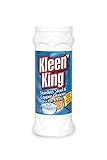
| Dish soap and a nonabrasive scrub pad | Removes factory wax, oil, dust, and shipping residue. | No |
| Clean, lint-free cloths or paper towels | Dries the pan and removes nearly all excess oil. | No |
| High-smoke-point cooking oil | Creates the polymerized seasoning layer. Canola, grapeseed, sunflower, or vegetable oil works well. | No |
| Half-sheet pan or foil | Catches drips and protects the oven floor. | Optional |
| Oven mitts | Carbon steel becomes extremely hot and stays hot longer than many lightweight pans. | No |
| Instant-read thermometer | Useful for checking that the pan has cooled enough to handle safely, though it is not required. | Optional |
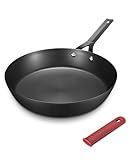
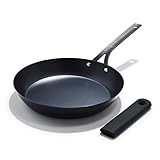
For a budget-friendly raw or carbon steel option, a 12-inch Yonida Carbon Steel Pan may cost around $35 to $45, with a listed price of $39.99. If you prefer a 10-inch pre-seasoned skillet, the OXO Obsidian Carbon Steel Frying Pan is commonly around $55 to $65, with a listed price of $59.99. Prices can change, so treat those figures as buying reference points rather than guarantees.
Step-by-Step
1. Confirm the pan is oven-safe — 2 minutes
Read the care label or manufacturer instructions. A bare steel body and metal handle are generally suitable for oven seasoning, but a detachable sleeve, wooden handle, plastic accent, or silicone cover may not be. Confirm the maximum oven temperature before proceeding.
Remove any paper labels, cardboard packaging, or protective inserts. If the pan is labeled “pre-seasoned,” you can still use this method, but you may need only one or two coats rather than a full initial treatment.
2. Remove the factory coating — 10 to 15 minutes
Wash the pan thoroughly with hot water, dish soap, and a scrub pad. Raw carbon steel is often shipped with a thin layer of beeswax, mineral oil, or another protective coating to prevent rust. That coating must be removed before seasoning.
Scrub the cooking surface, sides, bottom, and handle. If the residue is stubborn, soak the pan in hot, soapy water for 5 minutes, then scrub again. Do not use a caustic oven cleaner unless the manufacturer specifically approves it.
3. Dry completely — 5 minutes
Rinse away the soap and dry the pan immediately with a clean cloth. Place it on a stovetop burner over low to medium heat for 2 to 3 minutes to evaporate hidden moisture. Carbon steel can develop orange rust quickly when left wet.
Turn off the burner and let the pan cool enough to handle. Inspect it for any remaining waxy or greasy areas. If you see residue, wash and dry it again before adding oil.
4. Apply an extremely thin coat of oil — 5 minutes
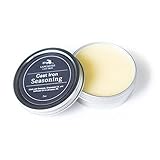
Add about 1 teaspoon of oil to a 10- to 12-inch pan. Spread it over the inside, outside walls, rim, and handle with a cloth or paper towel. Then use a fresh towel to wipe the pan as if you are trying to remove all the oil.
The surface should look barely glossy, not wet or pooled. If you can see streaks, droplets, or a thick shiny layer, keep wiping. This step matters more than adding extra oil. A heavy coat is likely to turn sticky or produce uneven seasoning.
5. Preheat the oven — 10 to 15 minutes
Set the oven to 450°F. This temperature is a useful general setting for common high-smoke-point oils and most oven-safe carbon steel pans. If your manufacturer specifies a lower maximum temperature, follow that instruction instead.
Place a sheet pan or a piece of heavy-duty foil on the rack below where the skillet will sit. This catches any stray oil. Do not place foil directly on the oven floor, where it can interfere with heat circulation or damage the oven.
6. Bake the pan upside down — 1 hour
Place the pan upside down on the upper or middle oven rack. Keeping it inverted prevents oil from collecting in the cooking surface. Bake for 1 hour at 450°F.
A little smoke is normal, especially during the first seasoning cycle. Keep the kitchen ventilated by using the range hood and opening a window if practical. If the pan produces intense smoke, turn off the oven, allow it to cool safely, and inspect the oil layer. Excess oil is usually the cause.
7. Cool inside the oven — 1 to 2 hours
Turn off the oven and leave the pan inside until it is cool enough to handle with oven mitts. Gradual cooling reduces the chance of burns and gives the seasoning time to harden. Do not pour cold water onto a hot pan; the sudden temperature change can warp the steel.
8. Repeat the coating and baking cycle — 2 to 4 hours
For a raw pan, repeat the thin-oil-and-bake cycle two to three more times. Each cycle takes about 1 hour of baking plus cooling time. The pan may become bronze, brown, blue-black, or patchy during the first few rounds. Color is not a perfect measure of performance, so focus on whether the surface is dry, smooth, and nonsticky.
After the final cycle, wipe away any visible excess oil. Let the pan cool fully before storing it. The best nonstick performance will develop gradually as you cook with it, particularly when using a small amount of cooking fat.
Mistakes to Avoid
- Leaving the factory wax on: Oil will not bond evenly to a dirty or waxy surface. Wash and scrub first.
- Using too much oil: More oil does not create better seasoning. About 1 teaspoon is enough for most 10- to 12-inch pans, and most of it should be wiped away.
- Skipping the drying step: Water trapped under oil encourages rust and creates uneven patches.
- Baking the pan right-side up: Oil can pool in the center and form a tacky film. Bake it upside down.
- Using low-smoke-point oil: Butter and extra-virgin olive oil are poor choices for the initial oven treatment. Save them for cooking after the pan is seasoned.
- Seasoning a coated pan: Carbon steel is different from nonstick-coated aluminum. Do not heat an unknown coated pan to 450°F.
- Scrubbing aggressively after every use: Harsh abrasives can remove developing seasoning. Use hot water, a soft brush or scrubber, and a small amount of soap when needed.
- Storing it while damp: Dry the pan over low heat, then wipe on a very thin protective film of oil.
How Often
Most home cooks do not need a complete oven seasoning cycle every week. Repeat one oven cycle when the pan looks dull, develops a few stubborn bare spots, or food begins sticking despite proper preheating and oil. For a frequently used skillet, this may be every few months; for occasional use, it may be once or twice a year.
Routine care is simpler: wash the warm pan, dry it thoroughly, heat it briefly to remove moisture, and wipe on a drop or two of oil. Cooking foods with some fat, such as eggs after the pan is well established, also helps maintain the surface.
When to Call a Pro or Replace
Professional help is rarely necessary for ordinary seasoning. Consider contacting the manufacturer if the pan warps, the handle loosens, a weld cracks, or the cooking surface develops a deep depression. Do not keep using a pan that rocks significantly on a flat stovetop or has a sharp structural crack.
Replace the pan if it has severe pitting, extensive flaking that returns after cleaning, or rust deep enough to create rough craters. Light surface rust is usually recoverable: scrub it away, wash the pan, dry it completely, and reseason. A food-safe pan should have a stable, intact steel surface without peeling coatings or unknown chemical residue.
FAQ
Can I season carbon steel in the oven at 350°F?
Yes, but polymerization may take longer and the result may be less consistent. A temperature around 450°F is a common general setting for high-smoke-point oils, provided the pan and manufacturer instructions allow it. Always prioritize the pan’s stated temperature limit.
Why is my seasoned pan sticky?
Sticky seasoning usually means too much oil was applied or the oil did not heat long enough. Scrub the tacky areas with hot water and a scrub pad, dry the pan, and repeat the process with a nearly invisible oil film.
Is black or blue discoloration normal?
Yes. Carbon steel commonly changes from silver to bronze, blue, brown, and black as it heats and seasons. Uneven color is normal, especially during the first few cycles. A dry, smooth surface matters more than a perfectly uniform appearance.
Can I use soap on a seasoned carbon steel pan?
Yes. A modest amount of dish soap will not automatically destroy properly bonded seasoning. Avoid leaving the pan submerged for long periods, dry it immediately, and apply a very thin protective coat of oil before storage.