Key takeaways
- Table of Contents 7 sections 9 min read 1 Quick Verdict 2 Side by Side 3 Where Carbon Steel Skillet Wins 4 Where Cast Iron Skillet for Searing Wins 5 Cost Over 5 Years 6 Which One for Your Home…
What's inside
Choosing between a carbon steel skillet and a cast iron skillet for searing is less about finding a single “best” pan and more about matching the pan to your kitchen, strength, storage, and cooking habits. Both materials can produce a browned crust on steak, chicken, pork, fish, and vegetables. The real decision is whether you prefer a lighter pan that responds quickly to temperature changes or a heavier pan that holds heat exceptionally well.
Size matters, too. A 10-inch skillet is practical for one or two servings, while a 12-inch skillet gives a 10- to 11-inch cooking surface and more room for two steaks without crowding. That extra space comes with more weight: a typical 12-inch carbon steel skillet weighs about 4 to 5 pounds, while a 12-inch cast iron skillet commonly weighs 7 to 9 pounds before food is added.
As an Amazon Associate we earn from qualifying purchases at no extra cost to you. Product prices and availability are accurate as of the date shown and are subject to change.


Quick Verdict
Choose carbon steel if you want cast iron-like searing performance in a lighter, more responsive pan. It is especially well suited to cooks who move between searing, sautéing, and oven finishing, or who find a full-size cast iron skillet difficult to lift.
Choose cast iron if maximum heat retention, rugged durability, and a low purchase price matter most. It is the better choice for repeatedly searing several portions, cooking on a grill or campfire, and keeping one dependable pan for decades.
For most homes, a 10-inch carbon steel skillet is the easier everyday tool, while a 12-inch cast iron skillet is the more economical heavy-duty option.
Side by Side
| Factor | Carbon Steel Skillet | Cast Iron Skillet |
|---|---|---|
| Typical size | 10 or 12 inches; about 2 to 5 pounds | 10 or 12 inches; about 5 to 9 pounds |
| Comfort | Lighter and easier to toss, lift, and pour from | Stable but noticeably heavy, especially when full |
| Heat response | Heats and cools relatively quickly | Heats slowly and retains heat for a long time |
| Durability | Very durable; can warp if overheated or heated unevenly | Extremely durable but can crack if dropped or thermally shocked |
| Price range | About $40 to $100 | About $20 to $80 |
| Maintenance | Dry promptly, apply a thin oil layer, and build seasoning | Dry promptly, apply oil, and maintain seasoning |
| Space needed | Usually easier to store because it is lighter and often has a longer handle | Needs sturdy shelf or cabinet space; handle and helper handle take room |
| Look | Smooth, modern, and often darkens with use | Classic, substantial, and traditionally textured |
| Resale | Good for recognized brands in excellent condition | Usually modest; value depends on brand, age, and condition |
| Best for | Fast searing, sautéing, eggs after seasoning, and daily use | Hard searing, batch cooking, oven use, grilling, and long-term ownership |
Where Carbon Steel Skillet Wins
Carbon steel is typically made from a relatively thin sheet of steel, so it offers a useful balance of speed and heat retention. It does not take as long to preheat as a thick cast iron skillet, and it reacts faster when you reduce the burner. That control helps when searing a steak and then lowering the heat to finish it without scorching the fond or oil.
The lower weight is its biggest home-kitchen advantage. A 12-inch carbon steel pan can be roughly half the weight of a comparable cast iron pan. That makes it easier to move from a cooktop to an oven, drain excess fat, or serve food directly from the pan. It is also more comfortable for cooks with limited hand strength or for anyone who frequently cooks with one hand.
Carbon steel often has a smoother cooking surface than traditional cast iron. Once seasoned, that surface can become naturally slick enough for many foods, although it is not a substitute for a coated nonstick pan when cooking delicate items with little fat. Its smoothness is helpful for sliding a spatula beneath a burger crust or turning seared fish.
Carbon steel is also versatile across cooking surfaces. Many models are induction compatible, but buyers should confirm the manufacturer’s specifications and make sure the base sits flat. A 10-inch skillet is a sensible option for a smaller cooktop, while a 12-inch pan needs a burner large enough to heat the center and edges evenly. On a typical electric burner drawing about 1,200 to 1,800 watts, gradual preheating is safer than immediately using maximum power.
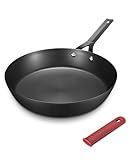
Current options illustrate the category’s price spread. The Merten & Storck 12-inch Pre-Seasoned Carbon Steel Frying Pan Skillet is listed at $59.95. The OXO Obsidian 10-inch Carbon Steel Frying Pan is listed at $69.99 and includes a removable silicone handle, an iron cleaning brush, and induction-ready, oven-safe design details. These are useful reference points, not reasons to choose one construction over the other.
Where Cast Iron Skillet for Searing Wins
Cast iron’s defining advantage is heat retention. After a heavy skillet is thoroughly preheated, adding a cold steak causes less of an immediate temperature drop than it would in a thinner pan. That makes cast iron excellent for producing a deep brown crust, particularly when searing larger cuts or several portions in succession.
Its mass also makes the pan stable. A cast iron skillet is less likely to shift when you press down with a spatula or turn a dense piece of meat. It can move from stovetop to oven, grill, or campfire, provided the handle and any accessories are rated for the intended temperature. Because cast iron stays hot for a long time, it is also useful for serving food at the table—but the handle remains dangerously hot well after cooking.
Cast iron is usually the budget winner. The Lodge Pre-Seasoned Cast Iron Skillet with Silicone Handle Holder, 12 Inches, is listed at $34.90, while the Utopia Kitchen 12-Inch Pre-Seasoned PFAS-Free Cast Iron Skillet is listed at $26.99. At those prices, cast iron is an accessible way to add a high-heat searing pan without spending much.
The trade-off is control. Cast iron takes longer to preheat and cool, so it can overshoot the desired temperature on a powerful burner. It also weighs enough to be awkward over a small sink or when full of food. On glass cooktops, lift rather than slide the skillet to reduce the risk of scratching the surface, and check the cooktop manufacturer’s weight guidance.
Cost Over 5 Years
Purchase price is only part of the cost, although both types are inexpensive compared with many clad stainless-steel or specialty pans. A carbon steel skillet generally costs about $40 to $100, while cast iron commonly costs about $20 to $80. Budget models can fall below those ranges during sales, and premium models can exceed them.
Over five years, plan on approximately $10 to $20 for cooking oil used in seasoning and routine maintenance, assuming the pan is used regularly and you already own basic dish soap and towels. A realistic five-year ownership estimate is therefore about $50 to $120 for carbon steel and $30 to $100 for cast iron. Neither pan requires seasoning products, specialty cleaners, or replacement coatings.
Energy costs are difficult to separate from the meal itself. Cast iron may require more preheating time, but the difference depends on burner type, heat setting, pan thickness, and cooking habits. The larger financial consideration is replacement: proper care can keep either material in service for many years.
Which One for Your Home
Small apartment
Carbon steel is usually the better fit. Choose a 10-inch model if you cook for one or two people and have limited cabinet space. Its lighter weight is friendlier to compact sinks and narrow countertops, and it responds more quickly on a small electric or induction burner. A 12-inch cast iron skillet can work, but verify that it fits the burner and that you have a secure place to store its 7- to 9-pound body.
Family with kids or pets
Cast iron’s stability and durability are appealing in a busy kitchen, but its heat-retaining handle requires strict safety habits. Keep the handle turned inward, use a visible handle cover, and remember that the pan can remain hot long after dinner. Carbon steel is easier to move out of reach and less tiring to lift, making it the safer practical choice if the pan must be relocated frequently.
Rental
Carbon steel offers more flexibility when you do not know whether your next home will have gas, electric, or induction cooking. Select an induction-ready model with a flat base and avoid dragging either type across a glass cooktop. A 10-inch skillet also reduces storage and countertop demands. Cast iron is reasonable if you already own it, but its weight deserves extra care in a rental with a glass range.
Long-term home
Choose based on cooking style rather than price. A serious searer who batch-cooks meat, uses a grill, or wants a pan that can handle rough treatment may prefer 12-inch cast iron. A cook who sautés vegetables, sears smaller portions, and values easy handling may use carbon steel more often. If space and budget allow, owning one of each is practical: carbon steel for daily flexibility and cast iron for maximum heat retention.
FAQ
Is carbon steel better than cast iron for steak?
Not universally. Carbon steel is easier to maneuver and adjust during cooking, while cast iron holds more heat when a cold steak hits the surface. Both can sear steak effectively when fully preheated, lightly oiled, and not overcrowded.
Which pan is easier to season?
Both require the same basics: clean off residue, dry completely, apply an extremely thin coat of neutral oil, and heat until the oil bonds to the surface. Carbon steel can develop a smooth dark patina quickly, while cast iron may take longer to become consistently slick.
Can carbon steel and cast iron go in the oven?
Generally, yes, but check the pan’s instructions. The metal may tolerate high heat while a silicone sleeve, removable grip, or other handle component has a lower limit. Remove accessories when required, and use substantial protection when handling either skillet.
Should I buy a 10-inch or 12-inch skillet?
Choose 10 inches for one or two servings, smaller burners, and easier storage. Choose 12 inches for two large steaks, family portions, or more room to prevent steaming. Remember that a larger cast iron skillet is considerably heavier, while a larger carbon steel skillet remains comparatively manageable.