Key takeaways
- Steel and Core Hardness: Look for a VG-10 or 440C core heat-treated to 58-61 HRC. Harder cores hold a more acute edge longer, which is critical for clean, low-friction slicing without tearing delicate proteins or produce.
- Edge Angle and Geometry: A 10 to 15 degree edge per side with a thin grind behind the edge reduces wedging. Flat-profile Kiritsuke and Gyuto shapes excel at straight push cuts and precision tip work versus curved Western rockers.
- Layering and Cladding: 66 to 67 layers of Damascus cladding protect the hard core and reduce food stick, but layer count alone does not equal sharpness. Focus on core steel quality, cladding finish, and grind consistency.
- Handle and Balance: Full-tang construction with POM, resin-wood, or stabilized wood handles improves control during long slicing sessions. Blade-forward balance helps with paper-thin cuts, while neutral balance suits versatile daily prep.
- Maintenance and Care: Damascus steel requires hand washing, immediate drying, and regular honing on a ceramic rod plus whetstone sharpening. Avoid dishwashers and glass cutting boards to preserve the fine edge and Damascus pattern.
.
The Best Overall Japanese Damascus knife for precision slicing is the Made In Cookware 8″ Japanese Damascus Steel Gyuto, with the MITSUMOTO SAKARI 8-Inch Kiritsuke Chef Knife as the close runner-up for tip control and clean push cuts. Both deliver the hard, thin VG-grade cores and layered Damascus cladding that define true precision slicing, but they serve slightly different cutting styles and budgets.
Shopping for a Japanese Damascus knife is confusing because layer counts, steel types, edge angles, and handle materials all sound similar yet produce very different slicing performance. This guide compares sharpness, edge geometry, steel construction, and handling to help you choose the right knife for paper-thin vegetable work, protein slicing, and everyday prep, without overpaying for marketing hype.
Our top picks





As an Amazon Associate we earn from qualifying purchases at no extra cost to you. Ratings are shown as listed on Amazon.
Quick Comparison
| Product | Best For | Standout Feature | Rating |
|---|---|---|---|
| Made In Cookware 8″ Japanese Damascus Gyuto | Overall Precision Slicing | 66 Layers VG-10 Core, Crafted in Japan | 4.9/5 |
| Sunnecko 8 Inch Japanese Damascus Chef Knife | Budget-Friendly Performance | 67 Layers VG10 Steel, 10-12 Degree Edge | 4.7/5 |
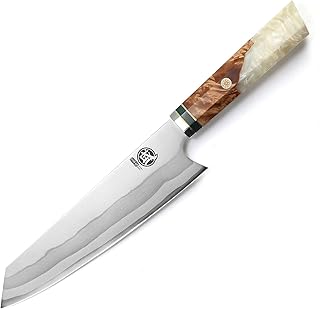
| MITSUMOTO SAKARI 8-Inch Kiritsuke | Premium Fit and Finish | Deep-Cryo Treated 440C Damascus, White Pomegranate Handle | 4.8/5 |
| 8.27” Japanese Damascus Kiritsuke Knife | Vegetable Push Cuts | Kurouchi Forged Finish, Flat Edge Profile | 4.6/5 |
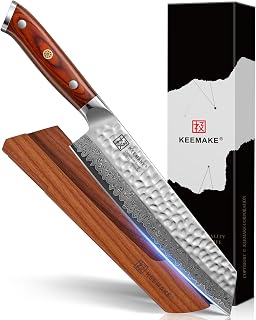
| Japanese Chef Knife 8 Inch Damascus with Resin Wood Handle | Home Cooks and Gifting | VG10 Core, Resin Wood Handle with Gift Box | 4.6/5 |
How to Choose a Japanese Damascus Knife for Precision Slicing Compared
- Steel and Core Hardness: Look for a VG-10 or 440C core heat-treated to 58-61 HRC. Harder cores hold a more acute edge longer, which is critical for clean, low-friction slicing without tearing delicate proteins or produce.
- Edge Angle and Geometry: A 10 to 15 degree edge per side with a thin grind behind the edge reduces wedging. Flat-profile Kiritsuke and Gyuto shapes excel at straight push cuts and precision tip work versus curved Western rockers.
- Layering and Cladding: 66 to 67 layers of Damascus cladding protect the hard core and reduce food stick, but layer count alone does not equal sharpness. Focus on core steel quality, cladding finish, and grind consistency.
- Handle and Balance: Full-tang construction with POM, resin-wood, or stabilized wood handles improves control during long slicing sessions. Blade-forward balance helps with paper-thin cuts, while neutral balance suits versatile daily prep.
- Maintenance and Care: Damascus steel requires hand washing, immediate drying, and regular honing on a ceramic rod plus whetstone sharpening. Avoid dishwashers and glass cutting boards to preserve the fine edge and Damascus pattern.
The Best Japanese Damascus Knives for Precision Slicing Compareds Reviewed
Best Overall: Made In Cookware 8″ Japanese Damascus Steel Gyuto
Best for cooks who want authentic Japanese craftsmanship with reliable precision. This Gyuto pairs 66 layers of Damascus steel with a VG-10 core and a full-tang black POM handle for exceptional edge retention, thin slicing, and balanced control, making it the most versatile choice for both vegetables and proteins.
Best Budget: Sunnecko 8 Inch Japanese Damascus Chef Knife
Best for value-focused home cooks and gift buyers who want ultra-sharp performance without a premium price. With a 10-12 degree edge, 67-layer VG10 construction, and full-tang design, it delivers impressive sharpness for meat, fruit, and vegetable prep, plus durability for camping or BBQ use.
Best Premium: MITSUMOTO SAKARI 8-Inch Kiritsuke Chef Knife
Best for experienced cooks who prioritize precision and presentation. The deep-cryo treated 440C Damascus blade holds a refined edge for clean push cuts and detailed tip work, while the white pomegranate handle and sandalwood box make it a standout premium gift.
Best for Push Cuts and Vegetables: 8.27” Japanese Damascus Kiritsuke Knife
Best for vegetable-forward cooks who love straight, vertical cutting. The flat-edge Kiritsuke profile and Kurouchi forged finish reduce friction and prevent sticking, and the included leather sheath and gift box add practical storage and gifting appeal.
Best for Everyday Home Use: Japanese Chef Knife 8 Inch Damascus with Resin Wood Handle
Best for home cooks and restaurant prep stations needing a sharp, comfortable daily driver. The VG10 core provides professional-level sharpness, the ergonomic resin wood handle offers secure grip during high-volume slicing, and the included gift box makes it ready to give.
Frequently Asked Questions
What makes Japanese Damascus steel better for precision slicing?
Japanese Damascus knives use a very hard core steel like VG-10 or 440C wrapped in many layers of softer stainless cladding. The hard core can be ground to a more acute angle and holds its edge longer, allowing thinner, cleaner cuts with less drag than softer Western stainless blades.
Is a Gyuto or Kiritsuke better for precision work?
Both excel, but differently. A Gyuto has a slight belly for rocking and all-purpose slicing, while a Kiritsuke has a flatter edge and sharper tip ideal for straight push cuts, fine vegetable work, and precise tip control. Choose Gyuto for versatility and Kiritsuke for meticulous, straight-line slicing.
How do I keep a Damascus blade razor sharp?
Hand wash and dry immediately, store in a sheath or on a magnetic strip, and use wood or soft plastic boards only. Hone lightly with a ceramic rod between uses and sharpen as needed on a 1000/6000 grit whetstone to maintain the acute bevel without damaging the Damascus cladding.
Are high layer counts like 66 or 67 layers actually sharper?
Not necessarily. Sharpness comes from the core steel hardness, heat treatment, and edge angle, not layer count. Damascus layers add strength, stain resistance, and reduced food adhesion, but a well-treated VG-10 core at 60 HRC with a 12-degree edge will out-slice a poorly treated high-layer blade.
Final Thoughts
For most home cooks seeking true precision, the Made In Cookware 8″ Japanese Damascus Gyuto is the top investment for balanced, all-around slicing, while the MITSUMOTO SAKARI 8-Inch Kiritsuke is the premium pick for refined push-cut accuracy. On a tighter budget, the Sunnecko 8 Inch Damascus Chef Knife delivers nearly the same sharpness and versatility for everyday cooking.