Our Top Picks
 FLAVCHARM Fall Decor Flameless Candles Maple Leave BatteryB19083 x 3 x 6 inches1.32 poundsCheck on Amazon
 Timeet Red Brick Wallpaper Self Adhesive Peel and17.7" x 118.1"118.11 x 17.7 x 0 inches0.7 poundsCheck on Amazon
 Dermacol Full Coverage Tattoo Cover Matte Foundation SPF1.06 Ounce (Pack of 1)0.1 poundsCheck on Amazon

Tempering is the least forgiving move in a kitchen. The oil is already hot when the ajowan seeds go in, and the whole decision — bloomed or scorched — is settled within seconds, long before the cook can react. So the real buying decision behind this refresh is not what looks good on the counter, but what was prepared correctly in advance: bought in the form that keeps, sized to the household’s pace, and ready for its one brief, intense moment when that moment comes.
This refresh serves daily cooks whose tools are maintained rather than replaced, households tired of staples that fade before they are finished, and hosts who set the counter’s light and backdrop once and rely on them nightly. The five picks were chosen from their Amazon listing names and details, then graded the ajowanwood way: whole form against ground, rehearsal before intensity, and an honest sorting of what the moment spends from what it leaves unchanged.
Quick Picks
As an Amazon Associate we earn from qualifying purchases
Five picks, graded the way a tempering is judged — by what the seconds of heat do to each one:
| Product | Best for | Key spec from title |
|---|---|---|
| 12-Inch Knife Sharpening Rod | The daily cook whose knives dull faster than they get replaced | 12-inch knife sharpening rod |
| Mahatma Jasmine Rice | A fragrant staple bought whole and spent in order | Jasmine rice |
| FLAVCHARM Flameless Candles | Evening glow that no flame ever uses up | Flameless candles |
| Timeet Red Brick Peel-and-Stick Wallpaper | A wall that gets one careful pass, then years of service | Red brick pattern, peel-and-stick wallpaper |
| Dermacol Full Coverage Foundation | The morning layer that is spent protecting, on schedule | Full coverage foundation, SPF30, No.207 |
How to Choose
Buy the Whole Form When Keeping Matters
Ground ajowan is the cautionary tale of the spice shelf. Milled fine, its thymol punch escapes quickly, and what reaches the pan weeks later is a shadow of the seed it came from — so ajowan is bought whole and ground, if at all, at the moment of use. Read every counter staple by the same rule. A whole kernel keeps what a broken one spends in storage; a candle in whole form is never ground down at all. Wholeness is not packaging. It is the storage strategy itself, and the form named on the listing is the first spec worth reading.
Rehearse the Seconds Before They Start
Tempering allows no mid-course correction. The seeds go into hot oil and bloom or burn within seconds, so the cook’s real work happened earlier: the measure taken, the pan order set, the receiving dish waiting beside the stove. Counter buys share that shape more often than they admit. A wallpaper sheet is aligned in a single pass. A sharpening stroke is angled before it is drawn. A foundation shade is matched before the morning it is needed. Judge each pick by whether its brief moment can be rehearsed — and walk away from the ones whose moment cannot.
Sort the Spent From the Survivors
Every refresh divides by what its moment of intensity costs. Some picks pay with themselves: rice gives up its stored fragrance in the pot, and a protective foundation layer is used up by the light it stands against. Others pay nothing at all: the rod comes out of its strokes exactly as it went in, and the flameless candles are never consumed by the glow they give. Neither side is the better side — a working kitchen needs both — but the shelf and the budget should know which pick is which before the order is placed, not after the first one runs out early.
Respect the Scorch Line
Ajowan’s heat has a threshold only a few seconds wide. Under it, the seeds bloom thyme-like and hot; over it, they turn harsh and bitter, and no later care repairs them. Every intensity tool carries the same line. A rod restores an edge in a few light strokes and can round that same edge with heavy, endless ones. A protective layer holds for its hours and not beyond them. The skill the seed teaches is stopping: choose picks whose right dose is small, brief, and easy to stop at, then actually stop there.
The 5 Best Options
12-Inch Knife Sharpening Rod
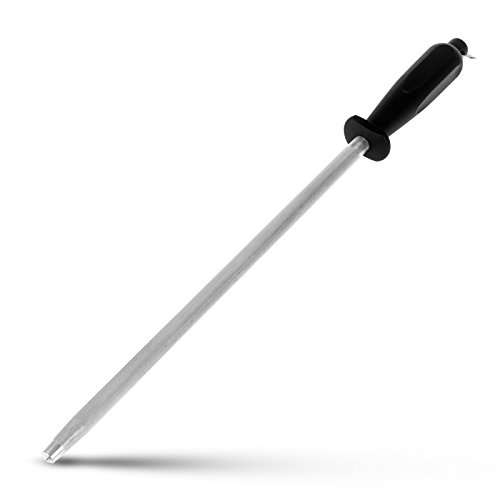
Its whole working life is seconds of intense contact. A knife edge is spent a little by every board it meets, and this rod is the tool that gives the edge back in a few drawn strokes — while the rod itself comes out of the exchange unchanged. That is the tempering bargain in steel: ajowan meets oil at full heat and comes out more itself, not less, and the rod does the same work for the counter’s most-used tool. For a kitchen that cooks daily, this is the pick that maintains everything else instead of adding one more object to the pile.
Specs
- Product type: Knife sharpening rod, per the listing name
- Length: 12 inches, per the listing name
- Role in the set: The survivor — brief intense contact that restores instead of consuming
- Details to confirm: Rod material and grit rating — Confirm on the listing
Best for: Cooks who hone weekly and want the edge restored in a few strokes at the counter, between board work and the drawer.
Watch out for: Confirm the rod’s material and grit on the listing, and keep the strokes few and light; past the scorch line, more honing rounds the edge it was meant to save.
Mahatma Jasmine Rice
Rice is this set’s whole-form staple. Per the listing name, this is Mahatma jasmine rice: whole kernels, bought intact the way ajowan is bought whole, because what a kernel holds inside itself it keeps, and what has been broken down early spends itself sitting in storage. The pot is the rice’s tempering moment — one brief, intense treatment of heat and steam that the whole form was saved for all along. Cooked, the rice is spent completely and entirely on purpose; sealed and uncooked, it waits without fading the way ground spice fades on the shelf.
Specs
- Brand: Mahatma, per the listing name
- Product type: Jasmine rice, per the listing name
- Grain state: Whole kernels, per the product type
- Role in the set: The whole form — fragrance held inside the kernel until its one hot moment
- Details to confirm: Sack weight and preparation details — Confirm on the listing
Best for: Households that cook rice weekly and want the staple bought whole, sealed, and rotated so the oldest sack is always the next one in the pot.
Watch out for: Match the sack weight on the listing to your pace; a whole form keeps well, but a sack bought far beyond the household’s rotation still spends its best months waiting.
FLAVCHARM Flameless Candles
These candles are the tempering rule read backwards. Per the listing name, they are FLAVCHARM flameless candles — counter light that no moment of intensity ever consumes. A real candle pays for its glow with itself, minute by minute, the way ground spice pays with its surface; these skip the transaction entirely. They give the same light on the fiftieth evening as the first, stand beside paper and towels with nothing lit to supervise, and are still whole when the evening ends. What the form gives up is scent and ceremony; what it keeps is everything else.
Specs
- Brand: FLAVCHARM, per the listing name
- Product type: Flameless candles, per the listing name
- Role in the set: The unconsumed — light that is never spent by its own giving
- Details to confirm: Candle count, sizes, and power source — Confirm on the listing
Best for: The counter’s far end, where the same evening glow is wanted every night with nothing burned down, trimmed or replaced as the weeks pass.
Watch out for: Confirm the candle count, sizes, and power source on the listing, and keep whatever they run on in the house before the season you want them lit.
Timeet Red Brick Peel-and-Stick Wallpaper
This sheet gets its intense moment exactly once. Per the listing name, it is a peel-and-stick wallpaper printed as red brick, and the moment is the application: measured, peeled, aligned and smoothed in a single pass where a misjudged line is printed in brick pattern for everyone to see — the mise en place rule in sheet form. After that pass the treatment is over and the surface simply endures: splashes wiped off, steam risen past it, evenings hosted against it. It is a picture of brick rather than brick itself, and judged honestly as a surface, it does its whole job.
Specs
- Brand: Timeet, per the listing name
- Pattern: Red brick, per the listing name
- Format: Peel-and-stick wallpaper, per the listing name
- Role in the set: The single pass — one rehearsed application, then endurance
- Details to confirm: Roll dimensions and pattern repeat — Confirm on the listing
Best for: Renters and splash zones, where the wall behind the counter needs the brick look with no paste, paint or landlord negotiation.
Watch out for: Check the roll dimensions on the listing and rehearse the first sheet’s alignment before peeling; the pass is brief, and the pattern forgives nothing once it is down.
Dermacol Full Coverage Foundation SPF30 No.207
This tube is the set’s spent shield. Per the listing name, it is a Dermacol full coverage foundation with SPF30 in shade No.207 — and its protective layer is used up by the very light it stands against, hour by hour, which is why it is reapplied on schedule rather than trusted once. Ground ajowan spends the same way: all surface, gone quickly, while the whole seed endures. The shade number is the identity to settle before the tube reaches the counter; the neighboring shades on the shelf are not substitutes for No.207.
Specs
- Brand: Dermacol, per the listing name
- Product type: Full coverage foundation, per the listing name
- Sun protection: SPF30, per the listing name
- Shade: No.207, per the listing name
- Role in the set: The spent shield — a layer consumed by the exposure it meets
- Details to confirm: Tube size and full shade range — Confirm on the listing
Best for: The morning end of the counter, where one tube covering and protecting in a single step replaces two products on a small shelf.
Watch out for: Confirm shade No.207 against the listing’s shade information before ordering, and treat the layer as a dose with a schedule, not a permanent coat.
Which One Fits Your Situation
You cook from scratch most nights and your knives show it
Start with the rod, and make its moment a rehearsed one: a few light strokes at a set angle before the board work starts. The rice backs it as the whole-form staple, bought sealed and rotated oldest-first, so the counter’s two daily tools — the edge and the grain — are both maintained by routine instead of replaced in a panic.
Your staples keep going stale before you finish them
Start with the whole-form rule and buy smaller. The rice keeps because the kernel is intact; the candles keep because nothing consumes them. Audit the shelf by the ajowan test: anything ground, opened, or broken down early is already spending itself, so those are the buys to shrink, seal, and finish first.
Your counter hosts as much as it cooks
Start with the two set-and-forget pieces. The wallpaper takes one careful pass and then backs every evening without further attention, and the flameless candles hold the glow nightly with nothing burned down. Together they free the host’s attention for the cooking itself, which is where the brief, intense moments actually belong.
Your mornings allow exactly one product on the counter
Start with the tube — and start with its number. Dermacol’s No.207 covers and protects in one step, which is the whole case for a combined product, yet the step only saves time when the shade is exactly right and the layer is renewed on its schedule. Check the listing’s shade information once, carefully, and the short routine stays short.
Common Mistakes
- Grinding a whole jar’s worth of seed at once for convenience, then cooking for months from a spice that spent its punch in the first week.
- Dropping seeds into oil that is already smoking and calling the bitterness a bad batch, when the scorch line was crossed before the seeds landed.
- Honing with dozens of heavy strokes, rounding the edge the rod was bought to restore — the dose is a few light passes, then stop.
- Approving a brick print or a foundation shade from a thumbnail in daylight, when both will live under the counter’s evening light.
- Treating a protective layer as permanent: applied once in the morning, trusted at hour six, long past the span it was dosed for.
Frequently Asked Questions
Does any pick in this set contain ajowan?
No. None of the five picks contains ajowan, ajowan extract, or any spice at all. Ajowanwood names the grading rule only: the seed is bought whole because ground spice spends itself, its tempering moment lasts seconds and must be rehearsed, intensity has a scorch line, and a set divides honestly into what the moment spends and what it leaves unchanged.
Why is ajowan tempered whole instead of ground?
Because the seed’s punch lives in its whole form. Ground ajowan loses its thymol strength quickly in storage and scorches almost instantly in hot oil, while a whole seed blooms in the same oil within seconds, releasing its flavor into the fat without burning. Tempering whole seeds at the last moment is how the spice arrives at full strength.
What does ajowan actually taste like?
Ajowan tastes overwhelmingly of thymol, the compound it shares with thyme: hot, herbal, and a little bitter at the edges, far stronger than its size suggests. The seeds are tiny and ridged, from an annual herb in the carrot family, and a small spoonful is enough to season a whole pan of breads or fritters — which is exactly why the dose is kept brief and small.
Where is ajowan used besides tempering?
Tempering in hot oil for Indian breads and pakoras is the best-known use, but the seed travels further. In Ayurvedic practice the seeds are chewed plain or steeped in water as a traditional preparation, and commercially the seed is distilled into thymol oil, a concentrated product far harsher than the seed itself. The whole seed remains the cook’s form.
FAQ
Does any pick in this set contain ajowan?
Why is ajowan tempered whole instead of ground?
What does ajowan actually taste like?
Where is ajowan used besides tempering?
More from Amazon
Programs that pair well with the guide above. Offers and eligibility are set by Amazon and may change.
Set up recurring deliveries of everyday items on eligible products. Terms and savings are set by Amazon.
Explore Subscribe & SaveCollect the home and kitchen items you want in one registry that guests can shop from.
Create a wedding registryFree shipping on eligible items, Prime Video and more. Eligible new members can start with a free trial.
Start a Prime free trialAudiobooks and podcasts to listen to on the go. Eligible new members can start with a free trial.
Try Audible freeAs an Amazon Associate we earn from qualifying purchases.