Key takeaways
- Power and Motor Control: Look for 300W to 1100W with true variable speed, not just low/high. Variable control lets you start slow to avoid splatter, then ramp up to pulverize potatoes, carrots, and beans into a silky puree.
- Shaft Length and Material: An 8-inch stainless steel shaft reaches deep into stockpots and Dutch ovens while protecting nonstick coatings from scratches. Stainless steel also resists staining and heat better than plastic.
- Blade Design and Bell Shape: A well-designed bell housing with venting reduces suction to the pot bottom and minimizes splashing. Sharp, offset stainless steel blades create a vortex that pulls chunks down for even blending.
- Ergonomics and Weight: For in-pot blending you will hold the blender at an angle for 2 to 4 minutes. A slim grip, balanced weight, and well-placed speed controls prevent hand fatigue and give you better control over texture.
- Clean-Up and Attachments: A removable blending arm that is dishwasher safe saves time with starchy soups. Extra attachments like a whisk or chopper are useful, but prioritize easy rinsing and BPA-free accessories for daily soup making.
.
The KitchenAid Variable Speed Corded Hand Blender KHBV53 is the best overall immersion blender for pureeing soups directly in the pot, with the Cuisinart CSB-179 Smart Stick as the runner-up for its precise control and premium build. Both deliver smooth, splatter-free purees without transferring hot soup to a countertop blender.
Pureeing soup in the pot sounds simple until you hit common frustrations: splashing hot liquid, uneven chunks, a blender that stalls in thick chowders, or a shaft that scratches nonstick cookware. Power, speed control, blade design, and shaft length all determine whether you get velvety results or a messy stovetop. This guide compares the top immersion blenders for in-pot soup pureeing on blending performance, comfort, clean-up, and versatility, so you can choose the right model for your kitchen and budget.
Our top picks





As an Amazon Associate we earn from qualifying purchases at no extra cost to you. Ratings are shown as listed on Amazon.
Quick Comparison
| Product | Best For | Standout Feature | Rating |
|---|---|---|---|
| KitchenAid Variable Speed Corded Hand Blender KHBV53 | Best Overall | Variable speed trigger + 8-inch removable blending arm | 4.8/5 |
| OVENTE Electric Hand Blender HS565B | Best Budget | Lightweight 300W design with 2 speeds | 4.5/5 |
| Cuisinart CSB-179 Smart Stick | Best Premium | Variable speed slider with one-touch operation | 4.7/5 |
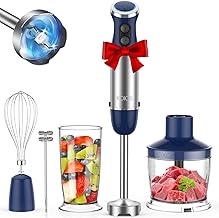
| SHARDOR 1100W 5-in-1 Immersion Blender | Large Batches & Heavy Soups | 1100W motor with variable speed + 5 attachments | 4.6/5 |
| Ganiza 8-in-1 Hand Blender 1000W | Maximum Versatility | 16 speeds with chopper, whisk, frother and masher | 4.6/5 |
How to Choose an Immersion Blenders for Pureeing Soups Directly in the Pot
- Power and Motor Control: Look for 300W to 1100W with true variable speed, not just low/high. Variable control lets you start slow to avoid splatter, then ramp up to pulverize potatoes, carrots, and beans into a silky puree.
- Shaft Length and Material: An 8-inch stainless steel shaft reaches deep into stockpots and Dutch ovens while protecting nonstick coatings from scratches. Stainless steel also resists staining and heat better than plastic.
- Blade Design and Bell Shape: A well-designed bell housing with venting reduces suction to the pot bottom and minimizes splashing. Sharp, offset stainless steel blades create a vortex that pulls chunks down for even blending.
- Ergonomics and Weight: For in-pot blending you will hold the blender at an angle for 2 to 4 minutes. A slim grip, balanced weight, and well-placed speed controls prevent hand fatigue and give you better control over texture.
- Clean-Up and Attachments: A removable blending arm that is dishwasher safe saves time with starchy soups. Extra attachments like a whisk or chopper are useful, but prioritize easy rinsing and BPA-free accessories for daily soup making.
The Best Immersion Blenders for Pureeing Soups Directly in the Pots Reviewed
Best Overall: KitchenAid Variable Speed Corded Hand Blender KHBV53
The KHBV53 is the most reliable choice for pureeing soups right in the pot thanks to its responsive variable speed trigger and 8-inch removable stainless steel arm. It is best for home cooks who want smooth, controlled results from brothy tomato soup to creamy potato leek without splatter or arm strain, plus the added convenience of the included blending jar for sauces and dressings.
Best Budget: OVENTE Electric Hand Blender HS565B
The OVENTE HS565B offers surprising performance for its price with a compact 300W motor, two simple speeds, and a lightweight body that is easy to maneuver in smaller saucepans. It is best for beginners, small kitchens, and occasional soup makers who want an affordable, easy-to-clean tool for quick purees, whisks, and chopping.
Best Premium: Cuisinart CSB-179 Smart Stick
The Cuisinart CSB-179 stands out for its smooth variable speed control, stainless steel shaft, and one-hand operation with lock/unlock safety. It is best for discerning cooks who puree soups weekly and want refined speed control, comfortable handling, and a durable, professional feel for both silky bisques and chunky rustic soups.
Best for Large Batches & Heavy Soups: SHARDOR 1100W 5-in-1 Immersion Blender
With an 1100W motor, variable speed dial, and 5 attachments including chopper, whisk, and frother, the SHARDOR powers through large pots of dense root vegetable or bean soups without bogging down. It is best for meal preppers and families who batch-cook and need extra power and capacity for thick, starchy purees and accompanying prep tasks.
Best for Maximum Versatility: Ganiza 8-in-1 Hand Blender 1000W
The Ganiza 8-in-1 brings 16 speeds and the broadest attachment set in this roundup, including a potato masher, chopper, whisk, frother, beaker, and portable bottle. It is best for versatile home cooks who want one handheld system to puree soups, mash potatoes directly in the pot, and handle smoothies, sauces, and baby food.
Frequently Asked Questions
Can I use an immersion blender in a nonstick pot?
Yes, if the blender has a stainless steel shaft with a plastic-coated bell or a design that prevents the blade from contacting the pot surface. Keep the blade slightly off the bottom, move it continuously, and avoid pressing hard. Stainless steel shafts like those on the KitchenAid and Cuisinart are safer for coated cookware than exposed blades.
How do you avoid splattering when pureeing hot soup?
Keep the bell fully submerged before starting, begin on the lowest speed, and tilt the pot slightly to create depth. Use a deep stockpot or Dutch oven, blend in slow up-and-down motions, and pulse at first before moving to continuous blending. A variable speed trigger gives the most control over splatter.
Will an immersion blender make soup completely smooth?
A good immersion blender will produce a velvety puree for most vegetable and bean soups, especially with sufficient power and blending time of 60 to 120 seconds. For ultra-silky restaurant-style bisques, you can finish by straining through a fine mesh sieve, but most home cooks will find the texture from models like the KitchenAid KHBV53 or SHARDOR 1100W perfectly smooth.
Is a corded immersion blender better than cordless for soups?
Corded models provide consistent, full power for the entire pureeing time, which matters for large or thick pots that require a few minutes of blending. They are also lighter without a battery. Cordless is convenient for quick tasks, but for pureeing soups directly in the pot, corded reliability and sustained wattage are generally preferable.
Final Thoughts
For flawless in-pot pureeing, the KitchenAid KHBV53 remains the top recommendation for its control, reach, and everyday ease, while the Cuisinart CSB-179 is an excellent premium alternative for precise texture control. On a budget, the OVENTE HS565B gets the job done without complexity, and power users cooking for a crowd will appreciate the SHARDOR 1100W for heavy batches.