Our Top Picks
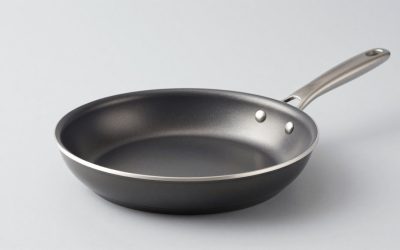
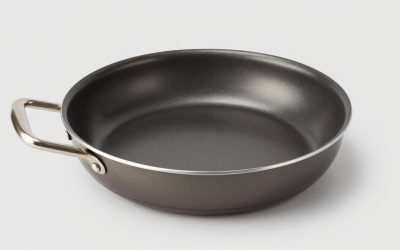
The best ceramic pan for most home cooks is a hard-anodized GreenPan such as the Valencia Pro, which several 2026 roundups rank first for value and heat distribution. Our Place’s Always Pan is the most versatile single pan, and Caraway is the pick for design and storage-friendly sets. Whichever you choose, plan on a coating life of roughly one to three years, because every sol-gel ceramic nonstick surface wears with heat and abrasion.
Quick Comparison of the Picks
| Pick | Best for | Body | Notable spec | Care | Price range |
|---|---|---|---|---|---|
| GreenPan Valencia Pro | Best overall and value | Hard-anodized aluminum | PFAS-free ceramic nonstick, sets and singles | Hand wash recommended | Mid |
| Our Place Always Pan 2.0 | One pan for many jobs | Aluminum body, ceramic coating | 10.5 in, steamer basket and spatula | Not dishwasher safe | Mid to upper |
| Caraway ceramic pans | Design, sets with storage | Aluminum core | Oven safe to 550 F per maker | Hand wash | Upper |
| T-fal ceramic nonstick | Budget | Aluminum | Entry-level price tier | Hand wash for longer life | Budget |
| Ceramic-coated cast iron or enameled pan | Long-term, oven use | Cast iron with enamel | Durable but heavy | Low heat, no sudden temperature changes | Upper |
Best Overall: GreenPan Valencia Pro
GreenPan helped popularize ceramic nonstick, and the Valencia Pro is the line that Organic Authority, Forbes and Kitchenware Authority each rank as best overall or best value. It has a hard-anodized aluminum body that heats evenly and resists warping, with a PFAS-free ceramic coating. It is sold as single pans and in sets, and an 11-piece set sells around the mid price tier.

CAROTE Pots and Pans Set Nonstick Ceramic Cookware Sets 21 Pieces Green | Non-Toxic Healthy Kitchen Cooking Set, Easy Clean, Even Heating, Fit All Stovetops, with Silicone Lids, PFAS FREE
Chosen because it specifies Non-Toxic Healthy Kitchen Cooking Set and Easy Clean.
View on Amazon
SENSARTE Ceramic Cookware Sets, Pots and Pans Set Non stick, 14 Piece Induction Cookware, Non toxic Healthy Non Stick Kitchen Cooking Set, with Frying Pans Set, PFAS PTFE PFOA PFOS Free
Chosen because it specifies Pots and Pans Set Non stick and 14 Piece Induction Cookware.
View on Amazon
SENSARTE Ceramic Nonstick Frying Pan Skillet with Lid, 12 Inch Large Deep Frying Pan, 5 QT Saute Pan, Induction Pan, Healthy Non Toxic Cooking Pan with Helper Handle, PFOA PFAS PTFE Free
Chosen because it specifies 12 Inch Large Deep Frying Pan and 5 QT Saute Pan.
View on Amazon
Umite Chef Non Stick Pots and Pans Set, 21 Pcs Ceramic Kitchen Cookware Set with Detachable Handle, Nonstick Healthy Induction Cookware, Dishwasher RV Cookware Set, Oven Safe, Stackable, Sage Green
Chosen because it specifies 21 Pcs Ceramic Kitchen Cookware Set with Detachable Handle and Nonstick Healthy Induction Cookware.
View on AmazonThe trade-off is mixed documentation. One reviewer notes that GreenPan does not publish third-party PFAS test certificates, while another sees the coating lasting longer than competitors. Treat claims as claims and check the maker’s current statements if this matters to you.
Best Versatile Pan: Our Place Always Pan 2.0
The Always Pan is built to replace several pieces: a frying pan, saute pan, steamer and sauce pan, with a nesting steamer basket and a built-in spatula rest. The 10.5 inch size is the usual model featured in reviews, and Forbes picked the 2.0 version as the best multipurpose ceramic pan.
The trade-off is that it is not dishwasher safe, the high sides make flipping eggs less graceful than with a skillet, and it sits at the higher end of single-pan prices.
Best Design and Sets: Caraway
Caraway’s ceramic cookware is oven safe up to 550 degrees Fahrenheit according to the maker and comes with magnetic racks and lid storage in sets. Food Network named its 12-piece set best overall, and Forbes chose the 10 inch pan as best for design. One analysis expects Caraway and Our Place to approach three years of coating life with careful use.
The trade-off is cost. Caraway sits at a premium over GreenPan, and you pay for aesthetics and storage as much as performance.
Best Budget: T-fal Ceramic Nonstick
For a first ceramic skillet or a dorm kitchen, T-fal is the budget pick named by Kitchenware Authority. It keeps costs low and offers standard sizes.
The trade-off is a thinner build and a shorter life if overheated. Treat it as a replaceable pan and avoid high heat.
Best Long-Term Option: Enameled Cast Iron
If you want a ceramic-feeling surface that will not wear like sol-gel coatings, enameled cast iron is a durable alternative. It works on all cooktops including induction and goes in the oven, though it is not as slick for eggs.
The trade-off is weight and the price, and the enamel can chip if dropped or hit with metal tools.
How to Choose a Ceramic Pan
Body material and thickness
Hard-anodized aluminum is the standard and handles even heat well. Thin stamped aluminum warps and hot spots. A base about 3 to 5 mm thick is a decent target for a skillet.
Induction compatibility
Aluminum alone does not work on induction. Check that the pan has a magnetic stainless base if you cook on induction.
Size and depth
An 8 inch pan is right for one or two eggs, 10 inch for two servings, and 12 inch for families. Sloped sides help with flipping; straight sides hold more sauce.
Handles and oven limit
Stainless handles tolerate the oven, often to 400 to 550 degrees Fahrenheit. Phenolic handles are usually limited to 350 to 400.
What PFAS-free means
Ceramic nonstick is made from a silica-based sol-gel and does not use PTFE. That does not mean the pan lasts forever, and it is not a promise about every material in the pan, so read the maker’s documentation.
Worked Example: Cost Per Year
Assume a ceramic skillet in the middle price tier lasts two years with daily use, and a cheap one lasts 8 months. Over six years you would buy three mid-tier pans or nine cheap ones. Even when the cheap pan costs a third of the mid pan, nine of them cost three times as much as three mid-tier pans. If you cook once a week, both can last longer, which narrows the gap.
Making the Coating Last
- Cook on low to medium heat; high heat breaks down the coating.
- Use a little oil or butter even though the pan is nonstick; it forms a protective film.
- Skip aerosol sprays that leave residue.
- Let the pan cool before washing and use a soft sponge.
- Use wood, silicone or nylon tools.
- Store with a pan protector to prevent scratches.
Common Mistakes
- Preheating an empty pan on high.
- Cold-water shocks on a hot pan.
- Putting it in the dishwasher despite hand-wash advice.
- Stacking with other cookware.
Frequently Asked Questions
Are ceramic pans safe?
Ceramic nonstick coatings are made without PTFE and are marketed as PFAS-free. Safety statements vary by maker, so check each brand’s documentation.
How long do ceramic pans last?
Commonly one to three years depending on heat, cleaning and use. Careful cooks may exceed that.
Why does my ceramic pan stick?
Food residue, overheating or scratched coating reduces release. Clean it gently and cook on lower heat; if the coating has worn through, replace it.
Can ceramic pans go in the oven?
Many can, often to 400 to 550 degrees Fahrenheit, but check the handle and lid limits for your model.
Do ceramic pans work on induction?
Only if the base is magnetic. Look for explicit induction compatibility on the listing.