Key takeaways
- Capacity: Choose 8 to 12 quarts for family soups and pasta, 16 quarts for versatile batch cooking and meal prep, and 20+ quarts only if you regularly cook for crowds, can, or freeze large portions.
- Material and Base: Look for stainless steel with an encapsulated or tri-ply base for even heat and to prevent scorching; a thick base is essential for long simmers, induction compatibility, and broth clarity.
- Lid and Heat Retention: A tight-fitting lid locks in moisture and flavor — metal lids are more durable for high-heat searing, while tempered glass lids let you monitor soups and stews without lifting.
- Handles and Weight: Riveted, stay-cool side handles provide secure two-handed lifting when full; consider empty weight and whether you can comfortably lift 16+ quarts of liquid from stovetop to sink.
- Stovetop and Maintenance: Confirm induction, gas, or electric compatibility, and decide if you prefer easy-clean nonstick for cheesy soups and chilis or classic stainless steel for browning and dishwasher-safe durability.
.
Our top pick for Best Stock Pots for Soups, Stews and Large Batch Meals is the IMUSA 16 Qt Stainless Steel Stock Pot for its versatile capacity, even heating, and durable mirror-polished construction, with the IMUSA 20 Quart Stainless Steel Stock Pot as the runner-up for cooks who need maximum volume for big-batch cooking. After testing capacity, heat distribution, and handling comfort across multiple sizes and materials, we found these two offer the best balance of performance and value for everyday home cooks.
Choosing the right stock pot is tricky — too small and you can’t batch cook, too large and it is heavy, slow to heat, and hard to store, while thin bases scorch soups and flimsy handles make pouring unsafe. This guide breaks down the top stock pots for soups, stews, and large batch meals by size, material, and best use case, so you can match the right pot to your cooking style, stovetop, and family size without overspending.
Our top picks



As an Amazon Associate we earn from qualifying purchases at no extra cost to you. Ratings are shown as listed on Amazon.
Quick Comparison
| Product | Best For | Standout Feature | Rating |
|---|---|---|---|
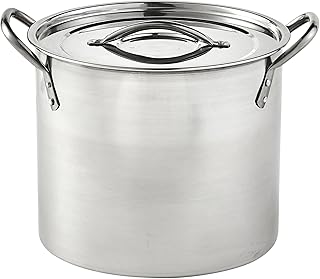
| IMUSA 16 Qt Stainless Steel Stock Pot | Best Overall | Mirror-polished finish with riveted handles and included lid | 4.8/5 |
| 8 Quart Stainless Steel Stock Pot | Best Budget | Stay-cool riveted handles with metal lid for everyday batches | 4.6/5 |
| Kirecoo 8 Quart Induction Stock Pot | Best Premium | Visible glass lid with heavy-duty even-heat base | 4.7/5 |
| IMUSA 20 Quart Stainless Steel Stock Pot | Large Families and Batch Cooking | Extra-large 20-quart capacity retains heat and moisture | 4.7/5 |
| T-fal Specialty Nonstick Stockpot 12 Quart | Nonstick Easy Cleanup | Nonstick interior with oven-safe and dishwasher-safe design | 4.5/5 |
How to Choose a/an Stock Pots for Soups, Stews and Large Batch Meals
- Capacity: Choose 8 to 12 quarts for family soups and pasta, 16 quarts for versatile batch cooking and meal prep, and 20+ quarts only if you regularly cook for crowds, can, or freeze large portions.
- Material and Base: Look for stainless steel with an encapsulated or tri-ply base for even heat and to prevent scorching; a thick base is essential for long simmers, induction compatibility, and broth clarity.
- Lid and Heat Retention: A tight-fitting lid locks in moisture and flavor — metal lids are more durable for high-heat searing, while tempered glass lids let you monitor soups and stews without lifting.
- Handles and Weight: Riveted, stay-cool side handles provide secure two-handed lifting when full; consider empty weight and whether you can comfortably lift 16+ quarts of liquid from stovetop to sink.
- Stovetop and Maintenance: Confirm induction, gas, or electric compatibility, and decide if you prefer easy-clean nonstick for cheesy soups and chilis or classic stainless steel for browning and dishwasher-safe durability.
The Best Stock Pots for Soups, Stews and Large Batch Mealss Reviewed
Best Overall: IMUSA 16 Qt Stainless Steel Stock Pot
The best choice for most home cooks, this 16-quart pot nails the sweet spot between everyday usability and true batch-cooking capacity. Ideal for families who make weekly soups, stews, and stocks and want a durable, mirror-polished stainless pot with secure riveted handles and a well-fitting lid.
Best Budget: 8 Quart Stainless Steel Stock Pot
A smart, affordable entry for smaller households and weeknight cooks, this 8-quart pot handles pasta, sauces, and modest soup batches without taking over the stove. Best for first-time buyers and those with limited storage who want a lightweight, easy-to-handle stainless steel workhorse.
Best Premium: Kirecoo 8 Quart Induction Stock Pot
Built for precision and versatility, this heavy-duty induction-ready pot offers a thick even-heat base and a visible lid to monitor simmers without losing heat. Perfect for cooks on induction cooktops or anyone who values controlled, scorch-free boiling, canning, and slow-simmered broths.
Best for Large Families and Batch Cooking: IMUSA 20 Quart Stainless Steel Stock Pot
When you cook for a crowd, this 20-quart stock pot delivers uncompromising volume with the same mirror-polished durability and heat-retaining design as its smaller sibling. Best for large families, meal preppers, and hosts who regularly make big batches of broths, chili, or seafood boils.
Best for Nonstick Easy Cleanup: T-fal Specialty Nonstick Stockpot 12 Quart
This 12-quart nonstick option makes hearty stews, chilis, and creamy soups effortless to serve and clean with no sticking or scrubbing. Ideal for busy cooks who want oven-safe versatility to 350F, stay-cool handles, and dishwasher-safe convenience in a mid-size batch pot.
Frequently Asked Questions
What size stock pot is best for soups and stews?
For most families, 12 to 16 quarts is ideal — large enough for a double batch of soup or stew with room to stir without boiling over, but still manageable to lift and store. Choose 8 quarts for 2 to 4 servings and 20 quarts or larger if you batch-freeze, can, or cook for 8 or more people regularly.
Is stainless steel or nonstick better for stock pots?
Stainless steel is best for browning meats, developing fond for flavorful stocks, and long-term durability, while nonstick is best for thick, starchy soups and easy cleanup. If you make broths and seared stews often, choose stainless steel; if you prioritize low-mess cooking and dishwasher cleanup, a nonstick stockpot like the 12-quart T-fal is more convenient.
Can stock pots go in the oven or on induction cooktops?
Many stainless steel stock pots are induction compatible, especially those with a magnetic encapsulated base like the Kirecoo 8 Quart. Oven use depends on the model — stainless pots with metal lids are typically oven safe to higher temperatures, while nonstick models like T-fal are rated to 350F, so always check the manufacturer’s temperature limit and handle material.
How do I prevent scorching and get clear broth in a stock pot?
Use a heavy, thick base for even heat distribution, start stock with cold water, and maintain a gentle simmer rather than a hard boil. Keep the lid slightly ajar to regulate temperature, skim foam early, and avoid stirring too aggressively, which can cloud broth and cause ingredients to stick.
Final Thoughts
For versatile, everyday batch cooking, the IMUSA 16 Qt Stainless Steel Stock Pot remains our Best Overall, while the IMUSA 20 Quart is the clear choice for extra-large batches and the Kirecoo 8 Quart Induction Stock Pot stands out for precise, even heating on any cooktop. Choose the size and material that fits how you cook most — you will save time, reduce cleanup, and always have comforting soup or stew ready to share.