Key takeaways
- Slice uniformly: Even thickness is the most important factor for consistent drying; a mandoline helps produce identical slices.
- Do not overcrowd trays: Leave space between pieces so air circulates freely around each one, or drying will be uneven.
- Rotate trays if needed: On bottom-fan dehydrators, swap tray positions partway through for even results; rear-fan models minimize this need.
- Condition dried fruit: Sealing dried fruit in a jar and shaking daily for a week equalizes moisture and prevents mold during long storage.
Dehydrating food is one of the oldest preservation methods and one of the most rewarding to do at home. By gently removing moisture with warm circulating air, a food dehydrator concentrates flavor and extends shelf life dramatically, turning fresh produce into chewy fruit snacks, meat into jerky, and herbs into pantry staples. It is healthier than store-bought dried snacks, which often carry added sugar and preservatives, and it rescues surplus garden harvests or bulk-buy deals from spoilage.
This guide explains how to dehydrate food with a dehydrator from start to finish, covering how the machines work, how to prepare different foods, the right temperatures and times, and how to store your results. Whether you own a stackable-tray Cosori, a stainless-steel Magic Mill, or a compact model, the principles below will help you dry fruits, vegetables, jerky, and herbs successfully in 2026.
Our top picks


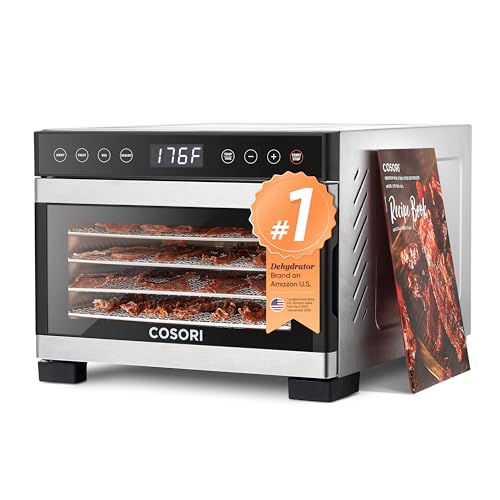
As an Amazon Associate we earn from qualifying purchases at no extra cost to you. Ratings are shown as listed on Amazon.
⚡ Save on Your Next PC — Amazon Prime
Prime members get fast free shipping on the systems above, plus early access to Prime Day & Black Friday PC deals. New members get a 30-day free trial.
Watch: How to Dehydrate Food with a Dehydrator — Video Review
How a Dehydrator Works
A dehydrator uses a heating element and a fan to circulate warm, low-temperature air across trays of food, evaporating moisture slowly and evenly. Unlike an oven, it holds a precise low temperature (often 95°F to 165°F) that dries food without cooking it, preserving nutrients and texture. Models with a rear-mounted fan, like the Magic Mill Pro, distribute air more evenly than bottom-fan units, reducing the need to rotate trays. More trays and larger drying space, measured in square feet, mean bigger batches per session.
Prepare Your Food Properly
Good results start with preparation. Slice fruits and vegetables uniformly, ideally between an eighth and a quarter inch thick, so everything dries at the same rate. Blanch vegetables like carrots and green beans briefly before drying to preserve color and speed the process. Dip apple and banana slices in lemon water to prevent browning. For jerky, slice meat thinly against the grain and marinate it first. Herbs need only rinsing and drying before going on the trays whole. Uniformity is the key to even, reliable dehydration.
Set the Right Temperature and Time
Different foods need different temperatures. Herbs dry at the lowest settings around 95°F to 115°F, fruits and vegetables at roughly 125°F to 135°F, and meat jerky at a food-safe 155°F to 165°F to eliminate bacteria. Times vary widely: herbs may finish in 2 to 4 hours, fruit in 6 to 12 hours, and jerky in 4 to 8 hours depending on thickness. Machines with adjustable temperature control and a timer, like the Cosori and Magic Mill models, let you match settings to each food precisely.
Test Doneness and Store
Properly dried food is key to safe storage. Fruit should be leathery and pliable with no moist pockets, vegetables brittle, and jerky dry but bendable without snapping. Let everything cool completely, then condition fruit by sealing it loosely in a jar for a few days and shaking daily to distribute any residual moisture. Store finished food in airtight containers or vacuum-sealed bags in a cool, dark place. Properly dehydrated and stored food can last months to a year.
Tips
- Slice uniformly: Even thickness is the most important factor for consistent drying; a mandoline helps produce identical slices.
- Do not overcrowd trays: Leave space between pieces so air circulates freely around each one, or drying will be uneven.
- Rotate trays if needed: On bottom-fan dehydrators, swap tray positions partway through for even results; rear-fan models minimize this need.
- Condition dried fruit: Sealing dried fruit in a jar and shaking daily for a week equalizes moisture and prevents mold during long storage.
Frequently Asked Questions
What foods can I dehydrate?
Almost anything with moisture: fruits for snacks and leathers, vegetables for soups and chips, meat for jerky, herbs for seasoning, and even yogurt or fruit purees for roll-ups. Beginners often start with apple slices, banana chips, and herbs before moving to jerky.
What temperature should I use for jerky?
Meat jerky should be dried at 155°F to 165°F to safely eliminate bacteria. Many people also pre-heat the meat or use a marinade with curing salt for added safety. Never dry meat at the low temperatures used for fruit.
How long does dehydrated food last?
When properly dried and stored in airtight containers in a cool, dark place, most dehydrated foods last several months, and some, like fully dried fruit and vegetables, can keep up to a year. Vacuum sealing extends shelf life further.
Is a dehydrator better than an oven?
For regular drying, yes. A dehydrator holds a precise low temperature and circulates air evenly, using less energy and producing more consistent results than an oven, which often runs too hot and dries unevenly.
Conclusion
Dehydrating food at home is straightforward once you understand the essentials: slice uniformly, match temperature to the food, dry until the texture is right, and store airtight. A quality dehydrator with adjustable temperature and a timer, like the Cosori or Magic Mill, handles the process reliably and opens up a world of healthy snacks and preserved harvests. Start with simple fruit and herbs, build confidence, and you will soon be making jerky and leathers far better and cheaper than anything on the shelf.