Key takeaways
- 8 inches: suitable for a small saucepan, one or two servings, and compact storage.
- 10 inches: a versatile size for most home kitchens and a good match for medium woks.
- 12 inches: better for family portions, but it needs a broad pot or wok.
- 14 inches: useful for parties, though it can overhang ordinary cookware and require a wok ring.
The best dim sum steamer set for most home cooks is a 10- to 12-inch, two- or three-tier bamboo steamer with a snug woven lid, provided it fits your existing wok or pot; choose stainless steel instead if easy cleaning, dishwasher use, and long-term durability matter more than traditional steaming performance.
Quick picks by cooking situation
| Cooking situation | Best choice | Why it fits | Typical market range |
|---|---|---|---|
| Occasional dim sum for one or two | 8-inch bamboo, 2 tiers | Compact, inexpensive, and compatible with a small saucepan or narrow wok | $18–$35 |
| Regular family cooking | 10- or 12-inch bamboo, 2–3 tiers | Good capacity for dumplings, buns, vegetables, and fish | $25–$60 |
| Maximum durability and easy cleanup | 10- or 12-inch stainless steel, 2 tiers | Resists odors and mildew and usually tolerates dishwasher cleaning | $35–$90 |
| Small kitchen or limited storage | Collapsible stainless-steel steamer basket | Folds or nests inside a pot, although it is less suitable for delicate buns | $15–$45 |
| Large gatherings | 12- or 14-inch bamboo, 3 tiers | High capacity, but it requires a broad wok, stockpot, or dedicated steaming ring | $45–$85 |
Bamboo versus stainless steel: which material is better?
Bamboo: the better dim sum texture
Bamboo is the traditional choice because its porous walls absorb some condensation rather than letting water droplets fall directly onto dumpling wrappers. That can help keep buns and dumplings from becoming soggy, especially when the lid is properly fitted. Bamboo also stays relatively cool at the rim, making it easier to lift between batches.

MacaRio 10 Inch Bamboo Steamer Basket Set Dumpling Steamer for Cooking
Included for 'Best Dim Sum Steamer Sets for Home Cooking' as a relevant option in this category; details come from the product listing.
View on Amazon
HAPPI STUDIO Bamboo Steamer Basket 10 Inch, Extra Deep Dumpling Steamer Set
Included for 'Best Dim Sum Steamer Sets for Home Cooking' because the listing specifies Extra Deep Dumpling Steamer Set, details this guide uses to compare options.
View on Amazon
Joyce Chen 2-Tier Bamboo Steamer Baskets, 10-Inch
Included for 'Best Dim Sum Steamer Sets for Home Cooking' because the listing specifies 10-Inch, details this guide uses to compare options.
View on Amazon
Greenwhisper 10 Inch Bamboo Steamer Set, 2 Tier Dumpling Steamer Basket – For Cooking Bao Buns, Dim Sum, Soup Dumpling (10 inch)
Included for 'Best Dim Sum Steamer Sets for Home Cooking' because the listing specifies 2 Tier Dumpling Steamer Basket and For Cooking Bao Buns, details this guide uses to compare options.
View on AmazonThe trade-off is maintenance. Bamboo should not be soaked, left in standing water, or put in a dishwasher. Steam, food residue, and poor drying can eventually cause dark spots, mildew, warped tiers, or a musty smell. The thin woven lid and the bamboo joints are usually the first parts to deteriorate.
Stainless steel: the better ownership choice
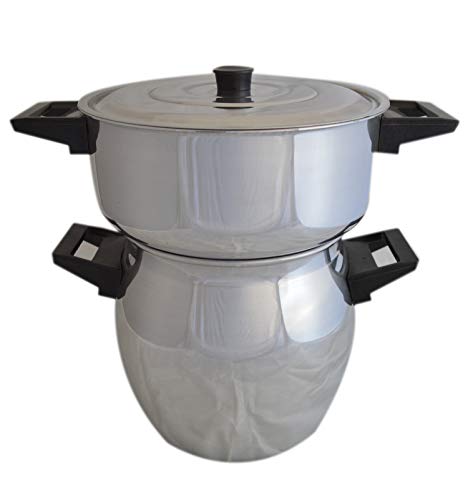
Stainless steel is nonporous, strong, and less vulnerable to mold. It is the practical choice for cooks who steam frequently, share a kitchen with other users, or want the least demanding cleanup. Many stainless sets have a tight-fitting domed lid and stackable perforated tiers.
Steel transfers heat more readily than bamboo, so condensation can collect on the lid and drip onto food. A lid with a rolled rim, a deep dome, or a condensation channel performs better than a flat lid. Stainless tiers can also be heavier and noisier when stacked, and some models have perforations that are too large for small dumplings unless you use liners.
The dimensions that determine whether a set works
Diameter is more important than the number printed on the packaging. Measure the inside diameter of the pot or wok opening, not the outside rim. A steamer should sit securely without wobbling, and it should leave enough space for steam to rise around the food.
- 8 inches: suitable for a small saucepan, one or two servings, and compact storage.
- 10 inches: a versatile size for most home kitchens and a good match for medium woks.
- 12 inches: better for family portions, but it needs a broad pot or wok.
- 14 inches: useful for parties, though it can overhang ordinary cookware and require a wok ring.
Allow roughly 1 inch of clearance between the steamer’s outer wall and the vessel’s inner wall where possible. For example, a 12-inch steamer generally works best over a wok or pot with an opening of about 12 to 14 inches. A 10-inch basket placed on a 9-inch pot may sit on the rim, but it can be unstable and may block steam circulation.
Tier capacity: more layers are not always better
A two-tier steamer is the easiest all-purpose configuration. It provides enough room for a batch of dumplings and a second tier of buns or vegetables without making the stack excessively tall. Three tiers are useful when cooking for four or more people, but the lowest tier receives the strongest heat and the upper tiers may cook more slowly.
Do not judge capacity only by the number of tiers. A 10-inch tier may hold approximately 10 to 14 medium dumplings in a single layer, depending on spacing. A 12-inch tier may hold approximately 14 to 20. Dumplings need room to expand and should not touch neighboring pieces, or their wrappers may stick together.
For mixed foods, place items needing the longest cooking time on the bottom tier. Delicate buns and leafy vegetables usually belong higher up. Rotate tiers midway through a long steaming session if the upper level is noticeably behind.
Lid fit and liner compatibility
A good lid should overlap the top tier enough to prevent steam escaping from the sides, but it should not press against the food. Bamboo lids are often slightly flexible and can accommodate a small amount of expansion. Stainless lids are more consistent, but an overly shallow lid may crush buns.
Check these details before buying:
- Stacking lip: each tier should lock into the tier below rather than merely balance on it.
- Handle clearance: the lid handle should remain cool enough to lift with a towel or silicone grip.
- Perforation size: small holes are better for dumplings; large holes suit vegetables and larger buns.
- Liner support: the tier should accept parchment rounds, perforated paper liners, reusable silicone mats, or cabbage leaves.
- Flat base: the bottom tier should sit evenly on a wok ring, steaming rack, or pot rim.
Perforated parchment rounds are the most versatile disposable liner. They allow steam through while reducing sticking. Silicone liners are reusable, but solid silicone mats can slow cooking if they cover too much of the base. Avoid unperforated wax paper, which is not intended for steaming temperatures and can interfere with airflow.
Compatibility with standard pots and woks
Bamboo sets are most forgiving over a wok because the sloping sides support a range of basket sizes and the wide base produces strong steam circulation. A flat-bottom wok, large sauté pan, or stockpot can also work if the steamer is supported securely.
For a standard pot, use a steaming rack or metal trivet that keeps the basket above the water. The water level should remain below the food and below the bottom of the steamer. If the water touches the basket, dumpling bottoms can become wet and the bamboo may absorb excess moisture.
A stainless set with a built-in rim or adapter ring is often the safest choice for a straight-sided pot. Collapsible stainless baskets fit many pots, but their segmented feet can leave gaps or press into soft dumplings. They are best for vegetables, eggs, and larger pieces of food rather than delicate filled dough.
Ownership costs and maintenance
The purchase price is only part of the decision. Consider a simple use calculation. Suppose a $30 bamboo set lasts two years with use twice per month: 48 sessions, or about $0.63 per use before liners. A $60 stainless set lasting six years at the same frequency costs about $0.17 per use. Bamboo can still be the better value if its texture and low initial cost matter, but frequent cooks often save money with stainless steel.
How to maintain bamboo
- Wipe food residue away promptly with a soft brush or damp cloth.
- Rinse briefly with warm water; do not submerge the tiers.
- Use a mild detergent sparingly, since bamboo can retain odors.
- Shake off water and air-dry every tier and the lid separately.
- Store the set uncovered or loosely ventilated rather than sealed while damp.
How to maintain stainless steel
- Remove food and liners while the parts are still warm.
- Wash perforations carefully, where starch can dry and harden.
- Dry the joints and underside of the lid to reduce water spotting.
- Check for sharp burrs, loose handles, or warped tiers before each use.
The most common mistakes are overfilling the pot, letting the water boil dry, stacking food too closely, and lifting the lid repeatedly. Each lid lift releases accumulated heat and can add several minutes to cooking. Keep extra boiling water nearby so you can replenish the pot without interrupting the steam too much.
Final recommendation
Choose a 10-inch, two-tier bamboo set if you want traditional dim sum service, gentle condensation control, and a low-cost entry point. Choose a 10- or 12-inch stainless-steel set if you steam weekly, want simpler cleaning, or need a set that can withstand years of use. Whichever material you select, prioritize a stable diameter match, a lid that overlaps securely, compatible liners, and enough tier space to keep each dumpling in a single uncrowded layer.