Key takeaways
- For substantial chunks and dipping: Look for refrigerated dressing labeled “chunky” or “chunky blue cheese.” Marie’s and Litehouse offer refrigerated blue cheese dressings; check the specific variety and current label for its texture and nutrition.
- For a sharper salad dressing: Choose a pourable formula with a pronounced vinegar tang. Ken’s Steak House and Hidden Valley sell shelf-stable blue cheese dressings, though thickness and flavor vary by product.
- For easy, controlled dispensing: A squeeze bottle is convenient for celery, carrots, and sandwiches. Confirm the package format before buying; a brand may sell different sizes or designs.
- For a sodium-conscious comparison: Compare milligrams per serving across labels, using the same serving size. “Light” or “reduced fat” does not necessarily mean lower sodium.
The best blue cheese dressings depend on how you’ll use them: choose a thick, chunky style for wing dipping, a pourable, tangy one for salads, or a squeeze-bottle option for vegetables and quick snacks. For a dependable starting point, compare established brands such as Marie’s, Litehouse, Ken’s Steak House, and Hidden Valley by texture, tang, package design, and the sodium listed on the label.
Quick picks by situation
- For substantial chunks and dipping: Look for refrigerated dressing labeled “chunky” or “chunky blue cheese.” Marie’s and Litehouse offer refrigerated blue cheese dressings; check the specific variety and current label for its texture and nutrition.
- For a sharper salad dressing: Choose a pourable formula with a pronounced vinegar tang. Ken’s Steak House and Hidden Valley sell shelf-stable blue cheese dressings, though thickness and flavor vary by product.
- For easy, controlled dispensing: A squeeze bottle is convenient for celery, carrots, and sandwiches. Confirm the package format before buying; a brand may sell different sizes or designs.
- For a sodium-conscious comparison: Compare milligrams per serving across labels, using the same serving size. “Light” or “reduced fat” does not necessarily mean lower sodium.
What matters more than the label
Blue cheese dressing is a balance of salty, tangy, creamy, and savory. A dressing can contain recognizable cheese pieces yet taste mild overall; another can be smooth and assertive without large chunks. Product names are useful clues, but the ingredient list, nutrition panel, and package shape help you predict how it will work at the table.

Kraft Dressing, Chunky Blue Cheese, 16 oz
Included for 'Best Blue Cheese Dressings for Salads, Wings, and Dipping' because the listing specifies Chunky Blue Cheese and 16 oz, details this guide uses to compare options.
View on Amazon
Litehouse, Big Blue Dressing, 13 oz
Included for 'Best Blue Cheese Dressings for Salads, Wings, and Dipping' because the listing specifies Big Blue Dressing and 13 oz, details this guide uses to compare options.
View on Amazon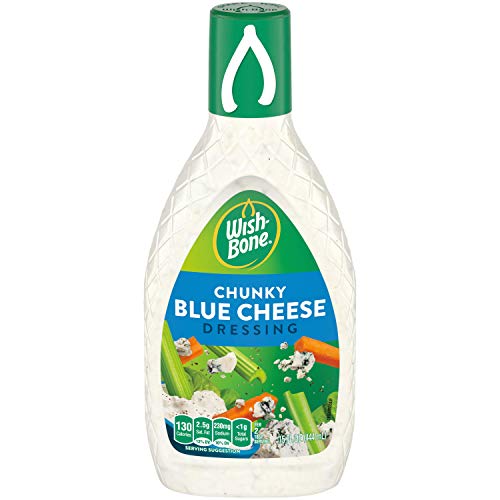
Wish-Bone Chunky Blue Cheese Salad Dressing, 15 FL OZ
Included for 'Best Blue Cheese Dressings for Salads, Wings, and Dipping' because the listing specifies 15 FL OZ, details this guide uses to compare options.
View on Amazon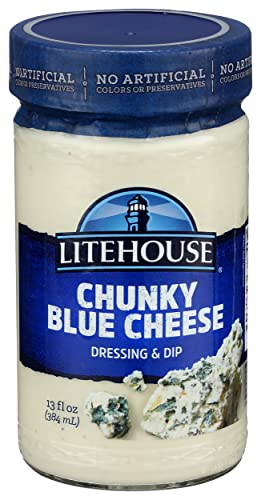
Litehouse Chunky Blue Cheese Dressing & Dip, 13 oz
Included for 'Best Blue Cheese Dressings for Salads, Wings, and Dipping' because the listing specifies 13 oz, details this guide uses to compare options.
View on AmazonChunk size and consistency
Chunky dressing gives each bite a stronger cheese presence and holds up well beside hot wings. It also tends to cling to food rather than run into a pool. For leafy salads, medium or small pieces are easier to distribute evenly. Smooth styles spread consistently over wraps and work better in a narrow squeeze-bottle stream.
Tang and richness
Vinegar or another acidic ingredient provides the lift that keeps a rich dressing from feeling heavy. If you like a bright contrast with spicy buffalo sauce, favor a tangier profile. If you want a milder dip for raw vegetables, a creamy, less sharp style may suit you better. Flavor descriptions are not standardized, so taste and current ingredient labels matter more than wording alone.
Sodium and serving size
Blue cheese, salt, and other seasoning can make sodium vary substantially between products. Compare the sodium per serving on the package, and check whether the listed serving size matches the amount you actually use. A generous wing dip can amount to several label servings. If sodium is a dietary concern, use the nutrition facts and ask a qualified health professional for guidance suited to your needs.
Comparison at a glance
The figures below describe common package formats rather than guaranteed current stock. Brands offer different sizes and recipes, and labels can change; confirm the exact bottle or tub before purchasing. The weight conversion is approximate: 1 fluid ounce is about 29.6 milliliters.
| Brand and product type | Common package format | Texture to look for | Best use | What to verify |
|---|---|---|---|---|
| Marie’s Blue Cheese Dressing | Refrigerated tub, commonly around 12 fl oz (355 mL) | Rich; check variety for chunk size | Wings, thick dip, chopped salads | Refrigeration, exact net weight, sodium per serving |
| Litehouse Blue Cheese Dressing | Refrigerated bottle or container; formats vary, often around 13 fl oz (384 mL) | Varies by variety; some versions emphasize cheese pieces | Salads, vegetables, dipping | Specific variety, cap design, serving size |
| Ken’s Steak House Blue Cheese Dressing | Shelf-stable bottle, commonly around 16 fl oz (473 mL) | Generally suited to pouring; shake if separated | Large salads, sandwiches, everyday use | Current formula, bottle opening, sodium per serving |
| Hidden Valley Blue Cheese Dressing | Shelf-stable bottle, commonly around 16 fl oz (473 mL) | Pourable style; check the label and product variety | Salads, vegetables, casual dipping | Package format, thickness, current nutrition facts |
Package size and refrigeration status can differ by retailer and region. The table is a practical starting point, not a guarantee that every listed size or format is available in 2026.
Choose by meal, not just by brand
For buffalo wings
Prioritize a thick dressing that stays on the wing or celery rather than dripping immediately. Visible blue cheese pieces add texture, while a bit of tang cuts through spicy, rich sauce. A tub is often easier to scoop from than a narrow bottle, especially if several people are sharing. Keep refrigerated products cold and follow the package’s storage directions.
For leafy or chopped salads
A pourable dressing coats greens more evenly and is easier to measure. For crisp lettuce, start with less than you think you need: toss first, then add more. Large chunks can be appealing in a chopped salad but may collect at the bottom of a bowl of delicate leaves.
For vegetables and snack plates
Choose a thicker style if you want a dip that clings to carrot sticks, cucumber, or celery. A squeeze bottle is tidy for individual portions; a tub makes sense when the dressing is also going on wings or a shared platter. For a thinner bottle dressing, serve it in a small bowl rather than expecting it to behave like a firm dip.
For sandwiches and wraps
Smooth or finely textured dressing spreads with fewer lumps and is less likely to pull apart soft bread. Use a thin layer: blue cheese flavor is potent, and too much dressing can make a wrap slippery. A bottle with a narrow opening gives better control than a wide-mouth tub.
How to compare value and avoid waste
Don’t judge value by bottle size alone. Compare the price per fluid ounce, then account for how much you’ll use and whether the package suits that use. For example, a 16-fl-oz bottle contains about 32 two-tablespoon servings if each serving is 0.5 fl oz. If your household uses two servings a week, that is roughly 16 weeks of dressing—potentially longer than ideal after opening. Follow the product’s storage instructions and discard it if its appearance, smell, or texture seems abnormal.
A refrigerated tub may cost more per ounce but make sense if you want a thick dip and will finish it promptly. A shelf-stable bottle can be convenient for occasional salads, but once opened it still needs the storage specified on its label. Avoid pouring leftover dressing from a serving bowl back into the original container, since food contact can shorten its usable life.
Buying checklist
- Choose chunky or thick for wings and dipping; choose smooth or pourable for salads and spreading.
- Compare sodium per serving using the same serving size, not just front-label claims.
- Check whether the package is a refrigerated tub, a standard bottle, or a squeeze bottle.
- Consider how quickly you’ll use the container and how much refrigerator space it needs.
- Read the label for storage directions, ingredients, and current nutrition information.
The best blue cheese dressing is the one whose texture fits the food: chunky and clingy for wings, balanced and pourable for greens, or easy to control for vegetables and sandwiches. If you are choosing between brands, let the current label and package format settle the decision rather than relying on the name alone.