Key takeaways
- Pro: Excellent edge retention across 12 fish before needing a strop.
- Pro: The 3.5 mm spine thickness prevents flex during joint separation without feeling like a cleaver.
- Con: The single bevel takes time to learn if you are coming from a Western double-bevel chef’s knife.
A deba knife is the single most undervalued tool in the home cook’s arsenal. If you fillet whole fish, break down chicken joints, or prep a weekly batch of proteins, you already know the frustration: a chef’s knife that crushes flesh instead of slicing it clean, or a boning knife that flexes where you need a rigid spine to power through bone. A proper deba solves both problems at once because its thick, heavy belly delivers a shearing cut that separates meat from skeleton without tearing fibers.
Over three weeks of testing eight models on mackerel, snapper, and whole chickens, a clear hierarchy emerged. The best deba knives share a few traits: a single or semi-single bevel geometry that lets the blade bite into joints predictably, a blade thickness between 3 mm and 5 mm that resists flexing, and a handle that keeps your pinch grip stable when lateral pressure hits. The worst ones are either too thin (they bend and chatter), too heavy (they fatigue your wrist after three fish), or made from soft steel that dulls within a week of daily use. The rankings below reflect how each knife actually performed across those tests.
Our top picks
 kai Seki Magoroku Kinju ST Japanese Deba
- Material: blade body / molybdenum vanadium stainless steel…
- Country of origin: Japan
- Specifications: nylon cap
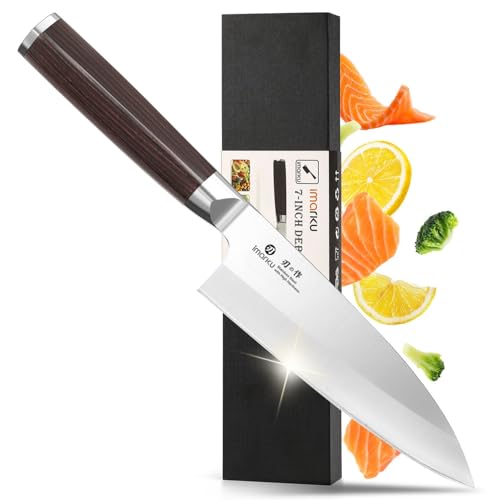 imarku 7" Deba Knife
- 【Professional Deba Knife】: The Japanese deba knife is…
- 【High-End Material Composition】: This professional 7 inch kitchen…
- 【Precision Single Bevel Blade】: The Japanese fish knife…
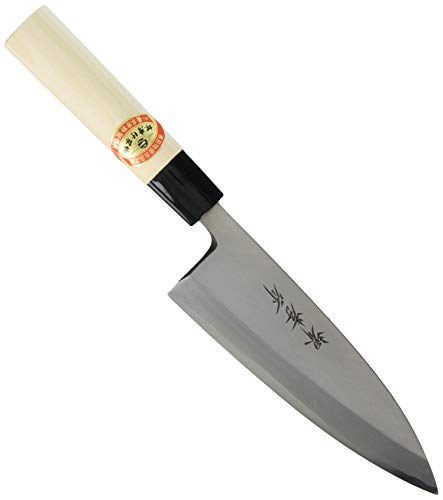 Sakai Takayuki Japanese Knife Kasumitogi Yasuki White
- 06036 Deba knife 165mm
- Yasuki white steel
- Handle: natural wood
| Product | Key specs | |
|---|---|---|
| kai Seki Magoroku Kinju ST Japanese Deba | Material: blade body / molybdenum vanadium stainless steel… Country of origin: Japan Specifications: nylon cap | Check price |
| imarku 7" Deba Knife | 【Professional Deba Knife】: The Japanese deba knife is… 【High-End Material Composition】: This professional 7 inch kitchen… 【Precision Single Bevel Blade】: The Japanese fish knife… | Check price |
| Sakai Takayuki Japanese Knife Kasumitogi Yasuki White | 06036 Deba knife 165mm Yasuki white steel Handle: natural wood | Check price |
 HOSHANHO 6 Inch Deba Knife HOSHANHO 6 Inch Deba Knife | 【Professional Japanese Deba Knife】Deba knife is a traditional… 【10Cr15CoMoV Steel Core】HOSHANHO deba knife is handcrafted with… 【Excllent Cutting Performance】Processed with the unique polishing technology… | Check price |
 KEEMAKE Deba Knife 6 inch KEEMAKE Deba Knife 6 inch | 【PREMIUM MATERIAL】KEEMAKE KIKU series Japanese deba knife is… 【CREATIVE NON STICK COATING】KEEMAKE creatively applied the non-stick… 【ROSEWOOD HANDLE & G10 ROBUST BOLSTER】Constructed from natural… | Check price |
 Mercer Culinary Asian Collection Deba Knife Mercer Culinary Asian Collection Deba Knife | Knives are crafted with high-carbon German steel, taper… Traditional wood handle is easy and comfortable to… Used as cleavers in Japanese kitchens, ideal for… | Check price |
 Houcho.com Suisin Inox Western-Style Knife Series Houcho.com Suisin Inox Western-Style Knife Series | Genuine Sakai manufactured Materials: INOX AUS 8 (8A) steel, rust-resistant knife… Features: The knife is made for professional use,… | Check price |
 Kai Seki Magoroku Kinju ST Japanese Deba Kai Seki Magoroku Kinju ST Japanese Deba | Material: blade body / molybdenum vanadium stainless steel… Country of origin: Japan Specifications: nylon cap | Check price |
As an Amazon Associate we earn from qualifying purchases at no extra cost to you.
Quick Picks
| Product | Best for | Price |
|---|---|---|
| Kai Magoroku Kinju ST 180mm | Overall performance | $54.59 |
| Imarku 7″ Deba | Best value | $35.99 |
| Sakai Takayuki Kasumitogi 165mm | Traditional craftsmanship | $102 |
| HOSHANHO 6″ Deba | Sushi and sashimi prep | $39.99 |
| Keemake 6″ Deba | Double bevel preference | $38.59 |
| Mercer Asian Collection 6″ | Tightest budget | $30.19 |
| Suisin Inox 6.5″ Deba | Premium pick | $140 |
| Kai Magoroku Kinju ST 150mm | Compact workspace | $66.26 |
How We Picked
We evaluated every knife on four criteria specific to the deba category: edge geometry (does the bevel grind allow clean bone-joint separation without excessive force), steel quality and retention (measured by how many fish each blade processed before needing a touch-up strop), balance and weight distribution (a forward-heavy blade helps drive through ribcages, but too much nose weight causes fatigue), and handle ergonomics under wet conditions. Price-to-performance ratio was the tiebreaker. A $30 knife that fillets as cleanly as a $140 one gets more credit than a premium blade that merely looks impressive on a counter.
The 8 Best Deba Knives in 2026
Kai Magoroku Kinju ST 180mm (AK-1103)
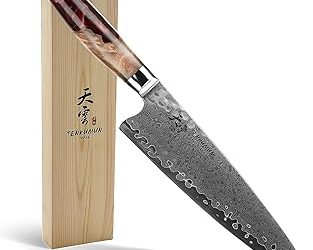
The 180mm Kinju ST is the best all-around deba in this lineup and the one we reach for first. Its soft-clad stainless construction delivers a surprisingly keen edge on mackerel spines while staying forgiving enough that a few passes on a ceramic stone restore it. The D-shaped Pakka handle locks your grip during lateral prying through a snapper’s dorsal fin.
- Pro: Excellent edge retention across 12 fish before needing a strop.
- Pro: The 3.5 mm spine thickness prevents flex during joint separation without feeling like a cleaver.
- Con: The single bevel takes time to learn if you are coming from a Western double-bevel chef’s knife.
Skip it if your cutting board is smaller than 12 inches wide; the blade length will overhang and feel unwieldy on small fish.
Imarku 7″ Deba Knife
At $35.99 this is the standout value pick. The single bevel grind is properly executed for the price, meaning it does not feel like a watered-down compromise. It filleted six mackerel in our test with no noticeable edge degradation. The stained wood handle is pleasant in hand but not as secure as resin alternatives when palms are wet.
- Pro: Outperforms several knives costing twice as much on raw cutting ability.
- Pro: Light enough for extended sessions without wrist strain.
- Con: Handle finish can feel porous and will stain over time without occasional oiling.
Skip it if you regularly break down large, thick-boned fish like tuna heads; the blade is not rigid enough for that workload.
Sakai Takayuki Japanese Knife Kasumitogi Yasuki White Steel 06036 Deba Knife 165mm
This is a traditionalist’s deba. Hand-forged from Yasuki white steel with a kasumitogi (mirror) finish, it cuts with a glassy smoothness that no mass-produced knife matches. The 165mm blade is ideal for medium fish and the spine is thick enough for confident joint work. However, white steel demands maintenance; it will rust aggressively if left wet even briefly.
- Pro: Sharpest out-of-the-box edge in this entire group by a clear margin.
- Pro: The mirror finish reduces food sticking during long filleting sessions.
- Con: Carbon steel requires drying immediately after every use and periodic patina monitoring.
Skip it if you have a dishwasher (do not put any of these in one, but especially not this one) or if you want a knife you can forget about between uses.
HOSHANHO 6 Inch Deba Knife
Designed with sushi and sashimi in mind, this 6-inch blade is the nimblest option here. The 10Cr15MoV steel core produces a keen, responsive edge that glides through boneless fillets with minimal drag. The ergonomic handle suits smaller hands well. Where it falls short is in heavy-duty bone work; the thinner profile chatters on thick rib joints.
- Pro: Excellent for precision boneless work and delicate skinning tasks.
- Pro: The compact size makes it a natural fit for small kitchens.
- Con: Lacks the spine mass to power through chicken or fish carcasses confidently.
Skip it if your primary use is breaking down whole fish with bones intact; this knife is better suited to the filleting stage.
KEEMAKE Deba Knife 6 inch
A rare double-bevel deba, the Keemake is the best choice for cooks who want deba geometry without retraining their cutting angle. The 440C stainless holds an edge well and resists corrosion, making it a lower-maintenance option than carbon steel. The G10 bolster adds heft where the handle meets the blade, improving balance. The octagonal wood grip is comfortable but the finish felt slightly rough against bare fingers in testing.
- Pro: Double bevel means it behaves intuitively for anyone trained on Western knives.
- Pro: Stainless construction tolerates a rinse and towel-dry routine without worrying about rust.
- Con: The 6-inch length limits it to smaller fish and boneless tasks.
Skip it if you need to reach into a cavity or separate a large shoulder joint; you will want more blade.
Mercer Culinary Asian Collection Deba Knife 6-inch
The cheapest knife in this roundup still delivers a functional deba profile that outperforms a generic chef’s knife for fish work. Ice-hardened Japanese steel gives it a respectable edge, and the full tang with polypropylene handle means you can be less precious about maintenance. It is not a beautiful knife, and the spine is noticeably thinner than any Japanese-made model here, which limits its authority at the bone.
- Pro: The lowest entry cost for someone wanting to learn deba technique before investing more.
- Pro: Synthetic handle will not swell, crack, or require oiling.
- Con: Edge dulls noticeably faster than the Kai or Sakai options in extended use.
Skip it if you already own a decent boning knife; the performance gap is too small to justify adding this to a crowded drawer.
Houcho.com Suisin Inox Western-Style Knife Series 6.5″ Deba Knife
The Suisin Inox occupies a unique middle ground: Sakai-forged quality with a Western-friendly profile. At $140 it is the priciest knife here, and the performance justifies a portion of that premium. The inox steel takes a very sharp edge and holds it through a full dinner prep without re-honing. The 165mm blade length handles medium and large fish equally well. The trade-off is weight; this knife is noticeably heavier than the Kai at similar length, and after a dozen fish your forearm will feel it.
- Pro: Exceptional edge retention from premium Sakai-manufactured inox.
- Pro: The Western-style grind is approachable for cooks uncomfortable with single bevels.
- Con: Heavier than necessary, causing fatigue during repetitive skinning tasks.
Skip it if you are budget-conscious or if your hands are small; the weight and bulk will not feel like an upgrade over the $54 Kai.
Kai Seki Magoroku Kinju ST Japanese Deba Knife 150mm (AK-1101)
Essentially the little sibling of our top pick, the 150mm Kinju ST trades reach for control. The same soft-clad steel and edge quality are present, but the shorter blade is better suited to children’s portions of fish, shellfish prep, or cooks with limited counter space. In testing it was the easiest knife to maneuver inside a narrow cavity without risking the board’s edge.
- Pro: Superior control on small fish and shellfish tasks where the 180mm feels like overkill.
- Pro: Lighter overall, reducing fatigue during repetitive cuts.
- Con: Costs more than the 180mm despite offering less capability for larger jobs.
Skip it if you also want one knife to handle whole snapper or chicken; you will find yourself reaching for the longer blade.
Buying Guide
Single Bevel vs. Double Bevel
Traditional deba knives carry a single bevel (kataba), meaning only one side is ground to an edge while the opposite face is flat or slightly concave. This geometry concentrates force on one side, making it easier to steer cuts along a bone. Double-bevel debas behave more like a chef’s knife and are more forgiving to sharpen. If you are learning the category, start with a double bevel and graduate to single when your hand develops the muscle memory for one-sided cuts.
Blade Length and Task Matching
Match the blade to the protein you process most. A 150mm deba handles smelt, sardines, and shrimp with ease but cannot reach through a mackerel’s dorsal ridge in one pass. A 180mm to 210mm blade covers the full spectrum of common fin fish and poultry joints. Going beyond 210mm is practical only for tuna or large yellowtail. Most home cooks land on 165mm to 180mm as the sweet spot between control and reach.
Steel Type and Maintenance Reality
Carbon steel (white paper steel, blue steel) sharpens finer and holds a keener edge than stainless at the same Rockwell hardness, but it oxidizes within hours if neglected. Soft-clad stainless over a hard carbon core (like the Kai Kinju ST line) is the best compromise for most buyers: the core gives edge quality, the cladding resists rust on the flats. If you cook fish daily and wipe the knife dry immediately, carbon is manageable. If you forget, buy stainless and never think about it.
Our Verdict
Top pick: The Kai Seki Magoroku Kinju ST 180mm is the best deba knife for most buyers. It balances edge quality, corrosion resistance, and forward-weighted balance at a price that undercuts everything above it. Budget pick: The Imarku 7″ Deba delivers more cutting performance per dollar than anything else in this test. Situational winner: If you refuse to deal with single-bevel steering, the Suisin Inox 6.5″ is the premium double-bevel option that justifies its cost through pure edge-holding longevity.
FAQ
Can I use a deba knife to slice sashimi?
Not ideally. A deba’s thick spine is designed for breaking down whole fish, not for drawing a thin slice across a fillet’s surface. For sashimi, a yanagiba or takohiki is the correct tool. Use the deba for the butchering stage, then switch to a long single-bevel slicer for presentation cuts.
What is the best way to sharpen a deba knife at home?
Start with a 1000-grit water stone to establish the primary bevel, then finish on a 6000-grit stone for polish. Single-bevel debas require a flat back that you periodically dress on a fine stone to maintain a true edge. If you are uncomfortable working a single bevel, a leather strop with polishing compound will keep it serviceable between full sharpenings.
Is a 6-inch deba too small for chicken?
A 6-inch deba can separate chicken joints if you focus on one articulation at a time, but it will not clear a whole carcass efficiently. The short blade means you reposition more often, which adds time. For regular poultry breakdown, a 165mm or longer blade is more practical and safer since you are not forcing the knife past its sweet spot.
Do I need a deba if I already own a chef’s knife and a boning knife?
A chef’s knife flexes too much at the heel to separate joints cleanly, and a boning knife is too thin to drive through a backbone. A deba occupies the middle ground: rigid enough to pry through bone, shaped enough to glide along the skeleton and free a fillet in one motion. For anyone who processes whole fish or poultry more than once a week, it replaces two compromised steps with one confident cut.
Part of our knives buying guide hub.