Our Top Picks
 Blackstone® Griddle Seasoning and Cast Iron Conditioner6.5 Ounce (Pack of 1)2.75 x 2.75 x 3.1 inches0.5 poundsCheck on Amazon
 Crisbee Stik® Cast Iron and Carbon Steel Seasoning2.3 Ounce (Pack of 1)4.9 x 2.1 x 1.3 inches0.1 poundsCheck on Amazon

A cast iron skillet only stays slick and rust-free when its seasoning layer gets regular care, and the real decision is which conditioner fits the way you cook. Some people want a fast spray after every wash, others want a wax stick that lays down a thin, hard coat, and a few want a small tin of oil for a full oven seasoning session. The wrong pick leaves a sticky film, a rancid smell, or a pan that rusts in the cabinet.
This guide is for home cooks who already own cast iron skillets, griddles, or Dutch ovens and want to keep them in daily use. It covers five conditioners chosen from the names and specs on their Amazon product pages, from a pump spray to a solid stick, so you can match the formula and format to your pans and your routine.
Quick Picks
As an Amazon Associate we earn from qualifying purchases.
| Product | Best for | Key spec from title |
|---|---|---|
| Lodge Seasoning Spray | Fast daily touch-ups after washing | 100% canola oil spray, 8 oz |
| Blackstone 4114 Conditioner | Griddle and skillet care in one jar | 6.5 oz 2-in-1 conditioner |
| Camp Chef Cast Iron Conditioner | Dutch oven cooks who season often | 6 oz palm oil conditioner |
| Field Company Seasoning Oil | A small organic tin for oven seasoning | Organic grapeseed, sunflower, beeswax |
| Crisbee Stik | Mess-free wipe-on coats | Solid stick, grapeseed oil and beeswax |
How to Choose
Match the format to how often you season
A spray suits a quick coat after every wash, because you mist the warm pan and wipe it dry in seconds. A liquid oil in a bottle suits a careful hand that pours a small amount onto a cloth and works it in. A solid stick or puck suits cooks who hate spills, since the wax melts onto warm iron and buffs to a thin film. A small tin of cream suits a full oven seasoning session, where you rub a dab over the whole pan and heat it. Pick the format you will actually reach for, because a conditioner that sits unused does nothing for your pan.
Check the base oils and the smoke point
The base oils decide how the coating behaves when the pan gets hot. Canola and grapeseed oils handle everyday cooking heat well, while flaxseed oil can flake if the coat goes on too thick. Beeswax blends build a harder, drier film that resists moisture during storage, which helps pans that sit unused for weeks. Palm oil and shortening blends stay stable on the shelf and spread evenly on warm iron. Avoid animal fats if you cook for vegetarians, and check the listing for a stated smoke point before you buy, since a conditioner that smokes at frying heat leaves a sticky layer.
Read the application steps before you buy
Every conditioner works only when the coat goes on thin. The standard routine is to wash the pan, dry it fully, warm it, wipe on a thin coat, then wipe off almost all of it until the surface looks nearly dry. Some products then need an oven bake at a set heat for an hour, while others just need a warm pan and a buff. If the listing gives a temperature and a time, follow it exactly. A thick coat that never bonds turns gummy, and a coat wiped off too soon leaves bare iron that rusts.
Size the container to your collection
A single skillet needs very little conditioner, so a small tin or stick can last months of daily use. A household with several skillets, a griddle, and a Dutch oven will run through a small tin fast, so a larger spray bottle or jar makes more sense. Solid sticks and pucks travel well and never leak in a bag, which matters for camp cooking. Check the ounces on the listing, not the size of the container in the photo, and remember that a little product goes a long way when each coat is thin.
The 5 Best Options
Lodge Seasoning Spray

Lodge Seasoning Spray is the simplest way to keep a skillet slick between cooks. It holds 100 percent canola oil in a non-aerosol pump bottle, so you mist the warm pan, wipe it thin, and put it away without measuring or pouring. The adjustable spray head gives an even coat, and the internal pouch keeps air and light away from the oil so it stays fresh in the cabinet. It suits cooks who wash their skillet after dinner and want a thirty-second routine.
Specs
- 100 percent canola oil with no additives or propellants
- 8 oz non-aerosol pump spray bottle, model A-SPRAY
- Adjustable spray settings for an even coat
- Internal pouch protects oil from air and light
- Recyclable aluminum can
Best for: Home cooks who want a fast spray coat after every wash.
Watch out for: A spray can overshoot the pan and mist the counter, so aim inside the skillet and wipe the excess right away.
Blackstone 4114 Griddle Seasoning and Cast Iron Conditioner
Blackstone 4114 is a thick conditioner made for griddles first, and its listing also names cast iron care. The 2-in-1 formula builds a slick layer that helps food release and shields the surface from rust and moisture. Its blend of palm oil, shortening, beeswax, canola oil, and soy oil spreads on warm iron and bonds into a hard film. The jar suits cooks who season a big flat top or several pans at once and want one product for the whole job.
Specs
- 6.5 oz jar, model 4114
- 2-in-1 formula that conditions and protects
- Blend of palm oil, shortening, beeswax, canola oil, and soy oil
- Plant-based and food safe with no harsh chemicals
- Non-rancid formula that will not stick or flake
- Product size 2.75 x 2.75 x 3.13 inches
Best for: Cooks who season a griddle plus cast iron skillets with one jar.
Watch out for: Blackstone markets this first for griddles, so read the listing and confirm it fits your skillet routine before you buy.
Camp Chef Cast Iron Conditioner
Camp Chef Cast Iron Conditioner is a palm oil based conditioner made for Dutch oven cooks. The maker says world champion Dutch oven chefs use it, and the bottle suits skillets, griddles, grill grates, and Dutch ovens alike. You spread a thin layer over the whole surface, and the natural oils build an easy-release coat that is not a chemical non-stick layer. It is a plain, single-purpose bottle with no spray head or wax to melt, which keeps the routine simple.
Specs
- 6 oz bottle, model CSC-8
- Palm oil based formula made from all natural oils
- Creates a natural easy-release surface
- For Dutch ovens, skillets, griddles, and grill grates
- Apply a thin layer over the entire surface
Best for: Dutch oven cooks who season their iron often and want a plain conditioner.
Watch out for: Palm oil is the base here, so cooks who avoid palm oil should pick a different conditioner from this guide.
Field Company Cast Iron Seasoning Oil
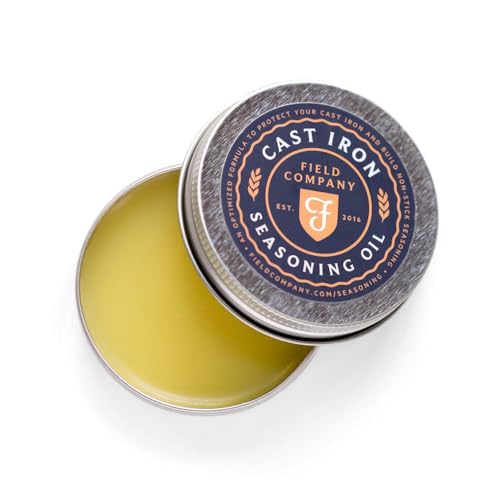
Field Company Cast Iron Seasoning Oil is a small tin of organic cream for cooks who season by hand. The blend mixes organic grapeseed oil, organic sunflower oil, and beeswax into a solid cream that melts at 120 degrees Fahrenheit. You dab a little onto the pan after cleaning, spread it thin with a cloth, and wipe off the excess until the surface looks dry and matte. The 2 oz tin suits one or two skillets, and the organic blend appeals to cooks who want plant-based care.
Specs
- 2 fl oz round tin, cream form
- Organic grapeseed oil, organic sunflower oil, and beeswax
- Melts at 120 degrees Fahrenheit
- Use within one year or refrigerate to extend shelf life
- Product size 2.6 x 2.6 x 1 inches
- Item weight 2.65 ounces
Best for: Cooks who want a small organic tin for hand seasoning after each wash.
Watch out for: The tin is small, so a household with many pans will empty it fast, and the cream needs cool storage or a fridge to keep well.
Crisbee Stik
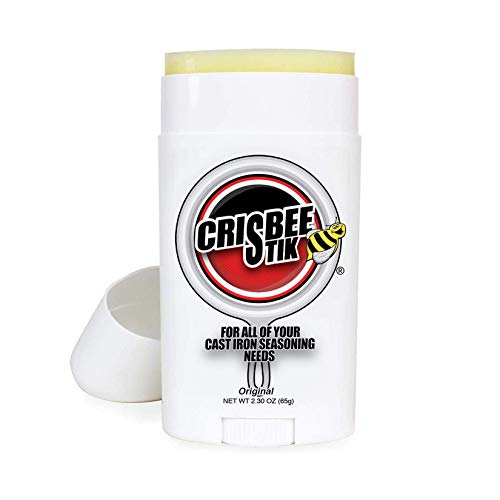
Crisbee Stik is a solid seasoning stick in a twist-up tube, shaped much like a deodorant stick. The Amazon listing names grapeseed oil and beeswax as the main ingredients, and the stick holds 2.3 ounces of solid product. You rub it across warm iron, then buff the thin coat until the surface looks nearly dry. The solid form never spills, which suits camp kits and crowded cabinets, and it works on cast iron and carbon steel alike. It is made in the United States.
Specs
- Solid stick in a twist-up tube, model Crisbee Stik Original
- Main ingredients grapeseed oil and beeswax per the Amazon listing
- 2.3 ounces of solid product
- Made in the United States
- For cast iron and carbon steel cookware
Best for: Cooks who want a spill-proof stick for thin, even coats at home or at camp.
Watch out for: Older Crisbee write-ups name soybean oil and palm oil instead, so check the current listing and confirm the formula before you buy.
Which One Fits Your Situation
You wash the skillet after every dinner
Pick the Lodge spray. A quick mist and wipe after washing takes seconds, and the pump bottle keeps the oil fresh between uses. Keep a cloth beside the stove, wipe the coat thin, and the pan stays ready for the next meal without a full oven session. A spray bottle lives by the stove, so the routine stays easy even on busy nights.
You season a griddle and several pans at once
Pick the Blackstone jar. The thick conditioner covers a large flat top fast, and the same jar works on skillets. Warm the iron first, spread a thin coat, and buff it well, since a thick coat on a big surface turns gummy. One jar covers the whole set, so you do not juggle three different bottles.
You cook in a Dutch oven at camp
Pick the Camp Chef bottle or the Crisbee Stik. The bottle suits a base camp with a full kit, while the stick travels in a pack without leaking. Both build a rust-proof coat on Dutch ovens, grates, and skillets that sit outside in damp air. The stick weighs almost nothing in a pack, and the bottle stays upright in a camp box.
You want organic care for one or two skillets
Pick the Field Company tin. The organic grapeseed, sunflower, and beeswax blend suits a small collection, and the cream form makes thin coats easy to control. Store the tin cool or in the fridge, and use it within a year for the best results. A small tin lasts months on one or two pans, so the extra care per coat stays worth it.
Common Mistakes
- Putting on a thick coat of conditioner, which turns sticky and gummy instead of bonding into a slick layer.
- Seasoning a wet pan, since trapped water under the oil leads to rust spots.
- Using a conditioner on a pan that still has food stuck to it, which seals the food into the coating.
- Storing a freshly oiled pan in a damp cabinet, where moisture still finds bare iron.
- Buying a conditioner made for griddles without checking that it fits your skillet routine.
Frequently Asked Questions
How often should I condition a cast iron skillet?
Condition the skillet after each wash while the pan is still warm. Wash it, dry it fully, warm it on the stove, wipe on a thin coat, then wipe off almost all of it. A full oven seasoning session is only needed when the pan is new, stripped, or rusty.
Can I use a conditioner on a Dutch oven and a griddle?
Yes, most conditioners in this guide work on skillets, griddles, Dutch ovens, and grill grates, since all of them are bare cast iron. Check the listing for each product, because a few are aimed mainly at griddles and may need a different routine on a deep Dutch oven.
Why did my seasoning turn sticky?
A sticky coat almost always means too much product was left on the pan. The fix is to wipe the coat until the iron looks nearly dry before heating, and to heat the pan long enough for the thin film to bond. Scrub the sticky layer off and start again with a thinner coat.
Does conditioner replace cooking oil in the pan?
No, conditioner builds and protects the seasoning layer, while cooking oil is what you cook with. Use a thin coat of conditioner after washing for storage, then add your normal cooking oil when you start to cook. The two jobs are different, and one does not replace the other.
FAQ
How often should I condition a cast iron skillet?
Can I use a conditioner on a Dutch oven and a griddle?
Why did my seasoning turn sticky?
Does conditioner replace cooking oil in the pan?
More from Amazon
Programs that pair well with the guide above. Offers and eligibility are set by Amazon and may change.
Set up recurring deliveries of everyday items on eligible products. Terms and savings are set by Amazon.
Explore Subscribe & SaveCollect the home and kitchen items you want in one registry that guests can shop from.
Create a wedding registryFree shipping on eligible items, Prime Video and more. Eligible new members can start with a free trial.
Start a Prime free trialAudiobooks and podcasts to listen to on the go. Eligible new members can start with a free trial.
Try Audible freeAs an Amazon Associate we earn from qualifying purchases.