Our Top Picks
 Victorinox Honing Steel 10-Inch Round Regular Cut10-inch16.25 x 2.25 x 1.5 inches0.1 poundsCheck on Amazon


A knife that felt razor keen last month can start to drag through tomato skin and fold over on herbs long before it is truly dull. In most home kitchens, the edge has not worn away; it has simply bent. Every cut pushes the thin apex of the blade slightly to one side, and after enough meals those tiny bends add up until the knife feels tired. A honing rod addresses that specific problem: a few light passes straighten the edge back into line so the knife cuts the way it did when freshly sharpened.
That is also why choosing among honing rods takes a little care. Rods come in plain steel, ceramic, and diamond-coated versions, and each surface interacts with a blade differently. Rod length matters too, because a rod that is shorter than the knife it serves makes a full, even stroke awkward. This guide explains the honing-versus-sharpening distinction, walks through the factors that separate one rod from another, and profiles five verified options across the three main surface types.
As an Amazon Associate, we earn from qualifying purchases.
How to Choose
Start with the distinction that shapes everything else. Honing and sharpening are not the same job. Honing realigns an edge that has folded or bent during normal use; a smooth or finely grooved steel rod pushes that edge back to center without meaningfully removing metal. Sharpening, by contrast, removes metal to form a new edge, which is what whetstones and abrasive surfaces do. A honing rod used regularly can stretch the time between sharpening sessions, but no rod restores a chipped, rolled, or genuinely worn-out edge.
Surface material is the next decision. Traditional steel rods are the classic maintenance tool: they realign edges and suit the softer stainless blades common in Western-style knife sets. Ceramic rods are made from fired alumina ceramic, a very hard material with a fine abrasive character, so they realign while also lightly refreshing the edge; they are often chosen for harder Japanese-style blades. Diamond-coated rods carry an abrasive diamond surface on a steel core, and makers describe them as both aligning and honing the blade; because the surface is abrasive, light pressure matters. The right surface depends on the knives you own and how worn their edges are.
Length is straightforward: the rod should be at least as long as the longest blade you plan to hone, and many cooks prefer an extra inch or two of working room. A 10-inch rod handles most chef’s knives, while a 12-inch rod gives more travel for slicing and carving knives. Round rods are the traditional shape, and regular-cut steel rods carry fine lengthwise grooves; oval rods exist too and present a broader contact patch per stroke.
Finally, look at the handle and guard. A guard, the flared section between rod and handle, keeps the blade from sliding down onto your fingers at the end of a stroke, and a hanging loop makes storage simpler. Handle material ranges from wood to molded plastic and textured synthetics; what matters is a grip that stays secure in a dry hand. Care is simple across all three surface types: wipe the rod clean after use, and note that ceramic is hard but brittle, so it should not be dropped on tile.
Wüsthof 10-Inch Sharpening Steel

Wüsthof’s 10-inch steel is the traditional entry in this roundup, built around an alloy steel rod with a light grit type as listed by the maker. It is the kind of rod sold alongside German knife sets for routine maintenance: the fine surface is intended for realigning an edge bent in daily use rather than removing metal, which keeps it firmly in the honing category described above. The listing notes the steel is magnetic, a property the maker associates with attracting fine metal fibers displaced during honing.
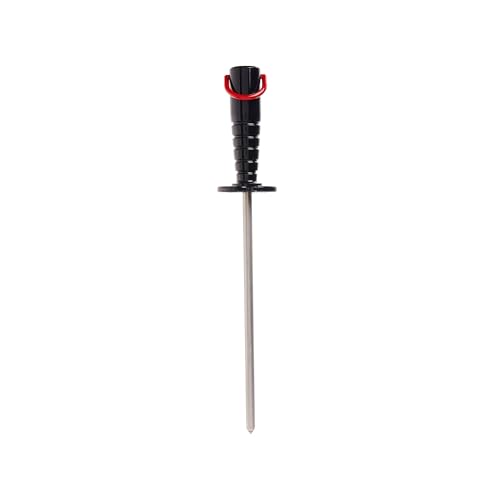
The handle is black, square in profile, and described as sturdy and non-slip, with a loop at the end for hanging storage. At 14 inches overall and about 0.28 kilograms, it has enough heft to stay steady held tip-down on the counter. Wüsthof covers its steels with a lifetime warranty against manufacturing defects. For cooks running a standard Western knife block, this is the straightforward, match-the-set option.
Specs
- Rod material: Alloy steel
- Rod length: 10 inches
- Overall length: 14 inches
- Grit type: Light, as listed
- Handle: Black, square profile, non-slip, with hanging loop
- Weight: 0.28 kilograms
- Warranty: Lifetime against manufacturing defects
Victorinox Honing Steel 10-Inch Round Regular Cut
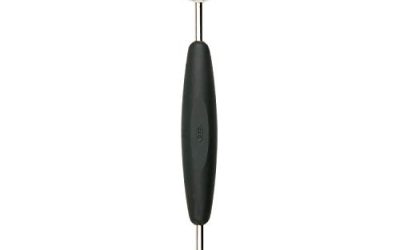
Victorinox lists this model, number 40083, as a 10-inch honing steel with a round cross-section and a regular cut, paired with a dark wood handle. The regular cut refers to the fine lengthwise grooves machined into the rod, the classic texture for everyday realigning work on kitchen knives. The round profile is the traditional shape, so the blade meets the rod along a narrow line and the user controls the angle through the stroke.
The dark wood handle gives it a more traditional look than molded plastic alternatives, and the 10-inch rod length matches the chef’s knives most home cooks reach for daily. Victorinox makes a wide family of honing steels in different lengths, cuts, and handle materials, and this wood-handled regular-cut version is the classic configuration in that line. It suits cooks who want a grooved steel rod from a long-established Swiss cutlery maker.
Specs
- Rod material: Steel
- Rod length: 10 inches
- Cross-section: Round
- Cut: Regular cut
- Handle: Dark wood
- Model number: 40083
Idahone Fine Ceramic Sharpening Rod 12-Inch
Idahone builds its rod from high-alumina ceramic and lists the grit type as fine. The company describes high-alumina ceramic as having near-diamond hardness, which is why ceramic rods are frequently recommended for harder blades, including Japanese-style knives, where a plain steel rod mostly slides along the edge. The ceramic surface realigns the edge and, as a genuine abrasive at a fine grit, also refreshes it lightly.
This version pairs the 12-inch rod with a black handle and measures 17.5 inches overall, with a listed weight of 8.8 ounces, noticeably light for its length. The extra rod length gives full strokes on long slicing knives as well as standard chef’s knives. Idahone states its products are sourced and produced in the USA. Ceramic’s one handling caveat applies here: the material is hard but brittle, so the rod should be stored where it cannot fall.
Specs
- Rod material: High-alumina ceramic
- Rod length: 12 inches
- Overall length: 17.5 inches
- Grit type: Fine, as listed
- Handle: Black
- Weight: 8.8 ounces
- Origin: Made in the USA, per the maker
DMT 12-Inch Diamond Steel Fine Grit DS2F
The DMT Diamond Steel takes a different approach: a continuous diamond surface on the rod, in the maker’s fine grade, rated at 25 micron and 600 mesh. DMT states that where most steels are designed only to align a blade, its diamond steels both align and hone, which places this rod closer to light sharpening than the plain steel options above. The maker uses micronized monocrystalline diamond and advises light strokes rather than pressure.
The rod itself measures 12 inches long and 0.375 inches in diameter, mounted in a sanitary black plastic handle with a large guard and a color-coded ring that designates the grit. The listed weight is 294 grams, and DMT says the sharpener can be used dry or with water, with no oils needed. It is made in the USA and carries a lifetime warranty. This is the pick for edges that have gone past simple misalignment and need a fine abrasive pass, short of a full session on a stone.
Specs
- Rod surface: Continuous diamond coating
- Rod length: 12 inches
- Rod diameter: 0.375 inches
- Grit: Fine, 25 micron / 600 mesh, as listed
- Handle: Black plastic with large guard and color-coded grit ring
- Weight: 294 grams
- Use: Dry or with water, per the maker
- Warranty: Lifetime, as listed
Winco Heavy-Duty Steel Honing Rod 12-Inch
Winco’s K-12S is the no-frills professional-kitchen entry: a heavy-duty steel honing rod with a 12-inch rod, sold under a model designation common in restaurant supply catalogs. Winco builds much of its line for commercial food service, and this rod follows that pattern, a plain steel realigning tool sized for the long knives used at a prep station.
Because the listing data focuses on the essentials, the confirmed facts are simple ones: steel construction, heavy-duty positioning, and the K-12S model number. For a home cook who wants a long steel rod without paying for a cutlery brand name, or a small cafe equipping a prep line, that simplicity is the point.
Specs
- Rod material: Steel
- Rod length: 12 inches
- Style: Heavy-duty
- Model number: K-12S
- Maker: Winco USA
Comparison
The five rods divide cleanly by surface. The Wüsthof and Victorinox are grooved or lightly textured steel rods built purely for realigning, with the Wüsthof adding a magnetic rod and square non-slip handle and the Victorinox a traditional round profile and dark wood grip. The Winco is also a steel realigner, stretched to 12 inches for heavy-duty, high-volume use. The Idahone moves into ceramic, trading toughness for a harder, fine abrasive surface that also refreshes edges lightly, while the DMT is the most abrasive option here, with a continuous diamond surface the maker says both aligns and hones.
| Product | Surface | Rod Length | Best Fit |
|---|---|---|---|
| Wüsthof 10-Inch Sharpening Steel | Alloy steel, light grit | 10 inches | Western knife sets, routine realigning |
| Victorinox Honing Steel Regular Cut | Steel, regular cut grooves | 10 inches | Classic grooved-steel maintenance, wood handle |
| Idahone Fine Ceramic Rod | High-alumina ceramic, fine | 12 inches | Harder blades, light edge refreshing |
| DMT 12-Inch Diamond Steel DS2F | Diamond coating, fine 600 mesh | 12 inches | Edges needing alignment plus abrasion |
| Winco Heavy-Duty Honing Rod K-12S | Steel | 12 inches | Long knives, high-volume prep work |
Length splits the group the same way: the two 10-inch rods suit standard chef’s knives and smaller blocks, while the three 12-inch rods give longer blades a full stroke. Guards and grips differ as well, from the DMT’s large guard and grit ring to the Wüsthof’s hanging loop.
FAQ
What is the difference between honing and sharpening?
Honing realigns an edge that has bent or folded during cutting, pushing it back to center without removing meaningful amounts of metal. Sharpening removes metal to create a new edge and is done with whetstones or abrasive tools. A rod handles the first job; a chipped or truly worn knife needs the second.
How often should a kitchen knife be honed?
Many cooks give the edge a few light passes before or after each use, since regular small corrections are easier than fixing a badly folded edge. The rhythm depends on how often the knife is used and what it cuts. Honing cannot rescue a dull edge, so if passes on the rod stop helping, the knife is due for sharpening.
Which rod surface suits Japanese-style knives?
Harder blades are commonly paired with ceramic rods, because the fine ceramic surface can realign and lightly refresh an edge that a plain steel rod tends to slide over. The Idahone above is one example, listed as high-alumina ceramic with a fine grit type. Whatever the surface, light pressure and a consistent angle matter more than force.
Can a honing rod damage a knife?
Used with a reasonable angle and light pressure, a rod is a maintenance tool, not a hazard. Problems come from heavy pressure, wildly inconsistent angles, or using a coarse abrasive surface on an edge that only needed realigning. Ceramic rods themselves are brittle and can chip if dropped, so store them where they cannot fall.
Final Verdict
For most Western knife sets, the Wüsthof 10-inch steel covers the daily realigning job with a non-slip handle and a hanging loop, and the Victorinox regular-cut model is the traditional alternative for cooks who prefer a grooved rod and a wood grip. The Winco K-12S stretches that same plain-steel formula to 12 inches for long blades and busy prep work. Cooks with harder knives should look first at the Idahone ceramic rod, while the DMT Diamond Steel is the choice when an edge needs fine abrasion as well as alignment. Match the surface to your knives, keep the pressure light, and reserve actual sharpening for the stone.
Product and ASIN Reference
| Product | ASIN |
|---|---|
| Wüsthof 10-Inch Sharpening Steel | B00009WDT8 |
| Victorinox Honing Steel 10-Inch Round Regular Cut, Dark Wood Handle | B0000CF919 |
| Idahone Fine Ceramic Sharpening Rod (12-Inch, Black Handle) | B019HJOVVI |
| DMT 12-Inch Diamond Steel, Fine Grit (DS2F) | B00004WFSY |
| Winco Heavy-Duty Steel Honing Rod, 12-Inch (K-12S) | B001N0ULJG |
FAQ
What is the difference between honing and sharpening?
How often should a kitchen knife be honed?
Which rod surface suits Japanese-style knives?
Can a honing rod damage a knife?
More from Amazon
Programs that pair well with the guide above. Offers and eligibility are set by Amazon and may change.
Set up recurring deliveries of everyday items on eligible products. Terms and savings are set by Amazon.
Explore Subscribe & SaveCollect the home and kitchen items you want in one registry that guests can shop from.
Create a wedding registryFree shipping on eligible items, Prime Video and more. Eligible new members can start with a free trial.
Start a Prime free trialAudiobooks and podcasts to listen to on the go. Eligible new members can start with a free trial.
Try Audible freeAs an Amazon Associate we earn from qualifying purchases.