Key takeaways
- Flame temperature: Quality butane torches reach 2,400–2,750°F. Anything under ~2,300°F caramelizes slowly and risks warming the custard underneath the sugar crust. MAP/Pro (propylene mix) torches burn hotter—up to ~3,700°F—and suit searing and blistering peppers, but demand more control.
- Ignition safety: Look for a safety lock plus a trigger or push-button ignition. Continuous-flame locks let you release the trigger mid-task; a child-resistant lock is worth prioritizing in shared kitchens.
- Fuel capacity and runtime: Tank size (typically 28–64 ml) dictates runtime. Expect roughly 8–30 minutes of continuous burn per fill. Refillable tanks accept standard butane canisters; disposable cartridge systems cost more per minute of flame.
- Balance and ergonomics: A top-heavy torch tips on the counter and strains your wrist when held at an angle. Heavier base, angled grip, and a stable standing footprint matter more than raw output for home use.
- Adjustable flame: A wide, diffuse flame suits brûlée and meringue; a pencil-point flame works for detail finishing and small batches.
The best culinary torches in 2026 balance three things: a flame hot enough to caramelize sugar without scorching it (around 2,500°F), a safety lock you’ll actually use, and a grip that stays comfortable during a full tray of crème brûlée. For most home cooks, a mid-range butane torch in the $25–$60 bracket outperforms both bargain torches with weak flames and pro-grade rigs that are overkill for occasional desserts.
What Actually Matters When Comparing Culinary Torches
Product listings rarely explain the specs that determine real performance. Here’s what to weigh:

Sondiko Creme Brulee Torch,Premium Kitchen Blowtorch for Cooking
Included for 'Best Culinary Torches for Browning, Brûlée, and Finishing' as a relevant option in this category; details come from the product listing.
View on Amazon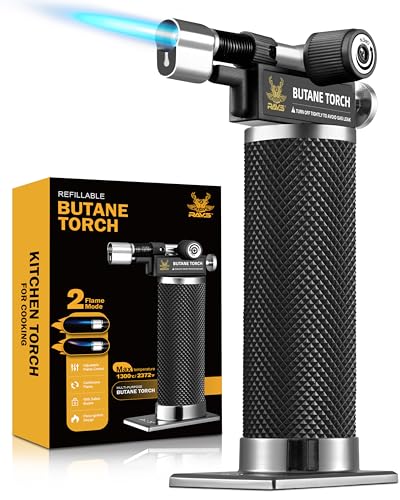
RAVS Butane Torch Lighter, DUAL Flame Mode Creme Brulee Torch, Black
Included for 'Best Culinary Torches for Browning, Brûlée, and Finishing' because the listing specifies DUAL Flame Mode Creme Brulee Torch and Black, details this guide uses to compare options.
View on Amazon
Jo Chef Kitchen Torch, Refillable Butane Torch for Creme Brulee, Cooking
Included for 'Best Culinary Torches for Browning, Brûlée, and Finishing' because the listing specifies Refillable Butane Torch for Creme Brulee and Cooking, details this guide uses to compare options.
View on Amazon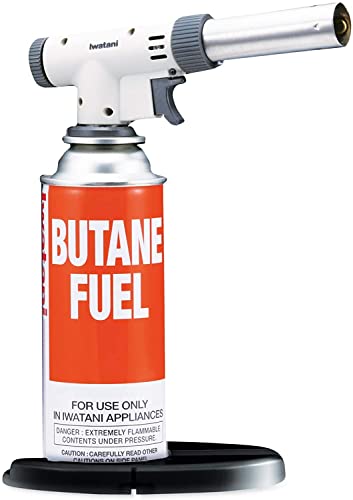
Iwatani PRO2 Culinary Professional Kitchen Butane Torch | Adjustable Flame Shape Strength 2700 F | Sous Vide Crème Brulee Pastries | Anti-flare | Incl. Stabilizing Stand | Butane Fuel Not Included
Included for 'Best Culinary Torches for Browning, Brûlée, and Finishing' because the listing specifies Adjustable Flame Shape Strength 2700 F and Sous Vide Crème Brulee Pastries, details this guide uses to compare options.
View on Amazon- Flame temperature: Quality butane torches reach 2,400–2,750°F. Anything under ~2,300°F caramelizes slowly and risks warming the custard underneath the sugar crust. MAP/Pro (propylene mix) torches burn hotter—up to ~3,700°F—and suit searing and blistering peppers, but demand more control.
- Ignition safety: Look for a safety lock plus a trigger or push-button ignition. Continuous-flame locks let you release the trigger mid-task; a child-resistant lock is worth prioritizing in shared kitchens.
- Fuel capacity and runtime: Tank size (typically 28–64 ml) dictates runtime. Expect roughly 8–30 minutes of continuous burn per fill. Refillable tanks accept standard butane canisters; disposable cartridge systems cost more per minute of flame.
- Balance and ergonomics: A top-heavy torch tips on the counter and strains your wrist when held at an angle. Heavier base, angled grip, and a stable standing footprint matter more than raw output for home use.
- Adjustable flame: A wide, diffuse flame suits brûlée and meringue; a pencil-point flame works for detail finishing and small batches.
Best Culinary Torches by Situation
Rather than a single winner, the right pick depends on what you’re finishing:
- Best all-rounder for desserts: The Sondiko-style refillable butane torch (widely sold under brands like Sondiko and Jo Chef) offers ~2,500°F output, a safety lock, adjustable flame, and a 30+ minute rated runtime for roughly $15–$30. It handles brûlée, baked Alaska, and toasted marshmallow well.
- Best for frequent use and larger jobs: The Iwatani PRO2 (CB-TC-PRO2) is a professional staple with a piezo ignition, stable base, and a torch head that accepts standard butane canisters directly—no funnel refilling. Priced around $50–$70, it’s the choice if you torch weekly.
- Best for searing and sous vide finishing: A MAP/Pro trigger torch like the Bernzomatic TS8000 paired with a Searzall-style diffuser screen delivers high, even heat for steaks and fish skin—around $50–$90 all-in. Overkill for custards, ideal for crusts.
- Best premium handheld: The EurKitchen or similar aluminum-body torch (roughly $30–$50) adds a fuel gauge window and a larger tank, removing the guesswork on refills.
Spec Comparison at a Glance
| Torch Type | Max Flame Temp | Tank Capacity | Runtime per Fill | Weight | Typical Price | Best For |
|---|---|---|---|---|---|---|
| Budget refillable (Sondiko/Jo Chef style) | ~2,500°F | ~28–35 ml | 8–12 min | ~170–220 g | $15–$30 | Occasional brûlée, meringue |
| Premium handheld (EurKitchen style) | ~2,600°F | ~50–64 ml | 20–30 min | ~350–420 g | $30–$50 | Regular dessert work, longer sessions |
| Iwatani PRO2 (canister-mount) | ~2,700°F | Whole canister (~227 g fuel) | 60+ min | ~460 g head + canister | $50–$70 | Frequent use, catering, batches |
| Bernzomatic TS8000 + diffuser | ~3,600°F (MAPP) | 14–16 oz cylinder | Hours | ~900 g+ | $50–$90 | Searing, sous vide, charring |
Decision Matrix: Match the Torch to Your Kitchen
| Your Situation | Recommended Pick | Why |
|---|---|---|
| Brûlée a few times a year, tight budget | Budget refillable butane torch | Low cost; short runtime doesn’t matter for 4–6 ramekins |
| Desserts monthly or more, want fewer refills | Premium handheld with fuel gauge | Larger tank means one fill per dinner party |
| Torch weekly, also sear fish skin or peppers | Iwatani PRO2 or similar canister model | Canister system refills in seconds; stable base for angled work |
| Sous vide steaks, big crusts, outdoor use | MAPP torch + diffuser screen | High output; diffuser prevents the “torch taste” hot spots |
| Kids in the house, first-time user | Any model with dual safety lock + stable base | Lock prevents accidental ignition; wide base won’t tip |
Cost of Ownership: A Quick Calculation
A standard butane refill canister costs roughly $3–$6 and refills a 35 ml torch tank about 8–10 times. If a fill lasts ~10 minutes and finishing one crème brûlée takes about 45 seconds of flame, a single canister fuels roughly 80–130 desserts—around 4–6 cents per use. A MAPP cylinder at $10–$12 makes sense only if you sear often; for custards alone it’s money left on the table. The hidden cost isn’t fuel—it’s replacing cheap torches whose igniters fail after a year or two. A $50 torch with replaceable parts often beats two $20 replacements.
Refilling and Care: What Listings Don’t Mention
Most premature torch failures trace back to refilling mistakes, not defects:
- Bleed before refilling. Depress the refill valve briefly to release trapped air, or the tank won’t fill properly and the flame sputters.
- Fill upside down, briefly. Hold the canister’s nozzle to the valve in 2–3 second bursts. Overfilling floods the valve and causes weak ignition for days.
- Purge and wait. Let the torch sit 5–10 minutes after filling so fuel stabilizes—igniting immediately often just hisses.
- What wears first: The piezo igniter, not the burner. Expect 1–3 years on budget models. A working torch with a dead igniter still functions with a lighter, but factor replacement cost.
- Cleaning: A toothpick clears a clogged nozzle; never use oil or solvents near the jet.
FAQ
Is a culinary torch different from a hardware-store torch?
Yes. Culinary torches burn cleaner butane and produce a smaller, more controllable flame. A plumbing torch works for searing but is too aggressive for sugar work.
Why does my torched food taste like fuel?
Incomplete combustion from holding the flame too close or too long in one spot. Keep the flame’s inner cone just above the surface and keep it moving; a diffuser screen helps for searing.
How long does a fill last?
Typically 8–30 minutes of continuous flame depending on tank size—enough for dozens of individual desserts.